
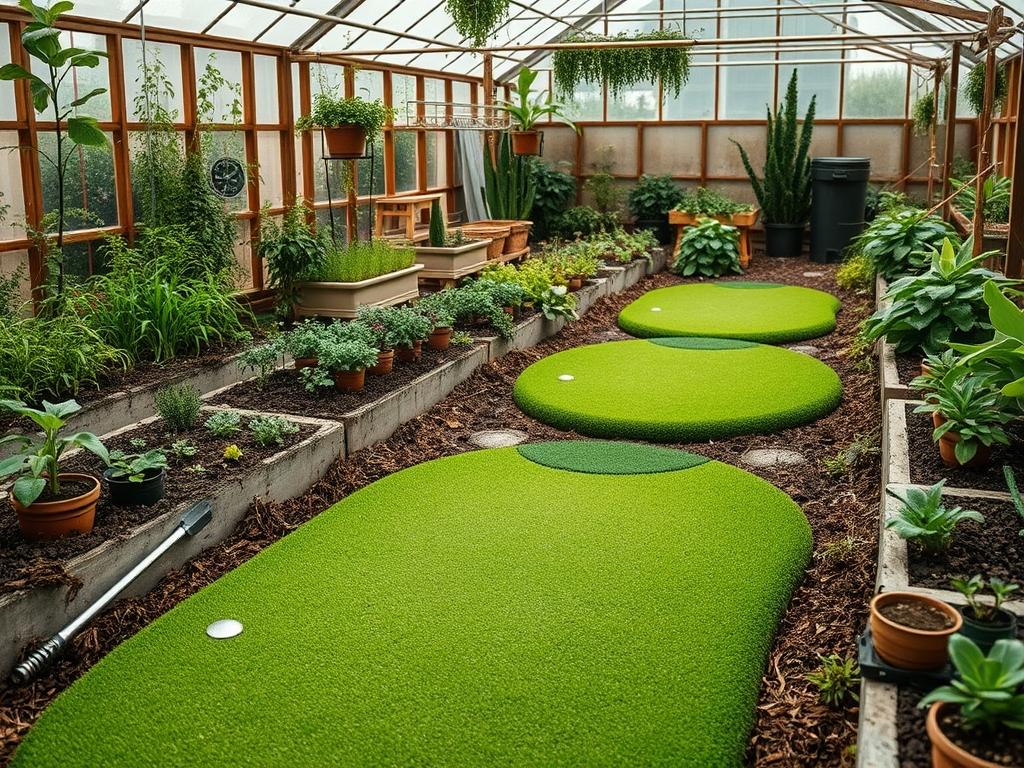
Transforming a residential landscape into a high performance athletic space requires a meticulous blend of civil engineering and aesthetic sensitivity. The installation of backyard putting greens has evolved from a niche luxury to a central feature of modern outdoor living, demanding a sophisticated understanding of topography, drainage, and material science. A successful project does not merely sit on top of the lawn; it integrates seamlessly with the existing environment, accounting for local climate variables such as annual rainfall, soil expansion, and heat retention. Homeowners must balance the desire for a professional grade surface with the practicalities of curb appeal and long term property value. When designed correctly, these installations provide a functional focal point that promotes outdoor activity while serving as a low maintenance alternative to traditional turf grass.
The landscaping challenge often lies in the transition zones between the synthetic surface and the natural flora. Because a putting green is inherently a highly manicured and flat or subtly undulating feature, it can look out of place if the surrounding garden is overgrown or unstructured. Landscape architects must consider the visual weight of the green, ensuring that it does not overwhelm smaller yards or feel lost in sprawling estates. Functionality extends beyond the game itself; the area must remain accessible during wet seasons, requiring a robust sub base and strategic placement away from low lying spots where water naturally collects. By approaching the project as a permanent structural addition rather than a simple gardening task, the homeowner ensures a durable, high performance environment that enhances the overall utility of the private landscape.
Landscape Design Principles
Effective design begins with the concept of visual balance. While the putting green is the primary attraction, its placement should follow the natural lines of the home and existing hardscaping. Symmetry is often used in formal garden layouts where the green is centered within a frame of Boxwood hedges or stone pavers. In more organic, “native” designs, asymmetrical layouts allow the green to follow the natural contours of the land, mimicking the look of an elite golf course nestled in the wild. Focal points, such as a backyard waterfall or a sculptural Japanese Maple, should be situated to draw the eye across the green, providing a sense of depth and intentionality.
Elevation layers play a critical role in the architectural success of the installation. A flat green can appear two dimensional and uninteresting; therefore, professional designers often incorporate subtle tiers or “breaks” in the surface. This is achieved by manipulating the crushed stone base prior to the turf application. These elevation changes must be mirrored in the surrounding landscaping through the use of retaining walls or tiered planting beds. Such structures prevent soil erosion from bleeding onto the synthetic fibers while creating a sense of enclosure. Furthermore, irrigation planning must be adjusted. While the green itself does not require water, the surrounding plants do. Overspray from sprinklers can carry silt and organic debris onto the putting surface, leading to algae growth or drainage clogs. Drip irrigation systems are the preferred solution for the perimeter, delivering water directly to the roots of the ornamental plants without affecting the playability of the turf.
Walkways provide the necessary infrastructure to move between the home and the recreational area without tracking mud or grass clippings onto the green. Use flagstone pavers or decomposed granite to create stable, clean paths. These walkways also serve as a “buffer zone” that separates the high maintenance putting surface from the natural soil of the garden. By varying the textures of the materials used in the walkway, such as smooth river rocks against a sharp limestone edge, the designer creates a clear boundary that reinforces the professional look of the installation.
Plant and Material Selection
Selecting the right flora and hardscape materials is vital for maintaining the cleanliness and longevity of the putting green. Dropping leaves, sap, and aggressive root systems can damage the synthetic backing or mar the putting surface.
| Plant Type | Sun Exposure | Soil Needs | Water Demand | Growth Speed | Maintenance Level |
| :— | :— | :— | :— | :— | :— |
| Dwarf Boxwood | Full Sun to Partial Shade | Well Drained | Moderate | Slow | Medium |
| Blue Oat Grass | Full Sun | Rocky/Sandy | Low | Moderate | Low |
| Creeping Thyme | Full Sun | Loamy | Low | Moderate | Low |
| Skyrocket Juniper | Full Sun | Adaptable | Low | Fast | Low |
| Lavender | Full Sun | Well Drained/Alkaline | Very Low | Moderate | Medium |
| Emerald Green Arborvitae | Full Sun | Moist/Well Drained | Moderate | Fast | Low |
Implementation Strategy
The process begins with precise site preparation. First, the area is excavated to a depth of 4 to 6 inches, removing all organic matter including grass, roots, and large stones. This cavity is then treated with a heavy duty weed barrier to prevent subsurface growth from compromising the integrity of the green. The foundation consists of multiple layers of compacted aggregate. Typically, a 3 inch layer of 3/4 inch road base is spread and compacted using a vibratory plate compactor. This is followed by a 1 to 2 inch layer of fine crushed limestone or “breeze,” which allows for the final smoothing and contouring of the surface.
Drainage is the most critical technical component. If the backyard is prone to standing water, a French drain system or a series of perforated pipes must be installed beneath the aggregate base. These pipes should be sloped at a minimum of 1 percent toward a legal discharge point or a dry well. Once the base is solidified and graded for the desired “breaks,” the synthetic turf is rolled out and trimmed with a utility knife to fit the exact dimensions. The edges are secured using 6 inch galvanized spikes driven every 3 to 4 inches. Finally, a specialized silica sand infill is brushed into the fibers. This sand provides the weight necessary to keep the turf in place and offers the resistance needed for a true ball roll. The depth of the infill determines the “speed” of the green, with more sand generally resulting in a faster surface.
Common Landscaping Failures
The most frequent error in backyard putting green installation is inadequate base compaction. If the crushed stone is not compacted in thin “lifts” or layers, the ground will eventually settle, creating “cups” or low spots that trap water and ruin the ball’s trajectory. This is often exacerbated by “the bathtub effect,” where the green is installed in a depression without an exit route for water. Without proper drainage, the aggregate base stays saturated, leading to soil compaction failure and a spongy, unplayable surface.
Another common failure involves the transition to the surrounding garden. Root overcrowding from nearby aggressive trees, such as certain species of Willow or Poplar, can actually lift the synthetic turf from beneath, creating hazardous humps. Furthermore, improper spacing of perimeter plants leads to a lack of airflow, which encourages the growth of moss and mold on the shaded sections of the green. Irrigation inefficiencies also pose a threat; if the surrounding sprinklers are not calibrated, the constant bombardment of water can wash away the silica sand infill, requiring expensive and frequent replenishment.
Seasonal Maintenance
Spring is the season for deep cleaning. Use a power broom or a stiff bristled brush to pull up any matted fibers and redistribute the infill. Check the edges for any lifting caused by winter’s freeze-thaw cycles and hammer down any loose galvanized spikes. This is also the time to apply a pre-emergent herbicide to the surrounding landscape beds to prevent windblown seeds from germinating in the turf.
Summer maintenance focuses on heat management and debris removal. While synthetic turf is durable, it can become quite hot in direct sunlight. A quick “syringing” or light misting with water can cool the surface before use. Keep the green clear of organic debris like grass clippings or fallen petals, as these will break down into a fine silt that can clog the drainage pores of the turf backing.
Autumn requires constant vigilance as leaves fall. Use a leaf blower on a low setting to clear the green daily. Never allow wet leaves to sit on the surface, as the tannins can stain the synthetic fibers. Before the first snow or heavy rain, ensure that the surrounding catch basins and drainage grates are clear of mulch and twigs.
Winter maintenance is minimal but important. Avoid using metal shovels to clear snow, as the sharp edges can cut the turf. If the green is frozen, avoid walking on it, as the frozen fibers can become brittle and snap under the weight of a person. Allow the snow to melt naturally, ensuring that the drainage paths you engineered during the implementation phase are working efficiently to move the meltwater away from the home’s foundation.
Professional Landscaping FAQ
What is the best base material for drainage?
A combination of 3/4 inch crushed stone for the sub base and 1/4 inch minus screenings for the top layer provides the best balance of structural stability and vertical drainage, ensuring water moves quickly through the turf and into the soil.
How do I prevent weeds from growing in the green?
Install a commercial grade geotextile weed barrier beneath the aggregate base. Additionally, maintain a clean perimeter using steel edging and ensure that the silica sand infill is kept clean of organic debris where seeds could potentially germinate.
Can I install a putting green on a slope?
Yes, but it requires tiered retaining walls or significant grading. The putting surface itself must be relatively level with only minor 1 to 3 percent undulations for ball movement. Significant slopes require professional engineering to prevent base erosion.
Does synthetic turf require a professional irrigation system?
The turf itself does not, but the surrounding landscape does. Use a drip irrigation system for the perimeter plants to prevent water and silt from washing onto the green, which preserves the infill and prevents mold growth.
How long will a professional putting green last?
With a properly engineered aggregate base and high quality polypropylene turf, a backyard putting green can last between 15 and 20 years. Longevity depends on maintaining the infill levels and keeping the surface free of organic contaminants.