
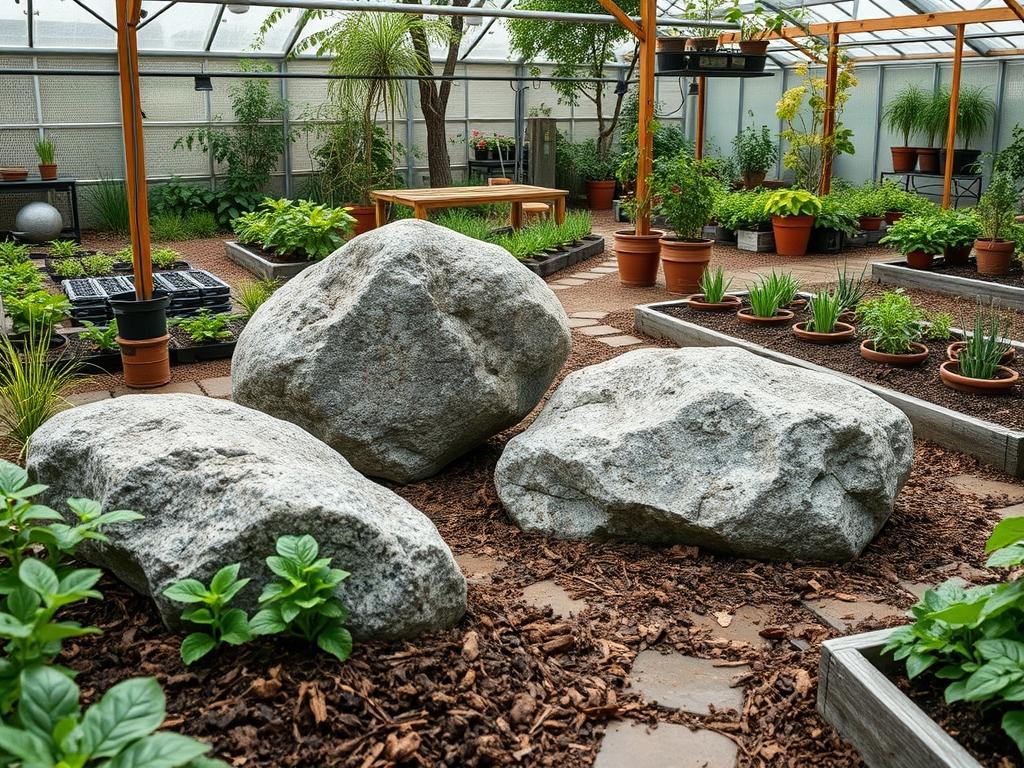
Integrating natural stone boulders into a professional landscape design requires a deep understanding of geological aesthetics and structural engineering. These massive elements serve as the permanent anchors of an environment; they provide weight, texture, and a sense of timelessness that softer organic materials cannot achieve on their own. For homeowners looking to increase curb appeal or define a specific outdoor room, the strategic placement of a primary focal point is essential. These stones are not merely decorative additions but are foundational tools used to solve complex site problems such as steep elevation changes, soil erosion, and wind exposure. When properly selected, they transition a garden from a temporary collection of flora into a mature, established ecosystem that complements the local climate and architectural style of the home.
Large stone features act as the silent protagonists of the garden. Their presence dictates how the eye moves across a property, drawing attention to specific vistas or guiding guests along a curated path. Beyond their visual impact, they offer significant functional benefits. In arid climates, boulders provide cooling thermal mass and shade for smaller, more sensitive plants. In regions with heavy rainfall, they can be utilized as natural diversions to manage surface runoff and protect the integrity of the surrounding soil. By treating a boulder as a permanent architectural feature rather than a simple accessory, a landscape architect creates a landscape that feels intentional and rooted in the earth.
Landscape Design Principles
The successful use of natural stone boulders depends on the principle of perceived weight and balance. Symmetry is rarely the goal; instead, designers strive for an asymmetrical balance that mimics the natural occurrence of rock outcroppings. A single, massive boulder often works best as an isolated focal point, while smaller stones should be grouped in odd numbers to create a more organic appearance. These groupings help to establish elevation layers within a flat yard. By constructing a berm with a mixture of soil, gravel, and stone, you can create a multi-layered height profile that adds depth to the horizontal plane of the lawn.
Focal points must be integrated with the broader site infrastructure, particularly irrigation planning and walkways. It is crucial to ensure that PVC irrigation lines are mapped out before stones are set. Placing a multi-ton rock atop a main water line is a recipe for future disaster. Furthermore, the relationship between stone and movement is vital. Large boulders should define the edges of natural stone walkways or serve as “stumbling blocks” for the eyes to pause at a turn in the path. This creates a sense of discovery. Visual balance is achieved by grounding the rock; this involves burying at least one-third of the stone’s height underground to make it appear as though it is part of a larger subterranean formation.
Plant and Material Selection
The vegetation surrounding a boulder should enhance its texture rather than obscure its form. Low-growing groundcovers and ornamental grasses are often the best choices for the immediate perimeter of the stone.
| Plant Type | Sun Exposure | Soil Needs | Water Demand | Growth Speed | Maintenance Level |
| :— | :— | :— | :— | :— | :— |
| Blue Star Juniper | Full Sun | Well-drained | Low | Slow | Low |
| Sedum Autumn Joy | Full Sun | Sandy/Poor | Low | Medium | Low |
| Dwarf Fountain Grass | Sun/Part Shade | Loamy | Medium | Medium | Low |
| Creeping Thyme | Full Sun | Rocky/Dry | Low | Medium | Low |
| Japanese Maple | Part Shade | Rich/Acidic | Medium | Slow | Medium |
| Blue Fescue | Full Sun | Well-drained | Low | Medium | Low |
| Irish Moss | Part Shade | Moist/Rich | Medium | Medium | Medium |
Implementation Strategy
The process begins with a detailed backyard or garden layout plan that accounts for both aesthetics and logistics. Before the first stone arrives, the site must be graded to ensure proper drainage away from the home’s foundation. Use a laser level to verify that the target site for the boulder is the highest point of the immediate area or part of a controlled slope. Once the location is marked, excavation begins. For a boulder measuring 36 inches in diameter, a hole should be dug approximately 12 inches deep and filled with a 3-inch layer of compacted crushed stone to prevent the boulder from sinking further over time.
Transporting and setting the stone requires heavy equipment like a skid steer or a mini-excavator equipped with a rock thumb. The stone must be rotated until its “best face” is visible from the primary viewing angle, such as the patio or the front window. Once set, the area is backfilled with topsoil and tamped down to eliminate air pockets. Edging materials, such as steel edging or cobblestone, can be used to separate the boulder’s bed from the turf. Finally, use a 3-inch layer of hardwood mulch or river rock to finish the area. This mulch layer helps retain moisture for surrounding plants and provides a clean, professional finish that highlights the stone’s color.
Common Landscaping Failures
One of the most frequent mistakes in boulder placement is the “dinosaur egg” effect. This occurs when stones are simply dropped on top of the grass without being sunk into the earth. It looks artificial and lacks the permanence required for a professional grade landscape. Another major failure involves drainage. If a boulder is placed in a low spot without a French drain or proper grading, it will collect water at its base, leading to soil saturation, moss overgrowth, and potential shifting or leaning as the ground turns to mud.
Root overcrowding is another issue that developers often overlook. Planting a fast-growing tree too close to a heavy stone can result in the roots lifting the stone or the stone restricting the tree’s growth. Proper spacing is essential; always research the mature width of your chosen plant species. Soil compaction is a hidden danger during the installation process. The heavy machinery used to move granite or limestone boulders can crush the soil structure, killing beneficial microbes and making it nearly impossible for plants to thrive. Always finish the project by aerating the surrounding soil and adding organic compost to restore vitality.
Seasonal Maintenance
Landscape management is a year-round commitment that changes with the weather. In the spring, the focus should be on cleaning the stone surfaces. Use a stiff-bristled brush and water to remove lichen or bird droppings that have accumulated over winter. Inspect the base of the boulders for any shifting caused by the freeze-thaw cycle and replenish the wood mulch to ensure a consistent depth of 3 inches. This is also the time to apply a pre-emergent herbicide around the stone to prevent weeds from taking root in the crevices where the stone meets the soil.
Summer maintenance centers on irrigation efficiency. Check that your drip emitters or sprinkler heads are still reaching the plants tucked behind the stones, as boulders can create “rain shadows” where water cannot reach. In autumn, the priority is leaf removal. Debris trapped against the base of a boulder can hold excessive moisture and lead to rot in nearby plants or staining on porous stones like sandstone. During the winter, avoid using harsh de-icing salts near your natural stone. Salts can penetrate the pores of the rock and cause scaling or cracking. Instead, use coarse sand for traction if the boulder is near a walkway.
Professional Landscaping FAQ
How do I choose the right size boulder for my yard?
Scale is the most Important factor. A boulder should be large enough to be noticed from the street but not so large that it overwhelms the house. Aim for a height that reaches roughly one-third the height of the nearest architectural feature.
Can I mix different types of stone in one landscape?
It is generally best to stick to one geological type, such as all fieldstone or all basalt. Using different colors and textures can look cluttered and unnatural. Consistency in material creates a cohesive and professional appearance across the entire property.
Do I need a permit to install large landscape boulders?
Most residential projects do not require permits for boulders. However, if the stones are part of a retaining wall over 4 feet tall, or if they alter the flow of a public waterway, you must consult local building codes and engineers.
What is the best way to move a heavy boulder without a machine?
For stones up to 500 pounds, a heavy-duty hand truck or a series of steel pipes used as rollers can work. For anything larger, professional equipment is necessary to ensure the safety of the installers and to prevent property damage.
How do I stop weeds from growing around the base of the rock?
Install a high-quality geotextile fabric beneath the stone and the surrounding mulch. Ensure the fabric is pinned down securely. Combined with a thick layer of bark mulch or lava rock, this creates a formidable barrier against invasive weed species.