
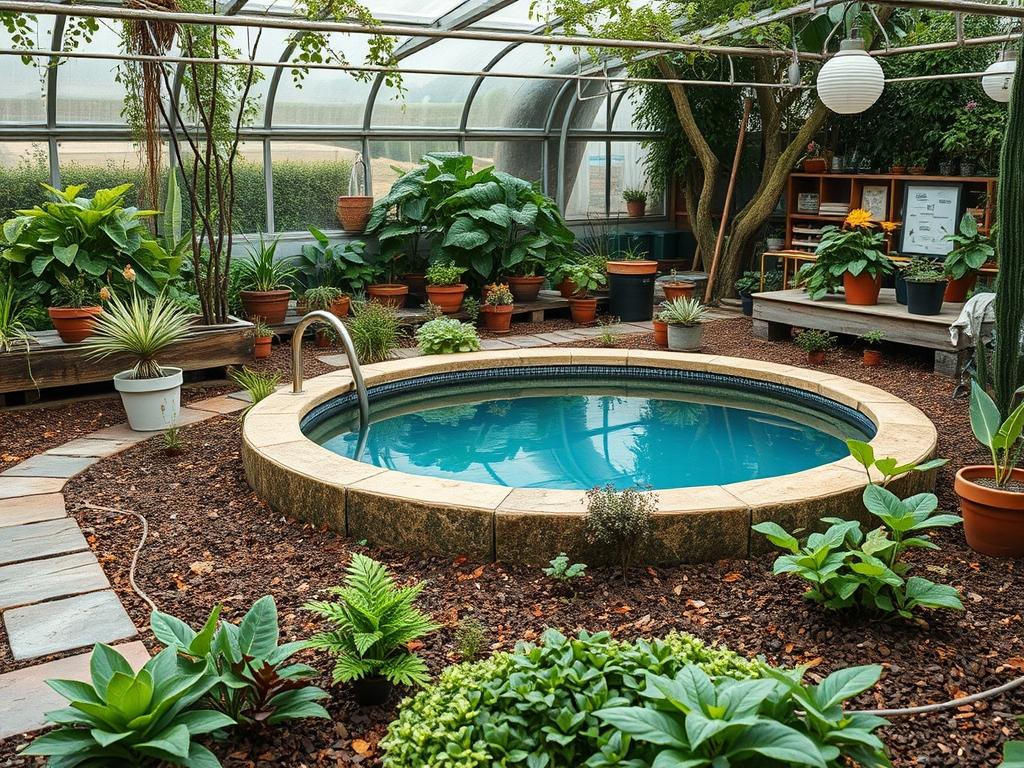
Integrating a natural swimming pool into a residential landscape represents a fundamental shift from traditional backyard engineering to holistic ecosystem management. For the modern homeowner, the primary challenge involves balancing the desire for a functional swimming area with the aesthetic demands of a high end garden. Unlike conventional chemically treated pools, a natural swimming pool utilizes biological filtration, meaning the pool is essentially a living organism. This requires a sophisticated understanding of regional climate considerations, as the biological processes involved in water purification are temperature dependent. In temperate zones, designers must account for seasonal dormancy, while in arid regions, evaporation rates and water conservation become the driving forces behind the design. The impact on curb appeal is profound. Instead of a stark, turquoise rectangle that often feels disjointed from the surrounding greenery, a natural pool functions as a seamless extension of the terrain. It enhances outdoor functionality by providing a year round water feature that attracts local fauna and offers a serene, chemical free environment for recreation.
Landscape Design Principles
The architectural success of a natural swimming pool relies on the careful application of fundamental design principles, beginning with the concept of visual balance. Most natural pools are divided into two distinct areas: the swimming zone and the regeneration zone. Achieving symmetry between these two can be challenging. Often, an asymmetrical approach works best, where the regeneration zone mimics a natural pond edge while the swimming area maintains clean lines for lap swimming. Focal points must be established to draw the eye across the water. This is frequently achieved through the placement of large granite boulders or a strategically positioned timber deck that overshoots the water surface.
Elevation layers are critical for both aesthetics and functionality. By utilizing the natural slope of a property, a landscape architect can design a gravity fed system where water flows from the regeneration zone into the main pool via a series of cascades. This movement oxygenates the water, which is essential for aerobic bacteria. Irrigation planning also changes in this context. While the pool itself is self contained, the surrounding landscape must be graded to ensure that runoff from lawn fertilizers or garden beds does not enter the pool. Such contamination would introduce excess phosphorus and nitrogen, leading to massive algae blooms. Walkways should be designed to bridge the transition between the manicured home environment and the more rugged pool edges, perhaps using flagstone pavers set in refined gravel to provide a stable, permeable surface.
Plant and Material Selection
The selection of plants for a natural swimming pool is not merely decorative; it is a functional requirement of the filtration system. These plants are categorized by their position in the water and their role in nutrient sequestration.
| Plant Type | Sun Exposure | Soil Needs | Water Demand | Growth Speed | Maintenance Level |
| :— | :— | :— | :— | :— | :— |
| Water Iris | Full Sun | Aquatic Compost | High (Submerged) | Fast | Moderate |
| Common Reed | Full to Partial | Gravel Substrate | High (Submerged) | Very Fast | High |
| Water Lilies | Full Sun | Heavy Clay | High (Deep Water) | Moderate | Low |
| Marsh Marigold | Partial Shade | Wet Mud/Gravel | High (Marginal) | Moderate | Low |
| Pickerel Weed | Full Sun | Loamy Sand | High (Shallow) | Moderate | Moderate |
| Hornwort | Any | None (Floating) | High (Oxygenator) | Fast | Low |
Materials used in construction must be inert to avoid altering the water pH. EPDM liners are the industry standard for waterproofing due to their flexibility and longevity. For the filtration bed, washed pea gravel and volcanic rock provide the massive surface area required for beneficial bacteria to colonize. Hardwood timber, such as Ipe or Cedar, is preferred for decking because it resists rot without the need for toxic chemical treatments that could leach into the ecosystem.
Implementation Strategy
Planning a natural swimming pool begins with a rigorous site analysis. The first step in the implementation strategy is determining the sun to shade ratio. Too much sun can overheat the water and encourage algae, while too much shade can prevent the aquatic plants from performing their filtration duties. Once the site is selected, excavation begins, keeping in mind that the regeneration zone should typically occupy about 50 percent of the total water surface area.
Grading is the next vital phase. The transition between the deep swimming zone, usually 8 feet to 10 feet deep, and the shallow regeneration zone must be structurally sound. This often requires the use of retaining walls built from concrete masonry units or stacked stone to prevent the gravel substrate from sliding into the swimming area. After the EPDM liner is installed and heat welded at the seams, the plumbing system is laid out. This includes at least one skimmer to remove surface debris and a low wattage circulation pump to keep water moving through the biological filter.
The edging of the pool determines its final aesthetic. For a naturalistic look, large river stones can be used to hide the liner at the water’s edge. In more modern applications, a cantilevered stone coping provides a sharp, clean transition. Finally, mulch depth in the surrounding terrestrial garden should be maintained at exactly 3 inches to suppress weeds and retain moisture, ensuring that no loose soil or organic matter washes into the pool system during heavy rains.
Common Landscaping Failures
The most frequent failure in natural swimming pool design is inadequate drainage. If the surrounding landscape is not correctly graded, heavy rainfall will carry silt, organic debris, and garden chemicals into the pool. This overload of nutrients can crash the biological filter, turning the water murky and green. Another common mistake is root overcrowding. When aggressive species like certain reeds are planted without containment, their root systems can expand rapidly, clogging the filtration pipes and even threatening the integrity of the liner.
Improper spacing of terrestrial plants around the pool often leads to excessive leaf litter. While some organic matter is expected, deciduous trees planted too close to the pool will overwhelm the skimmers and settle on the bottom, where they decay and consume oxygen. Soil compaction during the construction phase is also a major issue. Heavy machinery can compress the earth so tightly that natural drainage is destroyed, leading to standing water and muddy patches near the pool area. Finally, irrigation inefficiencies, such as spray heads that aim toward the water, can introduce tap water treated with chlorine or chloramines, which can harm the delicate microbial life in the regeneration zone.
Seasonal Maintenance
Maintenance for a natural swimming pool follows the rhythm of the seasons rather than the schedule of a chemical laboratory. In the spring, the focus is on waking up the ecosystem. This involves thinning out last year’s plant growth and checking the circulation pump for efficiency. As the water warms, the biological filter will naturally begin to activate.
During the summer, the primary task is monitoring water levels and managing evaporation. Because these pools do not use harsh chemicals, the water is safe for irrigation, but it must be topped up to keep the regeneration zone submerged. Any invasive weeds that find their way into the gravel bed should be removed by hand. In autumn, the goal is debris management. Installing a temporary leaf net over the surface can save hours of labor by preventing falling leaves from sinking to the bottom. Winter maintenance involves preparing for dormancy. In colder climates, the pumps may be turned off, and the water allowed to freeze. The aquatic plants will die back, but their root systems will remain alive underground, ready to restart the cycle when the ice melts.
Professional Landscaping FAQ
How does a natural pool stay clean without chlorine?
The system uses a biological filter known as a regeneration zone. Aquatic plants and beneficial bacteria consume the nutrients that would otherwise feed algae, while a circulation pump ensures the water moves through gravel substrates that trap fine particles.
Are natural swimming pools more expensive than traditional ones?
The initial construction cost is often higher due to the increased surface area and specialized biological components. However, long term costs are significantly lower because there are no expensive chemicals to purchase and the energy efficient pumps consume less electricity.
Can I convert my existing chlorine pool to a natural system?
Yes, conversions are possible by repurposing part of the existing structure as the swimming zone and building an adjacent regeneration zone. This process usually requires new plumbing and a complete liner replacement to ensure a watertight, chemical free environment.
Do these pools attract mosquitoes or other pests?
Since the water is constantly moving through a skimmer and filtration bed, natural pools do not provide the stagnant water required for mosquito breeding. Furthermore, healthy pools attract natural predators like dragonflies and frogs that help control insect populations.
How deep should the regeneration zone be for effective filtering?
The regeneration zone typically features varying depths, ranging from 6 inches at the edges to 18 inches near the center. This allows for a diverse range of marginal and submerged plants to coexist, maximizing the biological filtration capacity of the system.