
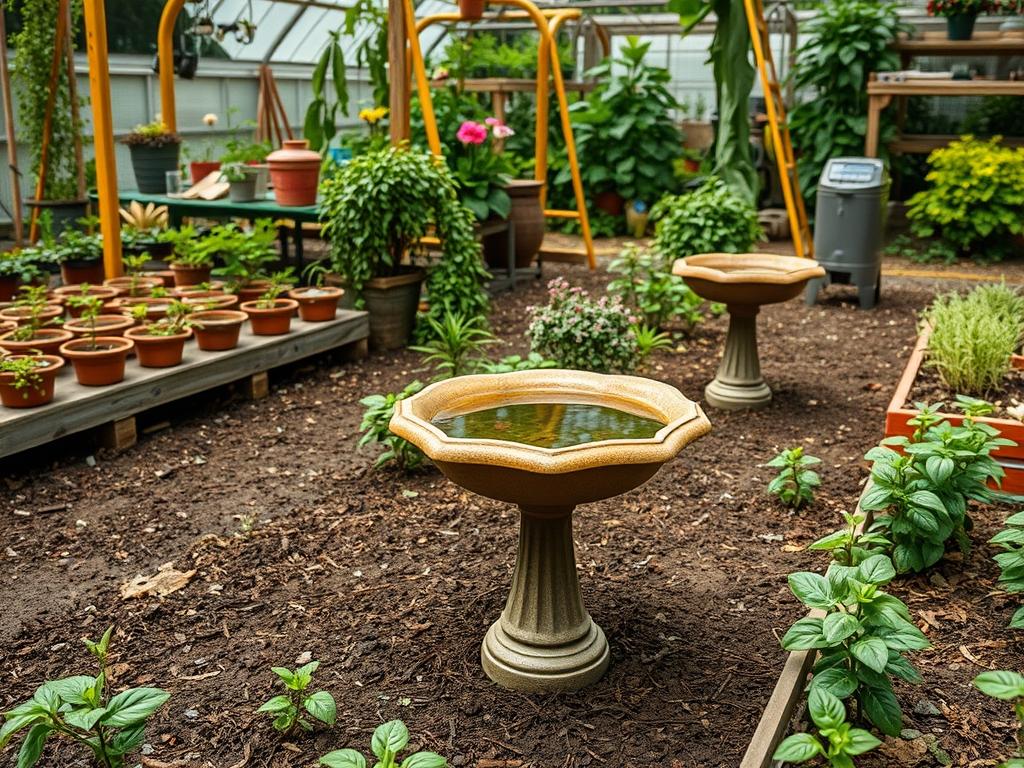
Integrating a water feature into a sophisticated landscape often presents a logistical challenge regarding electrical access and site disturbance. Modern Solar Garden Bird Baths have emerged as a primary solution for architects seeking to introduce the sensory benefits of moving water without the invasive trenching required for traditional 120-volt pumps. These self-contained units leverage photovoltaic technology to power small submersible pumps, creating a focal point that enhances curb appeal while supporting local biodiversity. From a design perspective, the selection process must balance the technical requirements of solar energy collection with the aesthetic goals of the outdoor environment. The objective is to select a fixture that serves as a functional piece of ornamental hydrology, providing a consistent water source for avian visitors while remaining structurally harmonious with the surrounding hardscape.
When evaluating a site for a avian water feature, a landscape architect considers the broader ecosystem service the installation provides. Stagnant water is a liability in modern gardening due to insect breeding risks, making the aeration provided by solar fountains an essential health feature. Furthermore, the auditory profile of falling water can be used strategically to mask ambient neighborhood noise, creating a more private and serene atmosphere. We look at these installations not merely as garden ornaments, but as critical nodes within a managed habitat. Selecting the right model involves assessing the wattage of the solar panels, the durability of the resin or cast stone basin, and the efficiency of the lithium-ion battery backup systems that allow for operation during overcast periods or into the evening hours.
Landscape Design Principles
Successful integration of Solar Garden Bird Baths requires adherence to fundamental design principles such as symmetry and visual balance. In a formal garden, a bird bath often serves as the central anchor of a parterre, where the axial alignment of walkways leads the eye directly to the water feature. For more naturalistic, informal designs, the fixture might be placed as an asymmetrical focal point, partially screened by ornamental grasses to create a sense of discovery. Elevation layers are equally important; placing a bird bath at a mid-level height, perhaps on a natural stone plinth, ensures it is visible from interior windows while remaining accessible to smaller bird species.
The concept of “visual weight” governs how the bird bath interacts with surrounding structures. A heavy, bronze-finished unit provides a sense of permanence and stability, making it suitable for placement near a retaining wall or a large flagstone patio. Conversely, a lighter glass-fiber reinforced concrete (GFRC) model can be moved more easily, allowing for seasonal adjustments based on solar pathing. Site designers must also consider the “landing zone” for birds, ensuring there is a clear line of sight to the water, which helps birds feel secure from predators. This balance between exposure for solar charging and protection for local fauna is the primary challenge in placement.
Plant and Material Selection
The vegetation surrounding a solar water feature should be chosen based on its ability to complement the water source without competing for sunlight. The following table outlines optimal plant species for the immediate proximity of a bird bath.
| Plant Type | Sun Exposure | Soil Needs | Water Demand | Growth Speed | Maintenance Level |
| :— | :— | :— | :— | :— | :— |
| Purple Coneflower | Full Sun | Well-drained | Moderate | Medium | Low |
| Lavender | Full Sun | Sandy/Gravelly | Low | Medium | Low |
| Blue Fescue | Full Sun | Dry/Average | Low | Fast | Minimal |
| Creeping Thyme | Full Sun | Well-drained | Low | Medium | Very Low |
| Switchgrass | Full/Partial | Various | Moderate | Fast | Low |
| Salvia | Full Sun | Rich/Drained | Moderate | Fast | Medium |
Selecting materials for the basin itself is just as critical as the plant palette. Fiber-clay and polyresin are popular for solar models because they are lightweight and resistant to the expansion and contraction caused by temperature fluctuations. However, for a more permanent look, powder-coated aluminum or copper basins develop a beautiful patina over time. It is vital to ensure that the material is non-toxic and has a textured surface, as birds require a firm grip to feel safe while bathing.
Implementation Strategy
Implementing a solar water feature begins with precise site analysis. The first step is to measure the average sunlight duration at the proposed location; most Solar Garden Bird Baths require at least 6 hours of direct midday sun to operate effectively. If the desired aesthetic location is shaded, look for a “split” solar system where the panel is separate from the bath and can be mounted up to 15 feet away on a sunny fence or wall using low-voltage extension cables.
Once the location is finalized, the ground must be prepared. Start by clearing a diameter of 24 inches and leveling the soil using a hand tamper. For stability, install a base of crushed gravel or a single 3/4-inch thick slate paver to prevent the basin from tilting as the soil settles. If the bird bath is part of a larger garden bed, apply a 3-inch layer of double-shredded hardwood mulch around the base, keeping the mulch an inch away from the pedestal to prevent rot. Ensure the basin is perfectly level by using a spirit level; a tilted basin will cause the fountain to splash unevenly, leading to rapid water loss and potential pump burnout.
Common Landscaping Failures
The most frequent failure in solar water features is improper solar orientation. Many homeowners place their bird baths under the canopy of Oak trees or Maples for the sake of the birds, but this prevents the solar cells from generating enough voltage to break the surface tension of the water. Another common mistake is poor drainage around the base of the pedestal. If the area becomes a muddy depression, it can lead to shifting and breakage of the unit. Designers should always ensure the surrounding soil is graded with a 2 percent slope away from the feature to manage runoff.
Root overcrowding is another overlooked issue. Placing a heavy stone bird bath directly over the root zone of a fast-growing tree can lead to the feature being pushed off-level within a single growing season. Furthermore, many enthusiasts fail to account for “hard water” mineral buildup. In regions with high calcium levels, the small nozzles of a solar pump can clog quickly. Using distilled water or a polyphosphate water softener can extend the life of the pump significantly. Finally, a lack of regular cleaning leads to algae growth, which not only looks unappealing but also decreases the efficiency of the internal filters.
Seasonal Maintenance
Maintenance requirements fluctuate with the seasons to ensure the longevity of the Solar Garden Bird Baths. In the spring, the primary task is a deep cleaning of the pump and the solar panel surface. Use a soft-bristled brush and a mild vinegar solution to remove salt deposits from the panel, as even a thin film of dirt can reduce energy conversion by 20 percent. As summer arrives, daily water top-offs are necessary due to higher evaporation rates. During peak heat, the water temperature should be monitored; if the water becomes too hot, it may discourage birds and promote bacterial growth.
Autumn requires proactive management of falling debris. Leaves and pine needles must be removed daily to prevent them from clogging the pump intake. As temperatures drop toward freezing, most solar bird baths must be decommissioned. Drain the water completely, remove the pump and solar component, and store them in a climate-controlled area such as a garage or basement. Leaving the basin full of water during a freeze can cause the material to crack due to ice expansion. For those in milder climates, a specialized bird bath heater can be used, but most integrated solar units are not designed to withstand sub-zero temperatures.
Professional Landscaping FAQ
How much sun do solar bird baths actually need?
Most high-efficiency units require roughly 6 to 8 hours of direct, unobstructed sunlight. Some models include a lithium-ion battery that stores energy to maintain pump operation during brief cloud cover or for a few hours after sunset.
Can solar bird baths be used in the shade?
Only if you select a model with a remote solar panel. This allows the bath to sit in a shaded garden nook while the panel is mounted on a nearby roof or sunny post, connected by a discrete wire.
How do I prevent algae growth without chemicals?
Placing the bath in a spot with moderate air circulation helps. Regular water changes and adding a small piece of copper wire to the basin can naturally inhibit algae. Always use a non-toxic scrub during weekly maintenance routines.
What is the best material for a durable bird bath?
Cast stone and fiber-reinforced concrete offer the best longevity and stability. For those needing a lighter option, high-density resin is UV-resistant and stands up well to various weather conditions without fading or peeling over time.
Do solar pumps require a lot of electricity?
No, they operate on very low voltage, typically between 6V and 12V. The integrated photovoltaic cells produce just enough current to circulate the water, making them entirely carbon-neutral and safe for use around children and pets.