
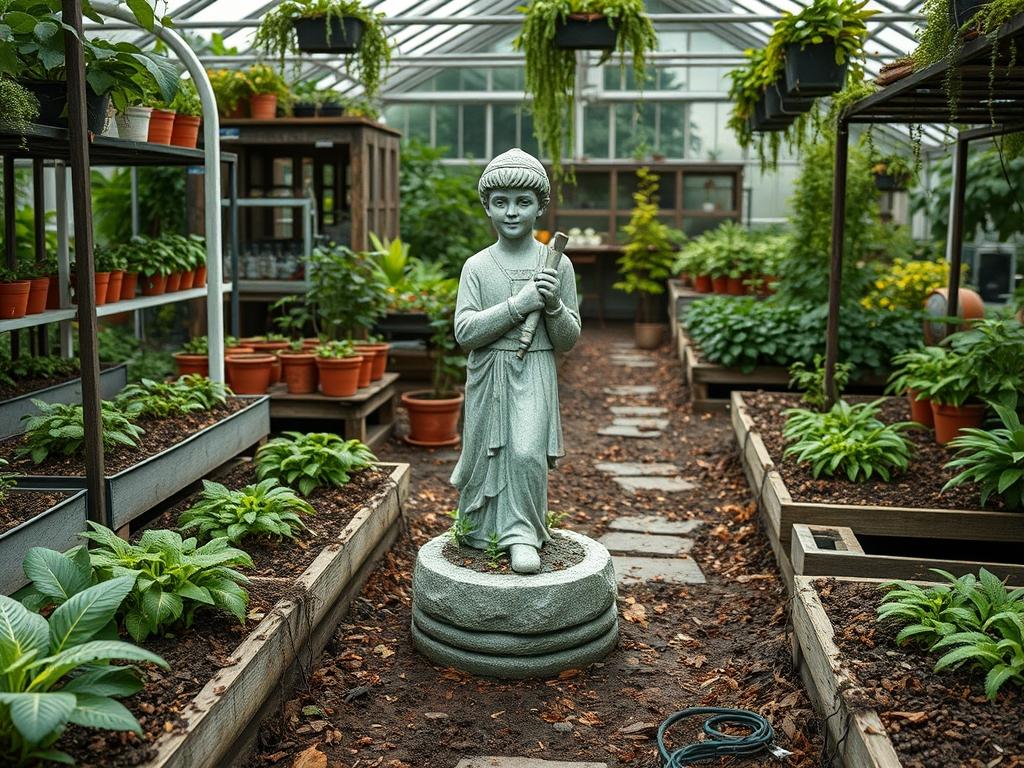
Integrating modern sculptural elements into a professional landscape requires more than an eye for aesthetics; it demands a comprehensive understanding of site-specific conditions, light cycles, and spatial hierarchy. When architects approach a property, the primary challenge often involves balancing the rigid structures of the home with the fluid, organic movement of the garden. A well-designed outdoor environment serves as an extension of the interior living space. It increases functional square footage while significantly boosting curb appeal. In high-end residential design, the selection of a Solar Garden Statue Top focal point has become a preferred method for adding nocturnal interest without the logistical complexity of hard-wired low-voltage lighting. Proper placement ensures that these pieces capture sufficient sunlight during the day to provide a soft, atmospheric glow at night, highlighting specific garden zones while avoiding the sterile appearance of industrial floodlights.
Climate consideration is another pillar of successful garden planning. A landscape that thrives in the temperate Pacific Northwest will fail in the arid Southwest if the designer ignores native ecology and local heat maps. Architects look at the microclimates within a single yard, identifying areas of wind exposure, frost pockets, and intense solar radiation. By selecting weather-resistant materials for both plantings and decorative elements, we ensure the longevity of the investment. Modern solar statues, for example, must feature high-grade resin or treated metal to withstand UV degradation and moisture ingress. Every element, from the drainage systems buried beneath the turf to the sculptural centerpieces above, must contribute to a cohesive and resilient ecosystem.
Landscape Design Principles
Effective landscape design is rooted in the principle of visual balance. This does not always mean formal symmetry, where one side mirrors the other precisely. Rather, it involves the careful distribution of visual weight. A heavy, dark evergreen on one side of a path can be balanced by a group of smaller, lighter-colored shrubs or a significant Solar Garden Statue Top pick on the opposite side. This creates a sense of equilibrium that feels natural to the eye.
Focal points are the anchors of any garden. Without them, the eye wanders aimlessly, and the space feels cluttered. Designers use these points to draw visitors through a space. You might place a high-quality solar figure at the terminus of a visual axis to encourage exploration. Elevation layers also play a critical role. By utilizing retaining walls and multi-tiered planting beds, we create a vertical dimension that makes small yards feel expansive. In these scenarios, lighting is essential. Positioning solar elements at different heights, perhaps one on a pedestal and another nestled within ground cover, adds a sense of depth and mystery to the evening landscape.
Walkway planning and irrigation are the hidden bones of the project. Paths should be wide enough for two people to walk comfortably, typically at least 48 inches in width. These paths should lead people toward the most intentional parts of the garden. Meanwhile, the irrigation system must be zoned based on the water needs of different plant groups. Grouping plants with similar hydro-requirements, a practice known as hydro-zoning, prevents overwatering of drought-tolerant species while ensuring thirsty plants receive adequate hydration.
Plant and Material Selection
The following table outlines high-performance selections for a modern, low-maintenance landscape that complements sculptural features.
| Plant Type | Sun Exposure | Soil Needs | Water Demand | Growth Speed | Maintenance Level |
| :— | :— | :— | :— | :— | :— |
| Blue Oat Grass | Full Sun | Well-drained | Low | Moderate | Low |
| Japanese Maple | Partial Shade | Acidic, Rich | Moderate | Slow | Medium |
| Boxwood ‘Winter Gem’ | Full/Part Sun | Loamy | Moderate | Moderate | High (Pruning) |
| Purple Coneflower | Full Sun | Poor to Average | Low | Fast | Low |
| Creeping Thyme | Full Sun | Sandy, Gritty | Low | Moderate | Very Low |
| Dwarf Fountain Grass | Full Sun | Adaptable | Low | Fast | Low |
Implementation Strategy
The transition from a blueprint to a physical garden requires a disciplined order of operations. First, grading must be addressed. Proper slope ensures that water moves away from the foundation of the home and toward designated drainage areas or dry creek beds. If the grade is incorrect, even the most expensive plantings will eventually rot or drown during heavy rain cycles. Once the land is shaped, hardscaping begins. This includes the installation of flagstone paths, paver patios, and any structural walls.
After the hardscape is set, the landscape edging should be installed. Metal or heavy-duty plastic edging creates a clean break between the lawn and the mulch beds, preventing grass from invading the ornamental areas. When planting, the hole should be twice as wide as the root ball but no deeper. This encourages outward root growth into the native soil. Once plants are in the ground, a layer of hardwood mulch or cedar bark, approximately 3 inches deep, should be applied. This suppresses weeds and retains moisture.
The final step is the placement of decorative accents and lighting. For a Solar Garden Statue Top installation, check the path of the sun throughout the day. The photovoltaic panel requires at least 6 to 8 hours of direct light to function at peak capacity. Avoid placing these statues under the dense canopy of a tree or in the shadow of the house. If the statue is purely decorative with a small solar component, it can be integrated into the mid-foreground of a perennial bed to provide a hidden surprise for evening guests.
Common Landscaping Failures
The most frequent mistake in amateur landscaping is poor drainage planning. Water is the most destructive force in a garden; it can erode slopes, kill expensive specimens, and cause stone work to shift. Failing to install a French drain or a catch basin in low-lying areas will lead to perpetual mud and plant loss. Another common error is root overcrowding. Many gardeners plant for what the nursery pot looks like today, ignoring the mature width of the species. Ten years later, a spruce tree might be crushing the siding of the house or lifting the sidewalk.
Soil compaction is a silent killer. During construction, heavy machinery often packs the earth so tightly that roots cannot penetrate and oxygen cannot reach the microbial life in the soil. Professional architects always recommend core aeration or the addition of organic compost to break up heavy clay before planting. Additionally, many homeowners fail to account for the maintenance of their solar lighting. Over time, dust and pollen accumulate on the solar cells, reducing efficiency. If the statue is not cleaned periodically, the light will dim and eventually fail to turn on.
Seasonal Maintenance
Landscape management is a year-round commitment. In the spring, the focus is on cleanup and preparation. This is the time to prune dead wood from deciduous shrubs, apply a pre-emergent herbicide to prevent weeds, and test the irrigation zones for leaks. As the weather warms into summer, the priority shifts to hydration and pest management. Mulch may need to be topped off to protect root systems from the heat.
Autumn is the ideal season for planting new trees and perennials, as the cooler air and warm soil encourage root development before the winter dormancy. It is also the time to bulb-plant for the following spring. Finally, during winter, the landscape needs protection. In regions with heavy snow, evergreens may need to be wrapped or shaken after storms to prevent branch breakage. Solar statues should be inspected during the winter months. If a statue is not rated for extreme freezing, it should be moved to a garage or basement. At the very least, wipe down the solar panel to remove salt or grime, ensuring that the limited winter sun can still charge the internal Lithium-ion battery.
Professional Landscaping FAQ
How do I choose the right size for a solar statue?
Follow the rule of thirds. A statue should take up no more than one third of the visual field in a specific garden bed. Scale the piece to the surrounding plants so it is not buried by tall foliage.
What is the best mulch for weed suppression?
Use a triple-mulched hardwood. Its fine texture interlocks to create a barrier that prevents sunlight from reaching weed seeds. It also decomposes into the soil more efficiently than larger decorative stones or wood chips.
How can I improve soil drainage in heavy clay?
Integrate expanded shale or high-quality organic compost into the top 12 inches of soil. For severe issues, install a sub-surface drainage pipe to divert water toward a lower point on the property or a municipal drain.
Do solar statues work in the shade?
Most require direct sunlight for the battery to charge fully. If your garden is shaded, look for statues with a remote solar panel connected by a wire, allowing the panel to sit in the sun while the statue remains shaded.
When is the best time to prune most shrubs?
Generally, prune late-winter or early-spring before new growth begins. However, for flowering shrubs like Lilacs or Forsythia, wait until immediately after they bloom to avoid cutting off next year’s flower buds during the dormant season.