
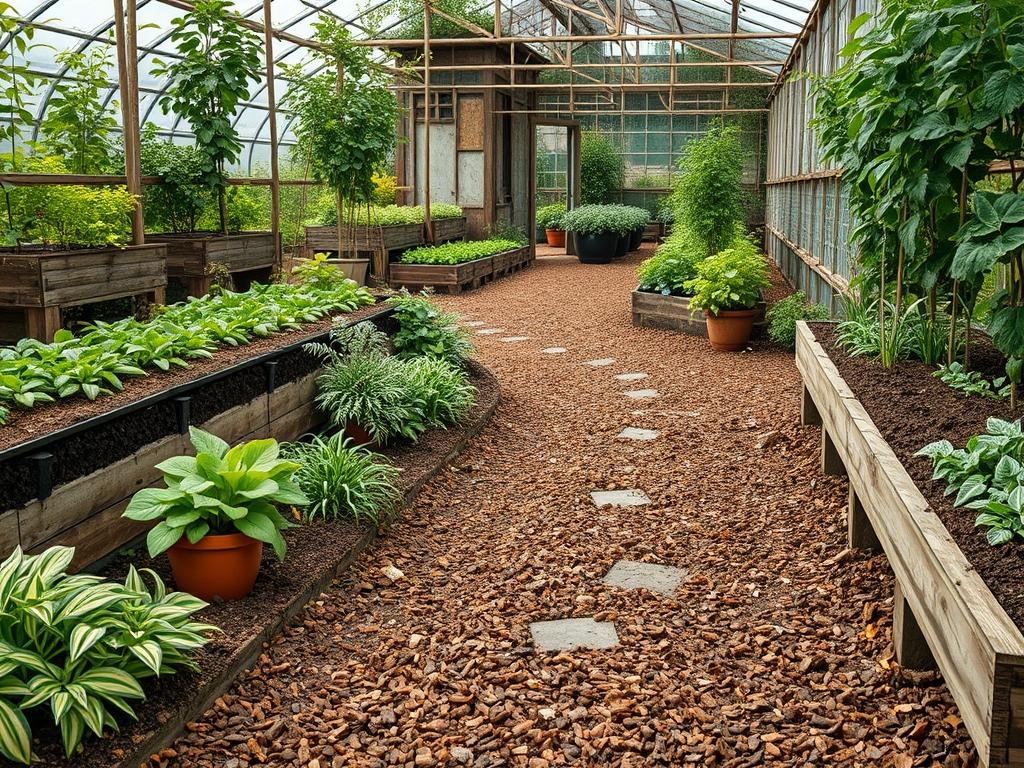
Designing a functional landscape requires a delicate balance between structural integrity and organic aesthetics. Homeowners often struggle with the transition between high traffic zones and the delicate ecosystem of a garden bed. While concrete and pavers offer permanence, they frequently suffer from drainage issues, high heat retention, and significant installation costs. Wood chip pathways emerge as an elegant, permeable alternative that addresses these environmental concerns while providing a soft, natural aesthetic that complements various architectural styles. From a professional perspective, the decision to use wood chips involves analyzing local precipitation patterns, soil acidity, and the intended frequency of foot traffic. These pathways are not merely aesthetic choices; they are active components of a site’s hydrologic cycle, allowing water to infiltrate the ground rather than contributing to urban runoff.
Integrating wood chip pathways into a master plan demands an understanding of how materials interact with the surrounding topography and climate. In arid regions, they act as a vital moisture barrier for the soil, whereas in humid climates, they require careful drainage planning to avoid fungal overgrowth. The primary appeal of this material lies in its cost effectiveness and ease of installation, but the long term maintenance must be factored into the project’s lifecycle. A well planned path serves as the circulatory system of the garden, guiding visitors through curated views and secluded resting spots. By selecting the right wood species and ensuring proper installation depth, a landscape architect can create a durable surface that ages gracefully, eventually breaking down to enrich the underlying soil structure.
Landscape Design Principles
Effective landscape design relies on the core principles of proportion, focal points, and transition. When planning wood chip pathways, symmetry often takes a back seat to the natural flow of the land. A curved path creates a sense of mystery, drawing the eye toward a distant Stone Bench or a specimen tree like a Japanese Maple. These pathways function as “negative space” that allows the “positive space” of the planting beds to stand out. Visual balance is achieved by matching the width of the path to the scale of the surrounding vegetation. A narrow 18-inch path feels intimate and forest-like, while a wide 4-foot walkway implies a formal thoroughfare suitable for a main garden entrance.
Elevation layers are equally critical. A flat garden can feel stagnant, so using wood chips to define terraced levels provides a sense of discovery. When paths intersect, creating a small “node” or a circular clearing can act as a natural staging area for a focal point. Irrigation planning must also be integrated early. If using a drip system, lines should be buried at least 2 inches beneath the soil surface before the wood chips are applied to prevent damage. Properly designed pathways also consider the transition between different materials. For example, using a Stone Threshold where a wood chip path meets a wooden deck helps prevent organic debris from being tracked into the home.
Plant and Material Selection
The success of a wood chip pathway depends heavily on the botanical palette surrounding it. Plants must be selected based on their ability to handle the slightly acidic environment created by decomposing wood. The following table highlights species that thrive in the microclimates often found alongside these organic corridors.
| Plant Type | Sun Exposure | Soil Needs | Water Demand | Growth Speed | Maintenance Level |
| :— | :— | :— | :— | :— | :— |
| Blue Star Creeper | Full to Partial Sun | Well-drained | Moderate | Fast | Low |
| Heuchera (Coral Bells) | Partial Shade | Rich, Organic | Moderate | Medium | Low |
| Sword Fern | Full Shade | Moist, Loamy | High | Medium | Very Low |
| Lavender (Munstead) | Full Sun | Sandy, Alkaline | Low | Medium | Moderate |
| Hostas | Shade | Moist, Humus-rich | Moderate | Fast | Low |
| Creeping Thyme | Full Sun | Well-drained, Poor | Low | Fast | Low |
For the pathway material itself, Cedar Chips are a premium choice due to their natural resistance to rot and insects. Pine Bark Nuggests offer a darker, more textured look but tend to float away during heavy rains. Arborist Wood Chips, often available for free from local tree services, provide the most diverse ecological benefit as they contain a mix of bark, wood, and leaves, though they lack the uniform appearance of bagged products.
Implementation Strategy
Building a durable wood chip pathway starts with precise grading. The area must be cleared of all existing turf and weeds using a Square-Point Shovel or a Power Sod Cutter. Once the soil is bare, it is essential to establish a slight crown in the center of the path or a gentle side slope to ensure that water does not pool during heavy storms. Compacting the subsoil with a Plate Compactor or a Hand Rammer prevents the path from developing deep ruts over time.
Edging is the most critical component for maintaining a clean aesthetic. Without a firm border, wood chips will inevitably migrate into the lawn or flower beds. Using Heavy-Duty Steel Edging, Pressure-Treated 2×4 Lumber, or Natural Fieldstone creates a physical barrier that keeps the material contained. Once the edging is secured with 12-inch Landscape Spikes, a layer of Commercial Grade Landscape Fabric Can be laid down to suppress weeds. However, many designers prefer a layer of Heavy Cardboard instead, as it is biodegradable and allows for better gas exchange with the soil. Finally, apply the wood chips to a depth of 3 to 4 inches. This depth is sufficient to suppress weed seeds while providing a comfortable walking surface.
Common Landscaping Failures
One of the most frequent mistakes in pathway installation is inadequate drainage. If a path is sited in a low-lying area without a proper French Drain or Gravel Sub-base, the wood chips will become a soggy, anaerobic mess that smells of methane and promotes fungal diseases. Another common error is “nitrogen robbery.” As wood chips decompose, the fungi responsible for the breakdown consume nitrogen from the soil. If the path is too close to new plantings without a buffer, the plants may turn yellow and experience stunted growth.
Root overcrowding is another concern. Homeowners often plant large shrubs or trees too close to the path edge, leading to surface roots that eventually heave the pathway material. Furthermore, improper spacing of edging stakes can cause the borders to bow out under the weight of the chips and foot traffic. Finally, many installers forget to account for the “settling” factor. A path that looks perfect on day one will likely lose 1 inch of height within the first six months due to natural compaction and decomposition, leading to an unfinished look if not initially overfilled.
Seasonal Maintenance
Landscape management is a year round commitment that changes with the seasons. In the Spring, the primary focus is on weed suppression. Even with a barrier, windblown seeds will germinate in the organic fines that accumulate in the chips. Hand-pulling these before they go to seed is vital. This is also the best time to check the integrity of your Path Edging and hammer down any spikes that have heaved during the winter frosts.
During the Summer, wood chips can become very dry and may require light misting if they are located near high-heat areas like stone walls. Check for “slime mold,” a harmless but unsightly orange or yellow growth that can appear during hot, humid spells; it can be easily raked away. In the Autumn, keep the path clear of fallen leaves. If leaves are allowed to mat down on top of the wood chips, they create a slippery surface and accelerate the decomposition of the path material.
Winter maintenance depends on the climate. In snowy regions, avoid using heavy salt on wood chip paths as it will leach into the soil and damage the surrounding plants. If the path becomes icy, use Coarse Sand for traction instead. By late winter, assess the overall depth of the material. A “top-dress” of 1 to 2 inches of fresh chips every two years is generally required to maintain the desired aesthetic and functional properties of the walkway.
Professional Landscaping FAQ
How long do wood chip pathways typically last before needing replacement?
Depending on the wood species and local climate, most pathways require a fresh top-dressing of chips every two to three years. Cedar and redwood last longer than pine or mixed arborist chips due to their natural rot resistance.
Are wood chips safe to use near the foundation of a house?
To prevent pests like termites or carpenter ants, maintain a 12-inch gap of bare soil or gravel between the wood chips and the house foundation. This ensures moisture does not sit against the sil plate or siding.
Can I use wood chips on a steep slope or incline?
Wood chips are prone to “washout” on slopes greater than ten percent. For steeper inclines, it is better to install Timber Steps filled with wood chips to terrace the grade and prevent the material from sliding downhill during rain.
Will wood chips change the pH level of my garden soil?
While decomposing wood can slightly lower the pH at the immediate soil surface, the effect is generally negligible for most established plants. However, acid-loving species like Azaleas and Blueberries will particularly benefit from the organic mulch environment.
What is the best way to prevent weeds from growing through the path?
The most effective method is a combination of a 3-inch material depth and a base layer of Heavy Cardboard. This duo blocks sunlight from reaching buried seeds while allowing the soil to breathe and moisture to reach tree roots.