
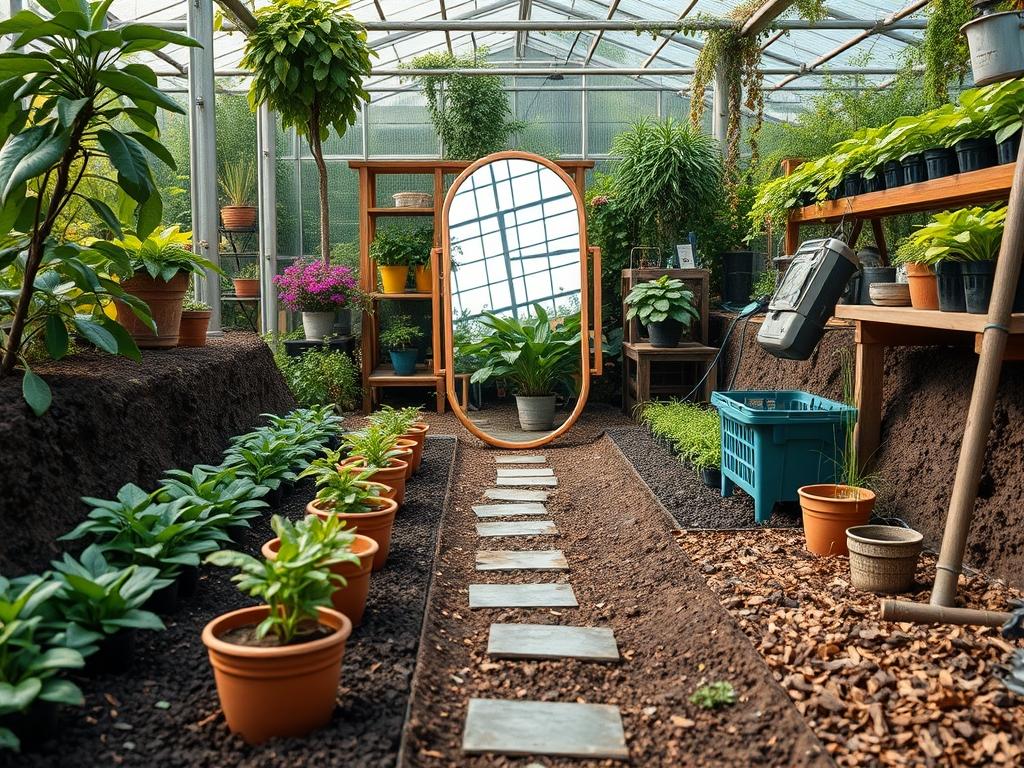
Small urban gardens often present a specific set of architectural challenges, primarily centered on the limitation of square footage and the restrictive nature of boundary walls. As a landscape architect, I treat these confined spaces not as obstacles but as opportunities for layered, immersive design where every square inch contributes to a cohesive narrative. One of the most effective tools in the professional designer’s arsenal for manipulating spatial perception is the strategic use of outdoor mirrors. When implemented with a technical understanding of light, reflection, and horticultural needs, an outdoor mirror transcends its status as a mere accessory and becomes a functional architectural element. This technique enhances curb appeal by creating an illusion of depth, effectively doubling the visual volume of a courtyard or side garden. However, successful integration requires more than just hanging a reflective surface; it demands a rigorous assessment of local climate conditions, sun angles to prevent leaf scorch, and the structural integrity of the mounting surface. Proper placement can transform a stagnant corner into a vibrant focal point, provided the designer accounts for drainage, irrigation spray patterns, and the long term growth habits of the surrounding vegetation.
Landscape Design Principles
The successful application of outdoor mirrors relies on foundational landscape design principles, specifically symmetry and the creation of a powerful focal point. In a small garden, a mirror should be treated as a window or a portal rather than a flat object. By placing a mirror at the terminus of a flagstone walkway, the designer creates a vanishing point that suggests the path continues into a hidden part of the garden. This manipulation of perspective requires the mirror to be slightly tilted forward at the top, usually by about 5 degrees, to reflect the lush groundcover and mid level plantings rather than the viewer or the sky. This technique ground the reflection and makes the extension of space feel more authentic.
Elevation layers are equally critical. A mirror should never stand alone; it must be integrated into the vertical layers of the garden. This involves using tiered retaining walls or raised planters to nestle the mirror into the environment. By surrounding the mirror frame with climbing plants or structural shrubs, you soften the edges and break up the harsh geometry of the glass. We often use the concept of hydro-zoning around mirrors. Because the glass can reflect heat, it is vital to plan irrigation that accounts for increased evaporation in the immediate vicinity. Furthermore, visual balance is achieved by ensuring the mirror reflects a curated “view” rather than a messy utility area or a plain brick wall. The goal is to capture movement, such as the swaying of ornamental grasses or the play of light on a water feature, to breathe life into the reflected image.
Plant and Material Selection
Selecting the right biological and structural components is essential to ensure the longevity of the installation and the aesthetic quality of the reflection.
| Plant Type | Sun Exposure | Soil Needs | Water Demand | Growth Speed | Maintenance Level |
| :— | :— | :— | :— | :— | :— |
| Boxwood (Buxus) | Full Sun to Shade | Well-drained, loamy | Moderate | Slow | High (Pruning) |
| Japanese Maple | Partial Shade | Acidic, moist | High | Slow to Moderate | Medium |
| Hostas | Full Shade | Rich, organic | Moderate to High | Moderate | Low |
| Star Jasmine | Full Sun to Part | Versatile | Moderate | Fast | Medium |
| Blue Fescue | Full Sun | Sandy, lean | Low | Moderate | Low |
| Creeping Jenny | Sun to Part Shade | Damp, boggy | High | Fast | Medium |
For the hardware, use only stainless steel or galvanized fasteners to prevent rust streaks from marring the mirror or the mounting wall. When selecting the mirror itself, acrylic mirrors are often preferred over glass for safety and weight considerations in high traffic areas, though high quality tempered glass provides superior clarity and scratch resistance. Frames should be constructed from rot resistant materials like Western Red Cedar or Powder-coated Aluminum.
Implementation Strategy
The implementation of an outdoor mirror begins with site preparation and structural analysis. First, assess the grading of the area. The ground at the base of the mirror must slope away from the structure at a minimum 2 percent grade to ensure that water does not pool at the foundation of the mounting surface. If the mirror is to be mounted on a fence, verify that the posts are set in concrete footings to a depth of at least 24 inches to handle the additional wind load.
Once the site is graded, install a weed barrier and a base layer of crushed stone or river rock around the base to prevent soil splash during heavy rains, which keeps the mirror cleaner for longer intervals. For the mounting process, use a commercial grade exterior adhesive in conjunction with mechanical fasteners. If the mirror is large, incorporate a Z-clip system for a secure, flush mount on masonry walls. After the mirror is secured, the edging process begins. Use steel edging or poured concrete curbing to define the transition between the mirror base and the adjacent planting beds. Apply a 3 inch layer of organic mulch or hardwood chips to the surrounding beds to retain moisture and regulate soil temperature, being careful not to pile mulch against the frame of the mirror, which can encourage rot.
Common Landscaping Failures
One of the most frequent failures in outdoor mirror placement is the “death ray” effect, where a concave or poorly angled mirror concentrates sunlight and burns sensitive foliage or even melts plastic siding. Always test the reflection at peak sun hours before finalizing the installation. Another common error is failing to account for drainage. If a mirror is flush with the ground, it can act as a dam, trapping water and leading to soil compaction and root rot for nearby plants.
Root overcrowding is another significant issue. Designers often plant too closely to the mirror to achieve an immediate “hidden” look, but as the root balls of species like Cherry Laurels or Privets expand, they can put pressure on the mounting surface or lift the mirror’s frame. Improper spacing also leads to poor air circulation, which invites powdery mildew and other fungal diseases, especially in the humid microclimate created between the foliage and the glass. Lastly, irrigation inefficiencies often plague these setups. If popup sprinler heads are aimed directly at the mirror, mineral deposits will quickly build up on the surface, requiring constant cleaning and potentially etching the glass over time. Use drip irrigation tubing buried beneath the mulch to deliver water directly to the roots without affecting the mirror’s clarity.
Seasonal Maintenance
Landscape management is a year round commitment, and mirrors require specific care to remain effective. In the Spring, inspect all mounting hardware and seals. The freeze/thaw cycle of winter can loosen screws or crack waterproof caulking. This is also the time to prune back aggressive early growers like Clematis that may be obstructing too much of the reflective surface.
During the Summer, focus on cleaning and hydration. Use a solution of vinegar and water to remove any hard water spots or pollen. Check the soil moisture levels frequently, as the mirror can increase the local ambient temperature through reflected light. In Autumn, debris management is the priority. Falling leaves and twigs can get trapped behind the mirror frame, creating a damp environment for pests and rot. Clear these out using a leaf blower or a long brush.
Finally, in Winter, if you live in a climate with heavy snow, ensure that snow banks are not piled against the mirror. The weight and moisture of the snow can warp frames or damage the silvering on the back of the glass. For acrylic mirrors, avoid using ice scrapers as they will permanently scratch the surface. Instead, use lukewarm water to gently melt away frost if necessary.
Professional Landscaping FAQ
What is the best height to hang an outdoor mirror?
For the most natural look, place the bottom of the mirror at the soil line or slightly below it behind a low hedge. If mounting on a wall, eye level is standard, provided it reflects greenery rather than the sky.
Can outdoor mirrors be a hazard to local birds?
Yes, birds may fly into reflections. To prevent this, use mirrors with a decorative grid or “window pane” design. This breaks up the reflection and alerts birds that the surface is a solid barrier rather than an open path.
How do I stop my outdoor mirror from fogging up?
While you cannot entirely stop condensation, applying a commercial anti fog spray used for car windshields can help. Ensuring there is at least an inch of air gap behind the mirror also facilitates airflow and reduces moisture buildup.
Is it better to use glass or acrylic for garden mirrors?
Acrylic is safer, lighter, and easier to cut into custom shapes, making it ideal for DIY projects. However, glass provides a much clearer, undistorted reflection and is far more resistant to scratching over several years of cleaning.
Will a mirror in the sun set fire to my mulch?
Flat mirrors reflect light but do not concentrate it like a magnifying glass. While it is highly unlikely to start a fire, the reflected heat can certainly dry out mulch and stress plants. Always use a flat, high quality surface.