
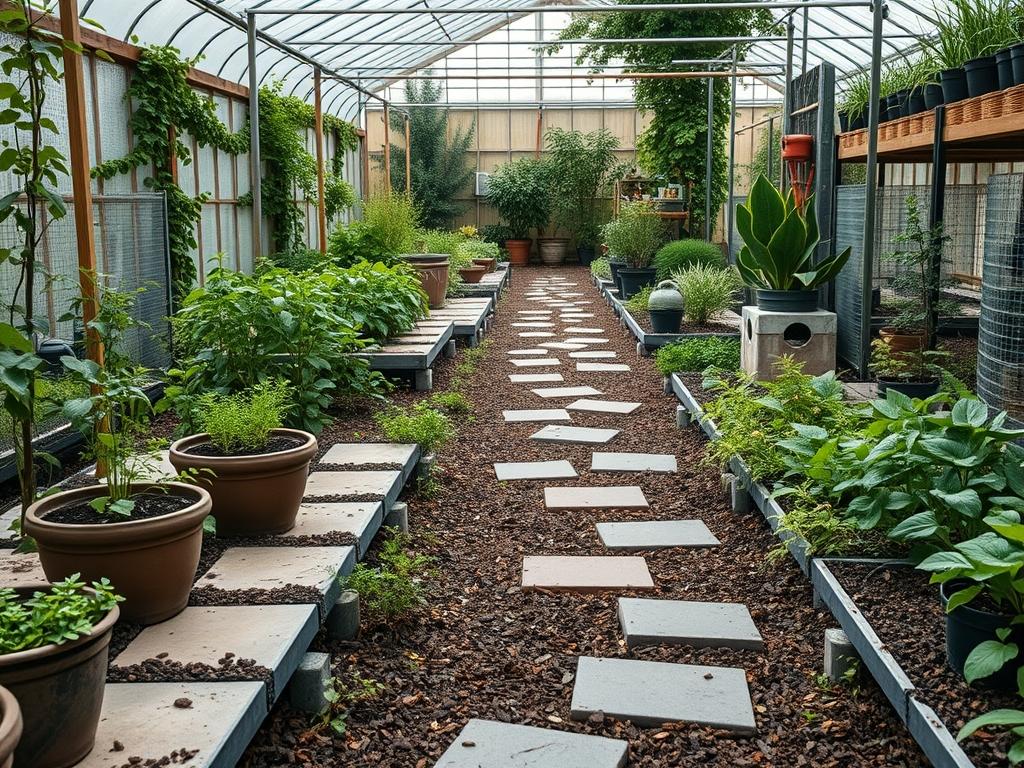
Designing a landscape is an exercise in managing the intersection between organic chaos and structural intent. Modern pathway pavers serve as the skeletal framework for this interaction, providing more than just a surface for foot traffic; they define transitions, manage site runoff, and establish a property’s visual rhythm. When owners consider an upgrade, they often focus solely on the color or texture of the stone. However, a successful installation requires a holistic understanding of soil mechanics, climate-specific drainage, and the long term growth patterns of surrounding vegetation. The installation of Modern Pathway Pavers is a high impact investment that influences both the property value and the daily functional experience of the home. In temperate regions, these paths must withstand freeze-thaw cycles that threaten to heave foundations. In more arid climates, they provide essential dust control and fire breaks. By approaching a walkway as a piece of engineered infrastructure rather than a simple aesthetic choice, the landscape architect ensures that the result is both durable and beautiful.
Landscape Design Principles
The placement of a walkway should never feel accidental. It begins with an analysis of site circulation, which is the study of how people naturally move through a space. In modern design, we often choose between formal symmetry and asymmetrical balance. Symmetrical paths, characterized by straight lines and mirrored plantings, evoke a sense of grandeur and order. These are typically used to lead the eye directly to a focal point, such as a large Arborvitae or a piece of outdoor sculpture. Conversely, asymmetrical paths use staggered Modern Pathway Pavers and varying elevation layers to create a sense of discovery. This approach allows the landscape to unfold slowly as the visitor moves through the space.
Elevation layers are critical for a professional finish. A flat yard can feel monotonous, so we use Retaining Walls and slight grade changes to add depth. If the path leads down a slope, we integrate shallow steps or landings to prevent the walkway from becoming a slide during rainstorms. We also consider the 60, 30, 10 rule for visual balance. In a landscape context, 60 percent of the space is dominated by the primary ground cover or turf, 30 percent by the hardscaping such as Modern Pathway Pavers, and 10 percent by high impact floral or structural accents. This ratio prevents the hardscape from overwhelming the natural environment while ensuring the path remains a distinct feature. Furthermore, irrigation planning must happen concurrently with the design phase. We must map out where PVC Sleeving will go under the path to ensure that future irrigation repairs do not require tearing up the newly laid stones.
Plant and Material Selection
Selecting the right materials involves balancing the geology of the site with the desired aesthetic. For a modern look, large format pavers with clean edges are preferred over tumbled or irregular stones. The goal is to create a crisp line that contrasts with the soft textures of the surrounding foliage.
| Plant Type | Sun Exposure | Soil Needs | Water Demand | Growth Speed | Maintenance Level |
| :— | :— | :— | :— | :— | :— |
| Japanese Forest Grass | Partial Shade | Humus-rich | Medium-High | Slow | Low |
| Blue Star Creeper | Full Sun/Part Shade | Well-drained | Medium | Fast | Moderate |
| Dwarf Mondo Grass | Part Sun to Shade | Adaptable | Moderate | Very Slow | Low |
| Creeping Thyme | Full Sun | Gritty, Poor | Low | Moderate | Low |
| Mexican Feather Grass | Full Sun | Well-drained | Low | Moderate | Moderate |
| Blue Fescue | Full Sun | Sandy, Dry | Low | Moderate | Low |
| Sedum ‘Angelina’ | Full Sun | Well-drained | Low | Fast | Very Low |
Implementation Strategy
The longevity of Modern Pathway Pavers depends entirely on the preparation of the sub-base. The process begins with excavation. For a standard pedestrian walkway, we excavate to a depth of 8 inches. This allows for 4 inches of compacted Crushed Stone, followed by 1 inch of Leveling Sand, and finally the thickness of the paver itself. Before any stone is dropped, the sub-grade should be compacted with a Plate Compactor to ensure there is no loose soil that might settle later.
Once the sub-grade is firm, we install a layer of Geotextile Fabric. This fabric acts as a stabilization barrier, preventing the heavy gravel from sinking into the soft clay or soil below while still allowing water to permeate. After the Crushed Stone base is installed and compacted in 2 inch lifts, we set our String Lines to establish the final grade and pitch. A path should always pitch away from the home at a rate of 1/4 inch per foot to ensure proper drainage.
The next step is screeding the Leveling Sand. We use two 1 inch pipes as guides and pull a straight board across them to create a perfectly flat bedding layer. When laying the Modern Pathway Pavers, it is vital to drop them straight down onto the sand rather than sliding them, which would disturb the level surface. Once the stones are set, we use Plastic Edging Restraints secured with 10 inch Steel Spikes to lock the path in place and prevent lateral shifting. Finally, we sweep Polymeric Sand into the joints and activate it with a light mist of water. This specialized sand hardens into a flexible bond that resists weed growth and ant infestations.
Common Landscaping Failures
The most frequent mistake in path installation is inadequate compaction. Shoveling dirt back into a hole and walking on it is not compaction. Without a mechanical Plate Compactor, the pavers will eventually dip and create trip hazards. Another common failure is the “bathtub effect,” where a path is installed lower than the surrounding soil without a drainage exit. In heavy rain, the water collects under the pavers, saturating the base and causing the stones to shift or “pump” when stepped on.
Root overcrowding is another issue that can destroy expensive hardscaping. Planting a tree like a Silver Maple or a Willow too close to a walkway will inevitably lead to the roots lifting the Modern Pathway Pavers. We recommend a minimum clearance of 10 feet for large canopy trees. Soil compaction from construction equipment also kills the microbial life in the soil, leading to poor plant health around the new path. We always use a Core Aerator on the surrounding turf once the heavy work is completed to restore air and water flow to the root zones.
Seasonal Maintenance
Landscape management is a year round commitment that changes with the weather. In the spring, the focus is on inspection and cleaning. Check the joints of the Modern Pathway Pavers for any loss of sand and replenish as needed to maintain structural integrity. This is also the time to apply a pre-emergent herbicide to the surrounding garden beds to prevent weed seeds from germinating in the mulch.
During the summer, the primary task is irrigation management. Ensure that sprinkler heads are not spraying directly onto the pavers for extended periods, as the mineral deposits in the water can cause efflorescence, which is a white, powdery salt deposit on the stone surface. Prune back any Boxwoods or grasses that have begun to encroach on the walking surface to maintain the clean lines of the design.
Autumn requires diligent leaf removal. Decomposing organic matter releases tannins that can permanently stain lighter colored stones. Using a high powered leaf blower is the most efficient way to keep the path clear. Finally, in the winter, avoid using rock salt for de-icing. Sodium chloride is corrosive to concrete and natural stone. Instead, use calcium chloride or simple sand for traction to preserve the finish of your Modern Pathway Pavers.
Professional Landscaping FAQ
How deep should the base be for a pedestrian walkway?
For residential foot traffic, a minimum of 4 to 6 inches of compacted Crushed Stone is required. This provides the necessary structural support and allows for proper vertical drainage beneath the pavers, preventing shifting during heavy rains or winter thaws.
Why is polymeric sand better than regular sand?
Polymeric Sand contains chemical binders that harden when wetted. This prevents the sand from washing away during storms, inhibits weed growth between the stones, and stops ants from excavating the bedding layer, ensuring that the Modern Pathway Pavers remain stable.
Can I install pavers directly on top of old concrete?
While possible, it is not recommended without proper drainage considerations. If you lay pavers over concrete, you must use a specialized thin-set or a perforated drainage mat to prevent water from being trapped between the two layers, which causes stone degradation.
How do I prevent my path from sinking over time?
Sinking is almost always caused by poor sub-grade compaction or a lack of Geotextile Fabric. By firming the native soil with a Plate Compactor and using fabric to separate the soil from the gravel, you create a permanent, stable foundation.
What is the best way to clean modern pavers?
Use a pH-neutral stone cleaner and a medium-bristle brush. Avoid high pressure power washing directly into the joints, as this can dislodge the sand. For stubborn organic stains, a mixture of water and mild dish soap is usually sufficient for most materials.