
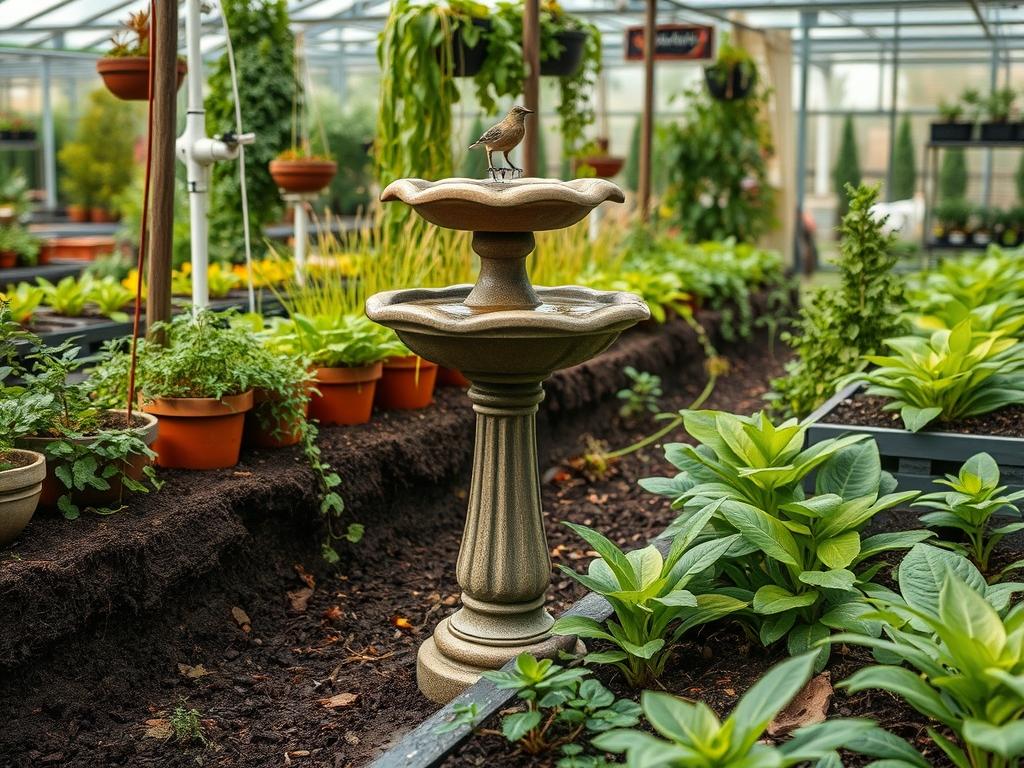
Successful bird bath landscaping requires a sophisticated understanding of spatial dynamics, avian biology, and material durability. For the professional landscape architect, integrating a water feature into a residential or commercial site is not merely about aesthetic placement; it is an exercise in micro-climate management and ecological stewardship. A well-positioned bird bath serves as an anchor for the outdoor living environment, drawing the eye toward a central focal point while enhancing the overall curb appeal of the property. However, the challenge lies in balancing the functionality of the water source with the surrounding vegetation and hardscape. Designers must account for regional weather patterns, ensuring that the installation remains stable through seasonal freeze-thaw cycles or periods of intense summer evaporation. By treating the bird bath as a primary element within the site plan, you can transform a simple garden corner into a vibrant, multi-layered habitat that increases property value and supports local biodiversity.
Landscape Design Principles
Effective bird bath landscaping begins with the principle of visual hierarchy. A water feature should act as a primary focal point, yet it must feel nested within the larger landscape rather than isolated. To achieve this, architects often employ the rule of thirds, placing the bath at a natural intersection of sightlines from the main patio or interior viewing windows. Elevation layers are equally critical. Professionals use a tiered approach, surrounding the basin with low-height groundcovers, mid-sized perennial grasses, and taller shrubs. This graduated height profile provides birds with a safe approach path, allowing them to survey the area for predators from a high branch before descending to the water.
Symmetry contributes to a formal aesthetic, often achieved by flanking the pedestal with identical plantings or geometric Boxwood hedges. Conversely, an asymmetrical layout utilizes River Rock and irregular groupings of Native Grasses to mimic a natural riparian corridor. Irrigation planning is another vital consideration. To minimize manual labor, designers can integrate a low-flow dripline that refills the basin on a timer, ensuring the water level remains consistent without creating runoff. Furthermore, the inclusion of a dedicated walkway, constructed from Flagstone or Decomposed Granite, allows the homeowner to access the feature for cleaning without compacting the surrounding soil or damaging delicate root systems.
Plant and Material Selection
The following table identifies high-performance plant species and materials suitable for a professional-grade bird bath installation.
| Plant Type | Sun Exposure | Soil Needs | Water Demand | Growth Speed | Maintenance Level |
| :— | :— | :— | :— | :— | :— |
| Purple Coneflower | Full Sun | Well-drained | Low | Medium | Low |
| Switchgrass | Full to Part Sun | Versatile | Low | Fast | Low |
| Serviceberry | Full to Part Sun | Acidic/Moist | Medium | Medium | Medium |
| Creeping Thyme | Full Sun | Sandy/Dry | Low | Medium | Low |
| American Beautyberry | Part Shade | Rich/Loamy | Medium | Fast | Medium |
| Blue Oat Grass | Full Sun | Well-drained | Low | Medium | Low |
| Dwarf Yaupon Holly | Full to Part Sun | Adaptive | Medium | Slow | Low |
Implementation Strategy
The transition from a design concept to a physical installation requires a disciplined implementation strategy. Begin with a thorough site analysis, checking for underground utility lines and assessing the natural Grading of the terrain. The installation area must be perfectly Level to prevent water from spilling over one side of the basin, which can lead to localized soil erosion. Start by excavating the footprint of the bird bath base to a depth of 4 inches. Fill this void with a Crushed Stone sub-base and use a Hand Tamper to compress the material. This creates a stable foundation that resists shifting during heavy rains or soil expansion.
Once the base is set, install a Weed Barrier fabric and secure it with Landscape Staples. If your design includes a heavy stone basin, ensure the pedestal is centered and plumb. For the surrounding landscape, apply a 3 inch layer of Organic Cedar Mulch or Hardwood Bark. This mulch depth is optimal for suppressing weeds and retaining moisture for the nearby plants. When planting the perimeter, ensure that the Root Ball of each specimen is level with the soil surface. Space the plants according to their mature width to avoid future overcrowding. Finally, incorporate Edging materials, such as Steel Edging or Paver Borders, to define the bed and prevent turf grass from encroaching into the bird bath area.
Common Landscaping Failures
One of the most frequent errors in bird bath landscaping is improper site selection relative to deciduous trees. Placing a basin directly under a canopy of large oaks or maples results in a constant influx of leaf litter and sap, which fouls the water and promotes bacterial growth. Another common failure is poor Drainage. If the soil around the base of the bird bath is heavy clay, splashing water will create a mud pit that attracts insects and damages the health of surrounding plants. To mitigate this, professionals often install a French Drain or a small Gravel Pit beneath the feature to disperse excess moisture into the subsoil.
Overcrowding is another pitfall that affects both aesthetics and functionality. Planting large shrubs too close to the basin restricts the flight path of birds, making them feel vulnerable to ambush from cats or other predators. Furthermore, many enthusiasts overlook the issue of soil compaction. During the construction phase, heavy foot traffic can crush the soil structure, leading to reduced oxygen levels for roots and poor Irrigation efficiency. Use Plywood Sheets to distribute weight when moving heavy materials across the lawn to protect the integrity of the landscape.
Seasonal Maintenance
To maintain a professional-grade landscape, a seasonal schedule is mandatory. In the Spring, perform a deep clean of the basin using a solution of nine parts water to one part vinegar. Inspect the Hardscape for any signs of winter shifting and re-level the pedestal if necessary. This is also the time to apply a slow-release Fertilizer to the surrounding perennials and refresh the Mulch to a consistent 3 inch depth.
During the Summer, the focus shifts to evaporation management and algae control. Scrub the basin weekly with a Stiff-Bristle Brush to prevent biofilm buildup. If the region experiences high temperatures, verify that the Irrigation system is delivering adequate water to the root zones of the “buffer” plants surrounding the bath. Autumn requires the removal of fallen leaves and the pruning of dead flower heads. In colder climates, Winter maintenance involves either draining the bird bath to prevent cracking from ice expansion or installing a Submersible De-icer. If the basin is made of porous material like Terra Cotta, it should be moved into a garage or shed to avoid structural failure during deep freezes.
Professional Landscaping FAQ
What is the best material for a permanent bird bath?
Cast Stone and Reinforced Concrete are superior for permanent installations. These materials provide the weight necessary for stability and the durability to survive extreme weather. Avoid plastic or thin resin for high-end professional projects due to UV degradation.
How deep should the water be for local songbirds?
Most songbirds prefer a depth of 1 to 2 inches. If your basin is deeper, add a layer of Flat River Rocks to the bottom. This allows birds to stand comfortably while bathing and prevents the risk of drowning.
Can I use a solar pump in bird bath landscaping?
Yes, moving water is highly effective at attracting birds and preventing mosquito breeding. Ensure the Solar Panel is placed in a spot receiving at least 6 hours of direct sunlight daily to maintain consistent pump operation throughout the afternoon.
Where should I place the bird bath for maximum safety?
Position the bath approximately 10 feet away from dense shrubbery. This distance is close enough for birds to seek cover quickly if a predator appears, but far enough to prevent cats from hiding in the foliage and pouncing on the birds.
How do I prevent the soil around the bath from becoming a mess?
Install a Splash Zone using Pea Gravel or River Pebbles around the base. This allows water to drain quickly into the ground without creating mud, keeping the surrounding Walkway and Mulch clean and professional in appearance.