
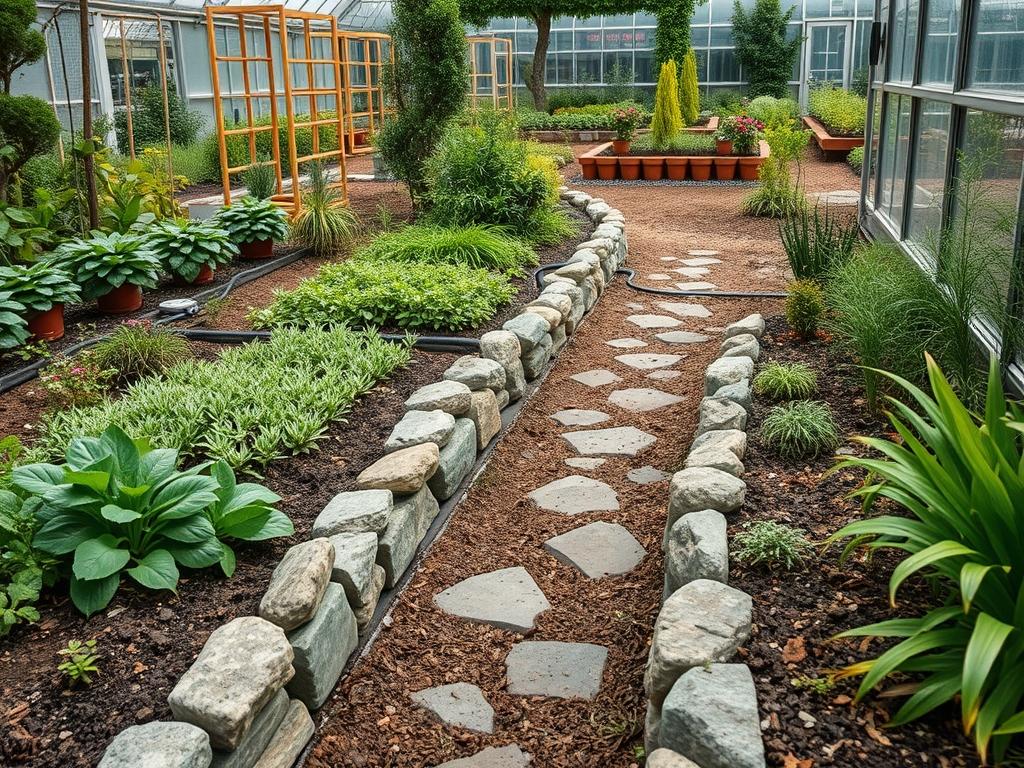
The boundary between a manicured lawn and a thriving garden bed represents more than just a physical separation; it defines the architectural integrity of the entire property. In professional landscape architecture, we often view the perimeter of a planting zone as the frame of a painting. While temporary solutions like plastic edging are common in entry level DIY projects, they frequently fail to meet the rigorous demands of fluctuating climates and long term aesthetic goals. Natural Stone Curbing stands as the superior alternative, offering a permanent, structural solution that resists the degradation caused by ultraviolet exposure and seasonal freeze-thaw cycles. When a homeowner invests in high quality masonry or quarried stone, they are not just installing a border; they are enhancing the land’s value through geological permanence.
Plastic edging materials suffer from a fundamental flaw in their physical composition. Over time, the polyethylene or composite materials become brittle under the sun’s rays. In regions where the ground freezes, the expansion of soil moisture pushes these lightweight strips upward, a phenomenon known as frost heave. This results in unsightly, wavy lines that interfere with lawn mowers and allow turf grass to invade delicate floral displays. Conversely, Natural Stone Curbing, whether composed of Granite, Limestone, or Sandstone, possesses the density and mass required to stay seated deep within the soil profile. Because stone is a porous, heavy, and natural material, it integrates with the environment rather than fighting against it.
Landscape Design Principles
Effective landscape design relies on the core concepts of symmetry, focal points, and elevation layers. When we plan a site, we look at how the eye moves across the horizon. Plastic edging creates a flat, two dimensional appearance that lacks shadow lines or depth. Natural Stone Curbing introduces a third dimension. A 4 inch or 6 inch stone block provides a vertical rise that creates crisp shadow lines, making the turf appear greener and the mulch beds more organized. This visual weight is essential for establishing balance, especially when the home features heavy architectural elements like brick siding or large windows.
Symmetry does not always imply a mirror image, but it does require a sense of equilibrium. Using stone allows a designer to match the curbing to the home’s foundation or chimney, creating a cohesive color palette. Furthermore, the use of elevation layers is significantly easier when working with stone. You can transition from a flat lawn to a slightly raised garden bed by stacking Fieldstone or Belgian Blocks, a feat that is impossible with thin plastic strips. This elevation helps with irrigation planning by preventing runoff from washing away expensive nutrients and Hardwood Mulch. It also allows for the strategic placement of focal points, such as a large Japanese Maple or a decorative fountain, which require a sturdy, well defined base to anchor their presence in the outdoor living space.
Plant and Material Selection
Selecting the right flora is just as critical as the hardscape itself. The plants must thrive within the microclimate created by the stone borders. Stone absorbs heat during the day and releases it slowly at night, which can provide a slight thermal advantage for certain species during early spring.
| Plant Type | Sun Exposure | Soil Needs | Water Demand | Growth Speed | Maintenance Level |
| :— | :— | :— | :— | :— | :— |
| Boxwood | Full Sun to Part Shade | Well-drained Loam | Moderate | Slow | Low |
| Lavender | Full Sun | Sandy/Gravelly | Low | Medium | Medium |
| Hostas | Full Shade to Part Shade | Rich/Humus | Moderate to High | Medium | Low |
| Salvia | Full Sun | Well-drained | Low | Fast | Low |
| Japanese Forest Grass | Part Shade to Full Shade | Moist/Well-drained | Moderate | Slow | Low |
| Sedum | Full Sun | Poor to Average | Very Low | Fast | Very Low |
| Hydrangea | Part Sun | Moist/Organically Rich | High | Medium | Medium |
Implementation Strategy
The process of installing a garden layout begins with a comprehensive site analysis. Before any stone is moved, the area must be marked using a String Line or Marking Paint to ensure fluid, organic curves or precise geometric angles. Grading is the next vital step. The ground must be sloped away from the home’s foundation at a rate of at least 2 percent to prevent water pooling. Once the layout is confirmed, a trench should be excavated. For Natural Stone Curbing, the trench depth usually ranges from 4 to 8 inches, depending on the height of the stone and the desired reveal.
After the trench is dug, a base of Crushed Stone or Polymeric Sand should be compacted using a Hand Tamper or a Plate Compactor. This base provides a stable foundation that allows for drainage and prevents the stone from sinking over time. As each piece of Granite or Limestone is set, a Rubber Mallet and a Level are used to ensure the top surface is consistent. Unlike plastic, which is simply spiked into the dirt, stone curbing is a masonry project. Once the stones are in place, a layer of Filter Fabric can be applied behind the stones to prevent soil migration. Finally, we apply a depth of 3 inches of Double-shredded Bark Mulch to retain moisture and suppress weeds.
Common Landscaping Failures
The most frequent failure in residential landscapes is the neglect of drainage. Many homeowners install edging without considering where the water will go during a heavy rainstorm. Plastic edging often acts as a dam, trapping water within the garden bed and rotting the roots of sensitive species like Azaleas or Roses. Natural Stone Curbing, when installed with small gaps or over a gravel bed, allows for subtle percolation. Another common mistake is root overcrowding. Without a firm border, the root systems of turf grass can easily dive under plastic edging and emerge in the middle of a flower bed, leading to a constant battle with weeding.
Soil compaction is another silent killer of backyard beauty. During the installation of cheap edging, there is often a lack of soil preparation. Professional stone installation involves tilling the soil and adding organic matter, which prevents the earth from becoming a hard, impenetrable brick. Finally, irrigation inefficiencies occur when edging is not aligned with the spray patterns of the Sprinkler Heads. Stone provides a clear, unyielding line that allows for the perfect calibration of irrigation systems, ensuring that water reaches the plants and not the sidewalk.
Seasonal Maintenance
A landscape is a living organism that changes with the seasons, and your maintenance routine should reflect that. In the spring, the primary focus is on inspecting the Natural Stone Curbing for any movement caused by winter frost. This is also the time to apply a pre-emergent herbicide and refresh the Mulch to a depth of 2 to 3 inches. Proper spring pruning of Boxwoods and Ornamental Grasses ensures vigorous growth as the temperatures rise.
Summer maintenance revolves around water management. During high heat, the stone edges may become hot to the touch, so ensuring that the soil moisture levels are consistent is vital. Monitor your Irrigation Controller to adjust for rainfall. In the autumn, the focus shifts to leaf management. Stone borders make it much easier to use a Leaf Blower or rake without dislodging the edging, a common frustration with plastic. Finally, in winter, the durability of stone shines. While plastic can crack in sub-zero temperatures, Natural Stone Curbing remains unaffected. Avoid using harsh de-icing salts directly on stones like Limestone, as the chemicals can cause pitting over several decades.
Professional Landscaping FAQ
Why should I choose stone over plastic for a curved garden path?
Natural Stone Curbing provides a permanent weight that anchors the curve. Plastic often kinks or creates unnatural angles, whereas stone can be chiseled or selected to follow organic lines perfectly while resisting the pressure of shifting soil and heavy foot traffic.
Does natural stone require a concrete footing?
While a full concrete footing is not always necessary, a compacted base of Crushed Stone or Screenings is essential. This prevents shifting and ensures drainage. For high traffic areas or retaining edges, a lean concrete mix provides additional stability.
How does stone curbing affect my lawn mower blades?
When installed at the correct height, stone curbing acts as a “mowing strip.” You can run the wheels of your Lawn Mower directly on the stone, allowing for a clean cut without the need for a secondary string trimmer.
What is the best way to clean natural stone borders?
A simple Pressure Washer on a low setting or a stiff brush with mild soap and water is usually sufficient. Avoid using acidic cleaners on Limestone or Travertine, as they can etch the surface and damage the stone’s natural finish.
Is natural stone significantly more expensive than plastic?
The initial material cost is higher, but the lifecycle cost is much lower. Plastic requires replacement every 3 to 5 years due to UV damage and breakage. Natural Stone Curbing lasts for decades, adding permanent appraised value to your home.