
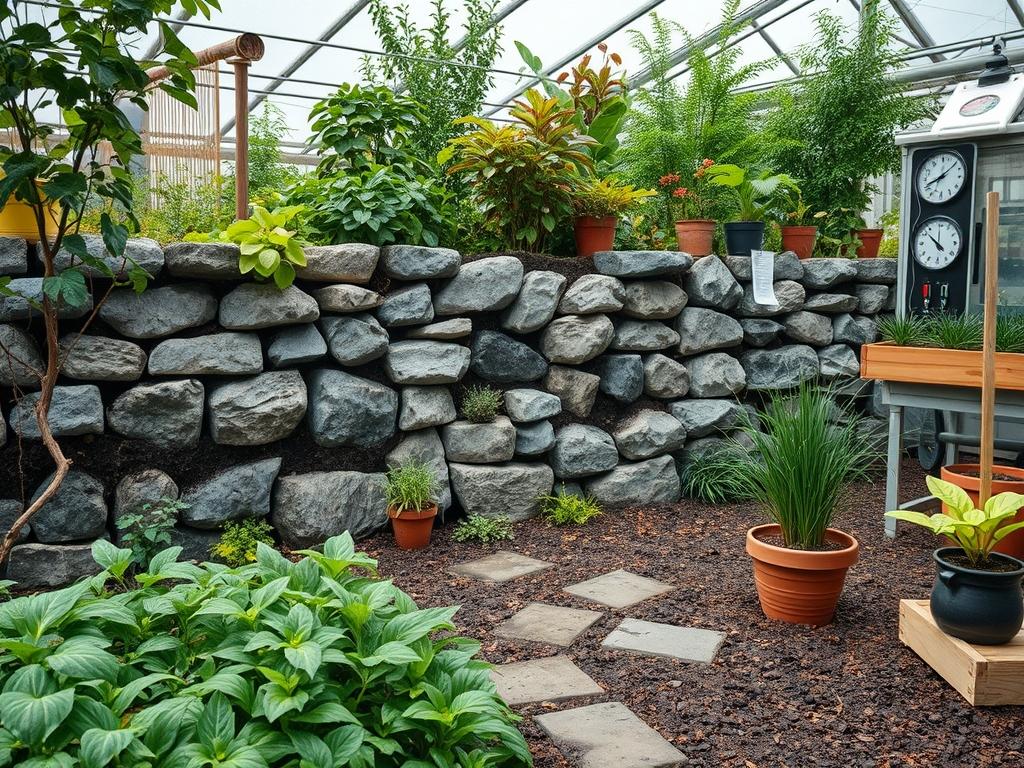
The modern residential landscape is no longer just a patch of mown grass and a few perimeter shrubs. It has transitioned into a sophisticated extension of the home interior, requiring the same level of architectural intentionality and structural permanence. When a homeowner seeks to define their sanctuary, the selection of Backyard Privacy Wall Stones becomes the most critical decision in the design process. These materials do more than simply mark a property line; they serve as acoustic barriers, windbreaks, and the primary visual backdrop for every other element in the garden. Choosing the correct stone involves balancing the geology of the site with the desired aesthetic, whether that is the clean, geometric lines of a contemporary estate or the rugged, organic feel of a rustic retreat.
Achieving true privacy requires a deep understanding of vertical scale and sightlines. A common mistake in suburban planning is the reliance on thin wooden fencing that eventually warps or rots. In contrast, masonry and natural stone provide a permanent sense of enclosure that increases property value and improves curb appeal significantly. Before the first stone is laid, a designer must consider the local climate, particularly the freeze and thaw cycles that can shift a poorly anchored wall. The goal is to create an outdoor environment that feels secluded and intentional, turning a generic backyard into a private gallery of texture and form.
Landscape Design Principles
Successful stone wall projects begin with the principle of visual balance. A massive stone wall can feel oppressive if it is not softened by elevation layers and varied textures. To prevent a “prison wall” effect, designers often use tiered elevations, where a shorter wall sits in front of a taller one with a planting pocket in between. This breaks up the vertical mass and allows for the integration of softscape elements. Symmetry plays a role in formal designs, where twin pillars might flank a wrought iron gate, but asymmetrical layouts often feel more natural in modern residential settings.
Focal points are essential to draw the eye away from the boundary and toward the living space. By integrating a water feature or a custom outdoor fireplace directly into the Backyard Privacy Wall Stones, the wall ceases to be a barrier and becomes a destination. Furthermore, movement and flow must be established through well-planned walkways. These paths should be at least 36 inches wide to allow for comfortable passage and should use materials that complement the wall stones, such as flagstone pavers or decomposed granite.
Irrigation and drainage must be designed concurrently with the wall structure. Stone walls are heavy and impermeable, meaning they act as dams for groundwater. Professional plans include 4-inch perforated drainage pipes behind the wall and strategically placed weep holes to allow moisture to escape. Without these, hydrostatic pressure will eventually cause even the heaviest stones to lean or collapse. Finally, lighting should be integrated into the design. Low-voltage LED puck lights installed under the capstones can graze the surface of the stone, highlighting the natural textures and ensuring the space remains functional and safe after sunset.
Plant and Material Selection
The choice of stone dictates the longevity and maintenance requirements of the wall. Natural stones like granite, limestone, and sandstone offer unmatched beauty but require skilled labor to install. Alternatively, engineered precast concrete blocks offer a more modular approach, often featuring interlocking systems that simplify the construction of tall privacy barriers. When selecting plants to accompany these structures, the goal is to enhance the stone’s color while providing additional height for screening.
| Plant or Material | Sun Exposure | Soil Needs | Water Demand | Growth Speed | Maintenance Level |
| :— | :— | :— | :— | :— | :— |
| Granite Ashlar | Full Sun/Shade | N/A (Stone) | None | N/A | Low (Cleaning) |
| Emerald Green Arborvitae | Full Sun | Well-drained | Moderate | Medium | Low (Pruning) |
| Travertine Split-Face | Full Sun | N/A (Stone) | None | N/A | Moderate (Sealing) |
| Sky Rocket Juniper | Full Sun | Sandy/Rocky | Low | Fast | Low |
| English Ivy | Shade/Part Sun | Loamy | Moderate | Fast | High (Trimming) |
| Castellated Limestone | Full Sun/Shade | N/A (Stone) | None | N/A | Low |
| Boxwood ‘Green Mountain’ | Part Sun | Rich, Organic | Moderate | Slow | Medium (Shaping) |
Implementation Strategy
The implementation of Backyard Privacy Wall Stones follows a rigorous technical sequence. First, the site must be graded to ensure water flows away from the home foundation. A trench is excavated, typically 12 to 24 inches deep depending on the frost line and the height of the wall. This trench is filled with a base of compacted 3/4-inch crushed stone to provide a stable, non-shifting foundation. Using a plate compactor is mandatory here; hand-tamping is insufficient for the weight of privacy stones.
Once the base is level, the first course of stone is laid. This is the most important layer, as any deviation from level will be magnified as the wall rises. For dry-stacked walls, a slight batter (a backward lean of about 1 inch for every 1 foot of height) is engineered to improve stability against the earth it retains. As the wall grows, filter fabric is placed behind the stone to prevent soil from clogging the drainage gravel. Each layer should be checked with a 4-foot level and a masonry line to ensure perfect alignment.
For the finishing touches, edging is used to create a clean transition between the stone base and the surrounding lawn or mulch beds. A 3-inch layer of hardwood mulch or decorative river rock at the base of the wall helps retain moisture for nearby plants and prevents lawn mowers from striking the stone. If the design includes a mortar finish, a trowel is used to create clean, recessed joints that emphasize the shape of each individual stone.
Common Landscaping Failures
The most frequent failure in privacy wall construction is the neglect of hydrostatic pressure. When rain falls, the soil behind a wall becomes heavy with water. If there is no clear path for this water to exit—such as a gravel chimney or drainage tile—the pressure will eventually crack the mortar or push the stones out of alignment. Another common error is improper spacing of plantings. Homeowners often plant Leyland Cypress or Western Red Cedar too close to the wall. As these trees mature, their root systems can heave the stone foundation, and their branches can rub against the surface, causing aesthetic damage.
Soil compaction is another silent killer of landscape projects. During the construction of a stone wall, heavy machinery often packs the soil so tightly that plant roots cannot penetrate it and water cannot drain. This leads to “bathubbing,” where plants sit in stagnant water and die. Always use a garden fork or tiller to loosen the soil in planting pockets after the heavy masonry work is finished. Finally, many DIY builders forget to check for underground utilities. Striking a gas line or irrigation main can turn a weekend project into a costly emergency.
Seasonal Maintenance
A stone privacy wall is a long-term investment that requires minimal but consistent care. During the Spring, inspect the wall for any sign of shifting or “efflorescence,” which is a white salty powder that can appear on the surface of the stone. This is usually a sign of excess moisture and may indicate a drainage issue. Trim back any perennial grasses or shrubs that have begun to encroach on the wall’s structure.
In the Summer, focus on irrigation efficiency. Ensure that drip emitters are not spraying directly onto the stones, as constant moisture can lead to moss or algae growth in shaded areas. Autumn is the time for leaf management. Decomposing leaves trapped against the base of Backyard Privacy Wall Stones can stain porous materials like limestone or sandstone. Use a leaf blower to clear the crevices. During Winter, avoid using harsh de-icing salts near the wall. These chemicals can penetrate the stone and cause “spalling,” where the face of the stone flakes off. Instead, use sand or pea gravel for traction on nearby walkways.
Professional Landscaping FAQ
What is the best stone for sound dampening?
High-density stones like granite or travertine are superior for blocking noise. A solid masonry wall with no gaps reflects sound waves more effectively than wood or chain-link fencing, creating a significantly quieter outdoor environment.
How high can I build a stone privacy wall?
In most municipalities, a wall can be built up to 4 feet high without a structural engineer’s seal. Anything taller usually requires a permit and specific calculations regarding footing depth and reinforcement to ensure safety.
Does a stone wall require a concrete footing?
For heavy, mortared walls, a reinforced concrete footing is necessary to prevent cracking. However, dry-set walls can often sit on a flexible base of compacted crushed stone, which allows for slight natural movement.
Can I use veneer instead of solid stone?
Yes, natural stone veneer can be applied over a concrete masonry unit (CMU) core. This provides the appearance of solid Backyard Privacy Wall Stones while potentially reducing material costs and allowing for more precise structural reinforcement.
How do I prevent weeds from growing in the wall?
For dry-stack walls, use polymeric sand in the joints or ensure the backup drainage layer is wrapped in geotextile fabric. This prevents soil from migrating into the cracks where weed seeds could otherwise germinate.