
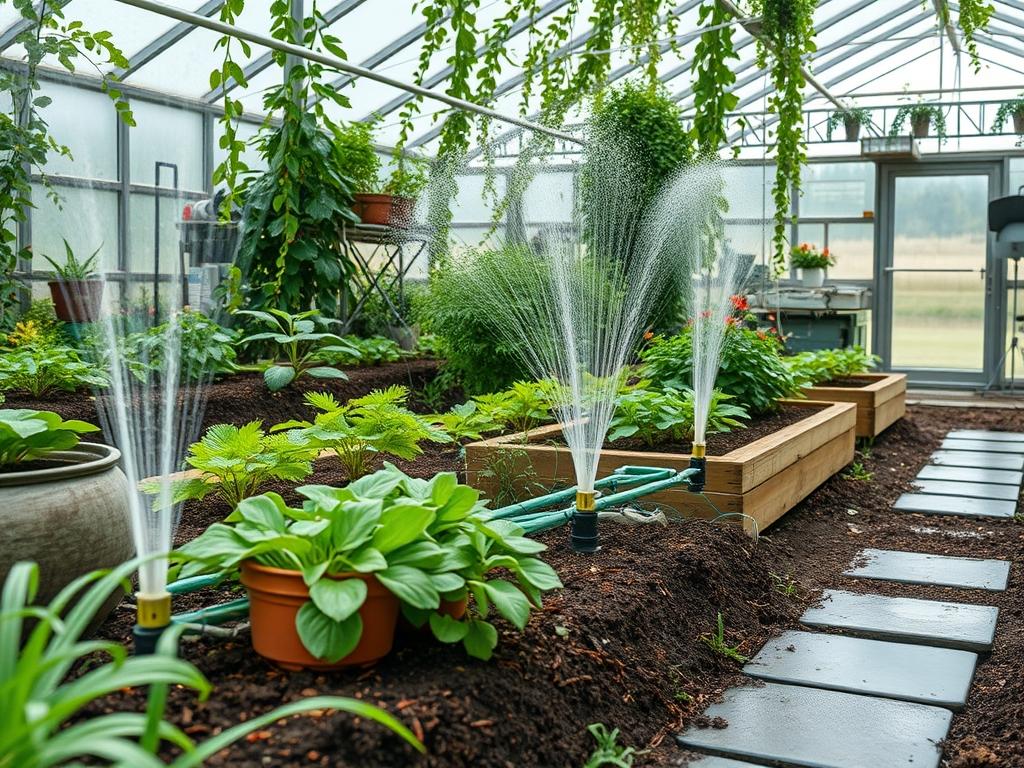
Modern estate management requires a delicate balance between aesthetic ambition and resource conservation. For the modern homeowner or commercial property manager, the landscape is no longer a passive collection of flora but a complex, living ecosystem that demands precise environmental control. At the heart of this ecosystem lies the most critical component of site infrastructure: the network of Automated Lawn Sprinklers. These systems have evolved from simple mechanical timers into sophisticated, data-driven solutions capable of interpreting local weather patterns and soil moisture levels in real time. Transitioning from a basic manual setup to an advanced irrigation network is more than a convenience; it is a fundamental upgrade that preserves the health of expensive ornamental plantings and ensures that the financial investment in sod and hardscaping is protected against the volatility of shifting climates. A well-designed landscape speaks to the architecture of the home, drawing the eye across tiered elevations and through carefully curated garden rooms, yet none of this beauty can be sustained without a reliable delivery system for water.
The integration of advanced technology into the outdoor environment allows for a level of customization previously reserved for professional golf courses and botanical gardens. When planning an upgrade to Automated Lawn Sprinklers, the landscape architect must consider the unique microclimates present on the property. A north-facing slope shaded by a massive White Oak requires a drastically different watering schedule than a sun-drenched southern exposure featuring Creeping Thyme or Lavender. Proper planning addresses these discrepancies by dividing the property into distinct hydro-zones. This ensures that water is not wasted on drought-tolerant species while simultaneously preventing the root rot that often plagues moisture-loving plants when they are over-serviced by a one-size-fits-all system. By tailoring the irrigation to the specific biological needs of each zone, the landscape achieves a state of equilibrium, reducing water waste by up to 50 percent while promoting vigorous, healthy growth.
Landscape Design Principles
Successful landscape design rests on the application of symmetry, focal points, and elevation layers. Symmetry provides a sense of order and formality, often achieved through mirrored plantings of Boxwood hedges or identical Terra Cotta planters flanking an entryway. However, rigid symmetry can feel stagnant without the introduction of focal points. A focal point might be a specimen tree like a Japanese Maple, a sculptural water feature, or a grand Stone Fire Pit. These elements anchor the viewer’s gaze and provide a destination for the eye to rest. To support these visual anchors, the landscape architect must hide the infrastructure. The placement of Automated Lawn Sprinklers should be invisible to the casual observer, with Retracing Pop-up Heads installed at a depth that allows for clean mowing while providing 360-degree coverage when active.
Elevation layers add depth and a sense of discovery to the garden. By utilizing Retaining Walls made of Natural Limestone or Stacked Slate, a flat lot can be transformed into a dynamic series of terraces. Each layer offers a new opportunity for planting, from ground-level Creeping Phlox to mid-level Hydrangeas and towering Arborvitae for privacy. Irrigation planning for these layered environments is notably complex. Gravity causes water to migrate downward, which means the upper tiers often dry out faster than the base. In these scenarios, Automated Lawn Sprinklers must be calibrated with check valves to prevent low-head drainage, where water leaks out of the lowest head in the zone after the cycle ends. Furthermore, integrating Walkways of Flagstone or Decomposed Granite requires careful trenching to ensure that irrigation lines do not interfere with the stability of the hardscape.
Plant and Material Selection
Choosing the right materials and plant species is the difference between a thriving garden and a maintenance nightmare. The following table outlines high-performance selections for a modern landscape.
| Plant Type | Sun Exposure | Soil Needs | Water Demand | Growth Speed | Maintenance Level |
| :— | :— | :— | :— | :— | :— |
| Emerald Green Arborvitae | Full Sun | Well-Drained | Moderate | Medium | Low |
| Pachysandra | Full Shade | Acidic/Moist | Moderate | Fast | Low |
| Russian Sage | Full Sun | Sandy/Loamy | Low | Fast | Minimal |
| Japanese Forest Grass | Part Shade | Rich/Moist | High | Slow | Moderate |
| Blue Star Juniper | Full Sun | Gritty/Dry | Low | Slow | Very Low |
| Coral Bells | Part Sun | Humus-Rich | Moderate | Medium | Low |
| Kentucky Bluegrass | Full Sun | Loamy/Rich | High | Fast | High |
Selecting plants that align with the local ecosystem is a core tenet of modern landscaping. Native species like the Purple Coneflower or Switchgrass offer incredible resilience and require less intervention from Automated Lawn Sprinklers once established. For the material palette, the use of Organic Shredded Bark Mulch at a depth of 3 inches is essential. It retains soil moisture, suppresses weeds, and eventually breaks down to enrich the soil. For hardscape elements, Polymeric Sand should be used between pavers to prevent weed growth and ensure that the surface remains permeable to minor rainfall, reducing the load on the primary drainage system.
Implementation Strategy
The transition from a design on paper to a physical landscape begins with thorough site preparation. First, the property should be surveyed for existing utilities to avoid costly mistakes during the trenching phase. Once the site is cleared, Grading is the most critical step. The land must slope away from the home’s foundation at a minimum of 2 percent to prevent water intrusion. During this phase, the installation of Automated Lawn Sprinklers takes place alongside the subterranean drainage pipes. PVC Schedule 40 or High-Density Polyethylene pipes are the industry standard for durability and longevity.
After the main lines are laid, the installers should focus on Edging. Whether using Steel Edging or Belgium Block, a clean border between the lawn and the planting beds simplifies maintenance and provides a professional finish. Mulch should be applied after the secondary lateral lines and Drip Emitters are tested. For large lawn areas, Rotary Nozzles are preferred over standard spray heads because they deliver larger water droplets at a slower rate, which minimizes evaporation and ensures that the water penetrates deep into the root zone. Finally, the installation of a WiFi Smart Controller allows the user to monitor the entire system from a smartphone, adjusting schedules based on the latest hyper-local weather forecasts.
Common Landscaping Failures
The most frequent failures in landscape renovation arise from a lack of foresight regarding long-term growth. Root overcrowding is a common issue where Oak or Maple trees are planted too close to Automated Lawn Sprinklers or hardscaped paths. As the roots expand, they can crush irrigation lines or lift heavy pavers, leading to expensive repairs. Another critical mistake is improper spacing; plants that look perfect in 3-gallon pots at the nursery will eventually reach three times that size, crowding out their neighbors and creating pockets of stagnant air that promote fungal diseases.
Drainage inefficiencies are equally detrimental. If the soil is not properly amended with Perlite or Compost, it may suffer from Soil Compaction, which prevents water from reaching the roots. This leads to a phenomenon where Automated Lawn Sprinklers run for their full duration, but the water simply sheets off the surface and into the street or the neighbor’s yard. Furthermore, a lack of head-to-head coverage in the irrigation layout will result in dry patches. Every sprinkler head should reach the next head to ensure that no spot is left underwatered. Failing to account for wind drift can also result in “shadowing,” where a large shrub blocks the water from reaching the grass behind it.
Seasonal Maintenance
A landscape is a living entity that changes with the calendar. In the Spring, the focus is on reactivation and auditing. This is the time to check every head of the Automated Lawn Sprinklers for clogs or winter damage. Applying a Pre-emergent Herbicide and a slow-release fertilizer will set the stage for a lush summer. As Summer arrives, the priority shifts to heat management. Irrigation cycles should be moved to the early morning hours, typically between 4:00 AM and 7:00 AM, to minimize evaporation and prevent the leaf scald that occurs when water droplets sit on foliage in the midday sun.
When Autumn approaches, it is time to overseed the lawn and adjust the irrigation frequency downward as the plants enter dormancy. This is also the season for clean-up; removing fallen leaves prevents them from matting down and suffocating the turf. Finally, Winter requires a complete system blowout. Using a High-Volume Air Compressor, all water must be purged from the lines of the Automated Lawn Sprinklers to prevent the pipes from bursting during a hard freeze. For the plants, a layer of Evergreen Burlap or Anti-Desiccant Spray can protect delicate species like Boxwood from the drying effects of winter winds.
Professional Landscaping FAQ
How often should I run my automated lawn sprinklers?
Most established lawns require approximately 1 inch of water per week. It is best to deliver this in two deep sessions rather than daily shallow waterings. This encourages roots to grow deeper, increasing the plant’s overall drought resistance.
What is the benefit of a rain sensor?
A Rain Sensor or Soil Moisture Probe automatically pauses your Automated Lawn Sprinklers when it detects natural precipitation. This prevents overwatering, saves money on utility bills, and helps protect the local watershed from unnecessary nutrient runoff.
Should I use drip irrigation or spray heads?
Drip Irrigation is superior for flower beds and shrubs because it delivers water directly to the root zone with zero evaporation. Spray Heads or Rotary Nozzles are better suited for large, open areas of turfgrass.
Can I install an irrigation system myself?
While possible, professional installation ensures correct hydraulic pressure and zoning. Professionals use specialized tools like Vibratory Plows to install lines without destroying your existing lawn, ensuring the Automated Lawn Sprinklers operate at peak efficiency for decades.
How do I know if my system has a leak?
Monitor your water bill for unexplained spikes and look for unusually soggy spots in the lawn. Most modern Smart Controllers also feature flow-sensing technology that will alert your phone if it detects a leak in the main line.