
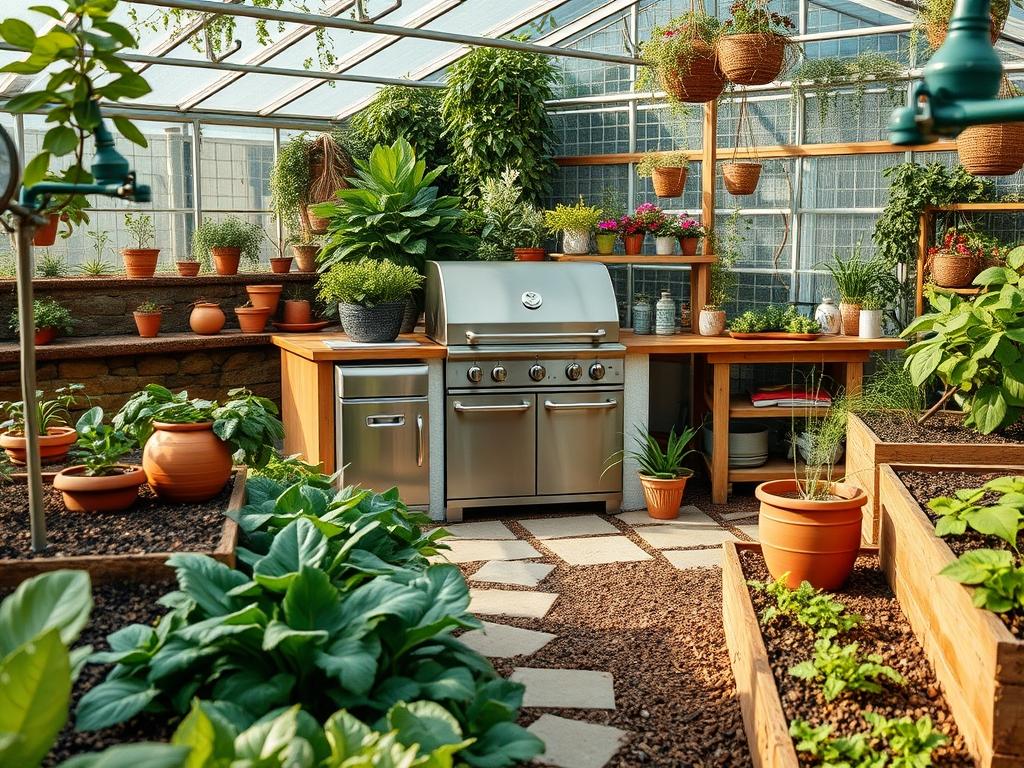
Transforming a residential landscape into a high performance culinary environment requires more than simply placing a grill on a patio. As a landscape architect, I view the integration of Outdoor Kitchen Appliances as a complex puzzle where utility meets aesthetics. The primary challenge lies in balancing the heat output and weight of industrial grade equipment with the delicate biological needs of a garden. Climate considerations play a decisive role; for instance, coastal environments demand 316 marine-grade stainless steel to combat salt air corrosion, while arid climates require shade structures to prevent equipment from becoming untouchable in the midday sun. Furthermore, a well planned kitchen affects more than just functionality. It serves as a structural anchor that enhances curb appeal and increases property value significantly. The goal is to create a seamless transition from the interior to the exterior, ensuring the chef has a logical workflow while guests remain comfortable within a curated ecological setting.
Landscape Design Principles
Successful outdoor environments rely on the core principle of spatial hierarchy. When planning for Outdoor Kitchen Appliances, the layout must start with a focal point, often a built-in gas grill or a wood-fired pizza oven. This central hub dictates the flow of the remaining space. Symmetry is vital for formal designs, where twin stone pillars or matched planter boxes can flank the cooking station to create a sense of permanence and order. Conversely, asymmetrical designs allow for a more organic feel, using boulders and varied elevation layers to define the cooking, dining, and lounging zones.
Elevation changes are an effective tool for separating the utility of a kitchen from the relaxation of a garden. A slight raised platform for the kitchen area, perhaps 6 inches higher than the dining terrace, provides a clear visual cue of the change in function. This also aids in the installation of drainage systems and utility lines, which can be hidden beneath the sub-structure. Visual balance must also be maintained between hard surfaces and softscaping. Too much concrete or natural stone can lead to heat islands; we mitigate this by integrating green “breaks” such as creeping thyme between pavers or vertical gardens on retaining walls. Finally, irrigation planning must be precise. Water lines for the outdoor sink should be mapped alongside the automated drip irrigation for surrounding vegetation to ensure that no leaks compromise the foundation of the kitchen island.
Plant and Material Selection
Selecting the right biological and structural components is essential for a space centered around high heat and food preparation. The following table outlines optimal selections for the modern culinary landscape.
| Plant Type | Sun Exposure | Soil Needs | Water Demand | Growth Speed | Maintenance Level |
| :— | :— | :— | :— | :— | :— |
| Rosemary | Full Sun | Well-drained | Low | Moderate | Low |
| Thuja Green Giant | Full/Partial | Loamy/Moist | Moderate | Fast | Low |
| Lavender | Full Sun | Sandy/Alkaline | Low | Moderate | Moderate |
| Japanese Maple | Partial Shade | Slightly Acidic | Moderate | Slow | High |
| Dwarf Citrus | Full Sun | Rich/Organic | High | Moderate | High |
| Lantana | Full Sun | Versatile | Low | Fast | Low |
For the hardscaping, granite countertops are preferred over marble due to their resistance to acidic food stains and weather. Basalt and travertine provide excellent durability for flooring, provided they are treated with a non-slip sealant. Using firebrick inside any custom enclosures is non-negotiable for safety.
Implementation Strategy
The execution of a luxury outdoor kitchen starts with rigorous site preparation. First, the area must undergo professional grading to ensure a 2 percent slope away from the home and the kitchen structure. This prevents water from pooling around gas connections or under heavy refrigeration units. Once the grade is established, we begin the utility trenching. Gas lines and electrical conduits must be buried at least 18 inches deep, or according to local building codes, to prevent accidental damage from future gardening activities.
After the utilities are set, the foundation is poured. For a full suite of Outdoor Kitchen Appliances, a reinforced concrete slab at least 4 inches thick is required to support the combined weight of the appliances, masonry veneers, and stone counters. As the structure rises, we focus on edging. Using steel edging or poured concrete curbs creates a crisp boundary between the kitchen and the lawn, preventing mulch or soil from migrating onto the cooking surface. Mulch depth should be maintained at 3 inches in surrounding beds to retain moisture, but it must be kept away from the base of the kitchen island to avoid attracting pests or creating a fire hazard. Finally, we install the drainage pipe and catch basins to manage runoff from the large non-porous surfaces of the kitchen.
Common Landscaping Failures
One of the most frequent errors in integrating Outdoor Kitchen Appliances is the neglect of ventilation. When a grill head is built into a stone island, failing to install vent panels can cause gas to trap and ignite, or cause the appliance to overheat. Another common failure is improper plant spacing relative to the heat source. Placing a fast-growing hedge too close to a power burner or smoker often results in scorched foliage or a fire risk. We recommend a minimum clearance of 3 feet between any combustible plant material and a high-heat appliance.
Soil compaction is another silent killer of the culinary garden. During the construction of the kitchen, heavy machinery often packs down the earth, destroying soil structure and leading to poor drainage. This results in root rot for your culinary herbs and ornamental plants. To fix this, we use a tine aerator or a broadfork to loosen the soil before any planting occurs. Furthermore, irrigation inefficiencies often arise when designers use the same zone for the kitchen-adjacent plants and the lawn. Since herbs like Sage and Thyme require far less water than Kentucky Bluegrass, they must be on separate solenoid valves to prevent overwatering.
Seasonal Maintenance
A professional landscape requires a year-round management plan to protect both the flora and the Outdoor Kitchen Appliances. In the spring, the focus is on reactivation. We clear any debris from drainage grates, inspect gas lines for leaks using a soapy water test, and apply a fresh 1-inch layer of compost to the garden beds. This is also the time to prune any winter-killed branches from your privacy screens.
Summer maintenance revolves around heat management and irrigation. Ensure the drip emitters are functioning correctly, especially for plants near the kitchen island which may experience higher ambient temperatures. Clean the stainless steel hoods and surfaces weekly to prevent grease buildup, which can attract insects. As autumn arrives, leaf management is paramount. Do not allow damp leaves to sit on pavers or against the base of the kitchen cabinet, as this causes staining and rot. For the winter, in colder climates, it is essential to shut off the water supply to the outdoor sink and ice maker to prevent pipe bursts. Use custom-fit covers for all appliances and apply a desiccant inside the grill to prevent moisture accumulation.
Professional Landscaping FAQ
How do I choose the location for my outdoor kitchen?
Select a site that is close to the indoor kitchen for logistical ease. Ensure the location accounts for prevailing wind patterns to keep smoke away from guests. Verify that the ground can support a reinforced concrete foundation.
Which materials are best for outdoor kitchen counters?
Granite is the industry standard for its durability and heat resistance. Avoid quartz as the resins can yellow under UV exposure. Concrete offers a modern look but requires frequent sealing to prevent staining from oils and wine.
How can I hide the utility lines for my appliances?
Incorporate utility runs into the initial hardscape design. Use PVC conduits buried beneath pavers or hidden within retaining walls. This maintains a clean aesthetic while allowing for future repairs without destroying the entire garden layout.
Do I need a permit for an outdoor kitchen?
Most jurisdictions require permits for gas, electrical, and plumbing extensions. A licensed contractor should handle these connections to ensure they meet safety codes. This also protects your homeowners insurance in case of an accidental fire.
How do I protect my plants from the heat of the grill?
Maintain a 36-inch buffer zone between heat sources and foliage. Use non-combustible materials like stone or brick for the immediate surround. Choose heat-tolerant species like Rosemary or Agave for the areas closest to the cooking station.