
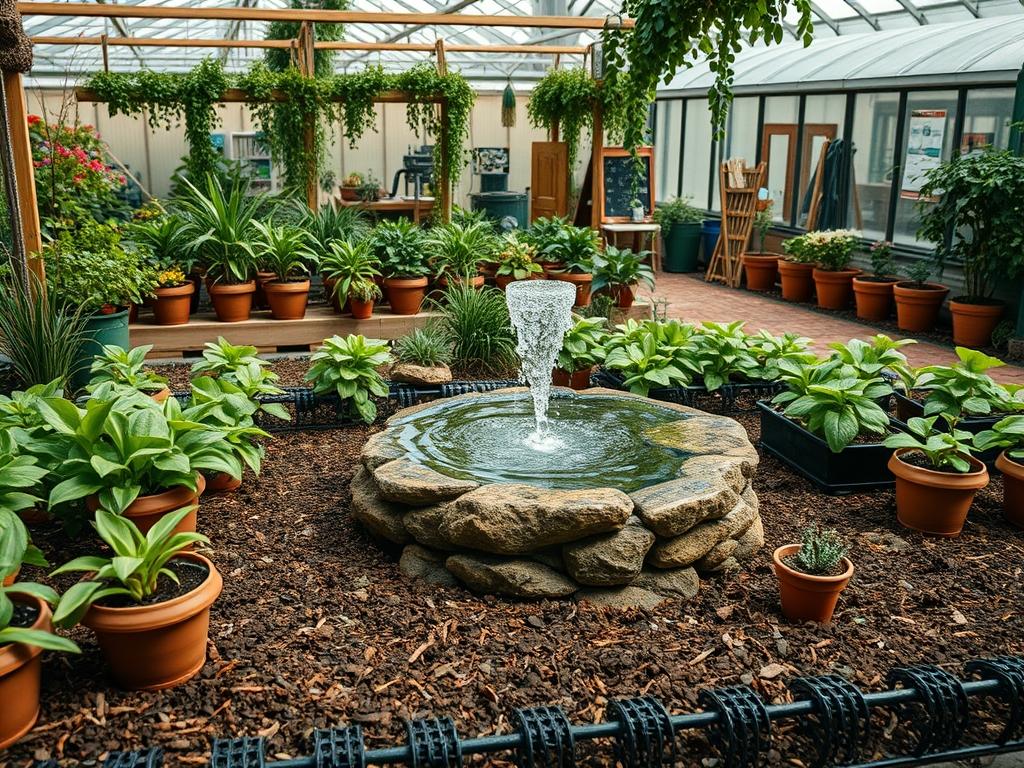
Landscape architecture in restricted urban environments requires a strategic balance between sensory input and spatial economy. In many modern residential plots, traditional ponds are often impractical due to footprint limitations, safety concerns for families with small children, or the intense maintenance requirements of open standing water. Disappearing water features offer a sophisticated alternative. These systems circulate water from a hidden subterranean reservoir through a decorative element such as a carved stone, a ceramic urn, or a set of basalt columns before it drains back into a gravel-covered basin. The result is the soothing auditory benefit of a waterfall without the ecological volatility of a biological pond. By integrating these systems, designers can transform a static yard into a dynamic environment that masks neighborhood noise and improves the thermal comfort of the immediate microclimate through evaporative cooling.
Landscape Design Principles
Successful integration of disappearing water features begins with the concept of visual hierarchy. In a small area, every square foot must serve a dual purpose. A water feature should act as a focal point, drawing the eye toward a specific destination or anchoring a corner of the site that might otherwise feel neglected. Professional designers often utilize symmetry to create a formal, structured look, or they apply an asymmetrical arrangement to mimic a natural spring. Visual balance is achieved by grounding the verticality of the water feature with lower-level plantings and hardscaping elements like flagstone or decomposed granite.
Elevation plays a critical role in the effectiveness of the soundscape. Increasing the height from which water falls changes the frequency and volume of the splashing. To provide a sense of depth in a flat yard, designers create artificial elevation layers using retaining walls or raised planters. A tiered approach allows the water to cascade over multiple surfaces, enriching the auditory experience. Furthermore, irrigation planning must account for the water feature’s splash radius. Wind patterns can carry droplets onto nearby walkways or delicate foliage, potentially causing slippery surfaces or fungal issues on leaves. Therefore, the architectural layout must incorporate a splash zone of at least 12 to 24 inches beyond the decorative element, lined with non-porous stones to redirect water back into the basin.
Plant and Material Selection
Specific plant selections enhance the aesthetics of a disappearing water feature while managing the humidity surrounding the reservoir. Since the water remains underground, you are not limited to true aquatic plants, but you should choose species that tolerate the occasional mist or higher humidity levels near the splash zone.
| Plant Type | Sun Exposure | Soil Needs | Water Demand | Growth Speed | Maintenance Level |
| :— | :— | :— | :— | :— | :— |
| Japanese Forest Grass | Full/Part Shade | Loamy, Moist | Moderate | Slow | Low |
| Sedge (Carex) | Full Sun/Shade | Versatile | High/Moderate | Medium | Very Low |
| Blue Star Creeper | Full/Part Sun | Well-Drained | Moderate | Fast | Moderate |
| Creeping Jenny | Full/Part Sun | Moist | High | Fast | Moderate |
| Liriope Muscari | Full Sun/Shade | Adaptable | Low/Moderate | Medium | Low |
| Dwarf Horsetail | Full/Part Sun | Wet/Boggy | Very High | Fast | High (Invasive) |
Materials are equally vital. For the feature itself, Basalt Columns provide a contemporary, architectural look, while Natural River Jack Stone creates a softer, more organic transition. Using 45 mil EPDM liners for the reservoir ensures long-term durability against root penetration and soil movement.
Implementation Strategy
The transition from design to installation requires precise grading and structural integrity. Start by excavating the reservoir site, ensuring the depth accommodates the pump and the water storage blocks, often referred to as Aquablox. These modular units provide more water volume than a basin filled purely with stone, as they create a void space for water to occupy. Ensure the bottom of the excavation is level and compacted to prevent shifting later. Line the pit with a high-quality underlayment followed by the EPDM liner, making sure there is enough excess to extend over the edges.
Once the reservoir is set, install the submersible pump inside a pump vault. This vault provides easy access for maintenance without requiring you to disassemble the entire stone arrangement. Connect the pump to the plumbing, which usually consists of 1.5-inch flexible PVC pipe, and route it through the center of your chosen fountain piece. After testing the flow and adjusting the water pressure, fill the reservoir with water and layer the top with 3 to 5 inch river stones. For the final aesthetic touch, apply hardwood mulch or ornamental gravel around the perimeter to hide the edges of the liner. Proper edging using steel or poly landscape edging will keep the mulch from migrating into the water feature.
Common Landscaping Failures
One of the most frequent errors in professional landscaping is inadequate drainage around the water feature. If the surrounding soil does not drain properly, heavy rain can flood the reservoir with silt and debris, clogging the pump and damaging the mechanical components. Always ensure the grade of the yard slopes away from the water feature basin. Another common failure is root overcrowding. Planting vigorous or invasive species too close to the reservoir can lead to roots piercing the liner or clogging the intake of the pump vault.
Irrigation inefficiencies also plague many small garden designs. Homeowners often forget that wind causes significant evaporation in disappearing water features. If the system does not have an automatic fill valve connected to a dedicated irrigation line, the pump may run dry. A dry pump will overheat and fail prematurely. Additionally, improper spacing between the feature and structural foundations can lead to moisture wicking into building materials. Maintain a minimum distance of 3 feet from any residence or wooden deck to prevent rot or mold issues caused by consistent overspray.
Seasonal Maintenance
Landscape management is a year-round commitment that changes with the climate. In the spring, the focus is on reactivation. You should remove any leaf litter that has accumulated on the decorative stones, as organic matter will break down and create sludge in the reservoir. Inspect the pump for any damage and clean the intake screen. This is also the time to apply a fresh layer of organic mulch and prune back any perennials that were left for winter interest.
During the summer, evaporation is your primary concern. Check water levels weekly and monitor the splash zone for algae growth. If algae become a problem, use a bird-safe water clarifier to keep the feature pristine. As autumn approaches, net the area to catch falling leaves before they enter the rock gaps. In colder climates, winterization is mandatory. You must pull the pump from the vault and store it in a bucket of water in a frost-free area or blow out the lines to prevent ice from cracking the plumbing. While the water feature may remain off during the winter, the structural elements like basalt pillars remain as beautiful frozen sculptures in the landscape.
Professional Landscaping FAQ
How often should I refill the water reservoir?
In hot or windy weather, evaporation can deplete the basin quickly. Check levels weekly. Installing an automatic fill valve connected to your irrigation system eliminates manual refilling and prevents the submersible pump from burning out due to dry operation.
Are disappearing water features safe for toddlers and pets?
Yes, they are exceptionally safe. Since the water is stored in an underground reservoir covered by heavy stones or a grate, there is no open pool of water. This eliminates the drowning risk associated with traditional garden ponds or reflecting pools.
Can I install these features on a slope?
Yes, but it requires careful grading. You must use retaining walls or tiered stone levels to create a flat area for the reservoir. The pump must also be rated with enough “head height” to push water up the incline effectively.
What kind of pump is best for a small feature?
A submersible mag-drive pump is usually the best choice. These pumps are energy-efficient, quiet, and designed for continuous duty. Ensure the pump’s GPH (gallons per hour) rating matches the desired flow rate and height of your fountain.
Do these features require a dedicated electrical line?
For safety and reliability, a dedicated GFCI-protected outlet is recommended. This prevents the water feature from tripping breakers shared with interior appliances and ensures the outdoor electrical system can handle the constant load of the pump and optional LED lighting.