
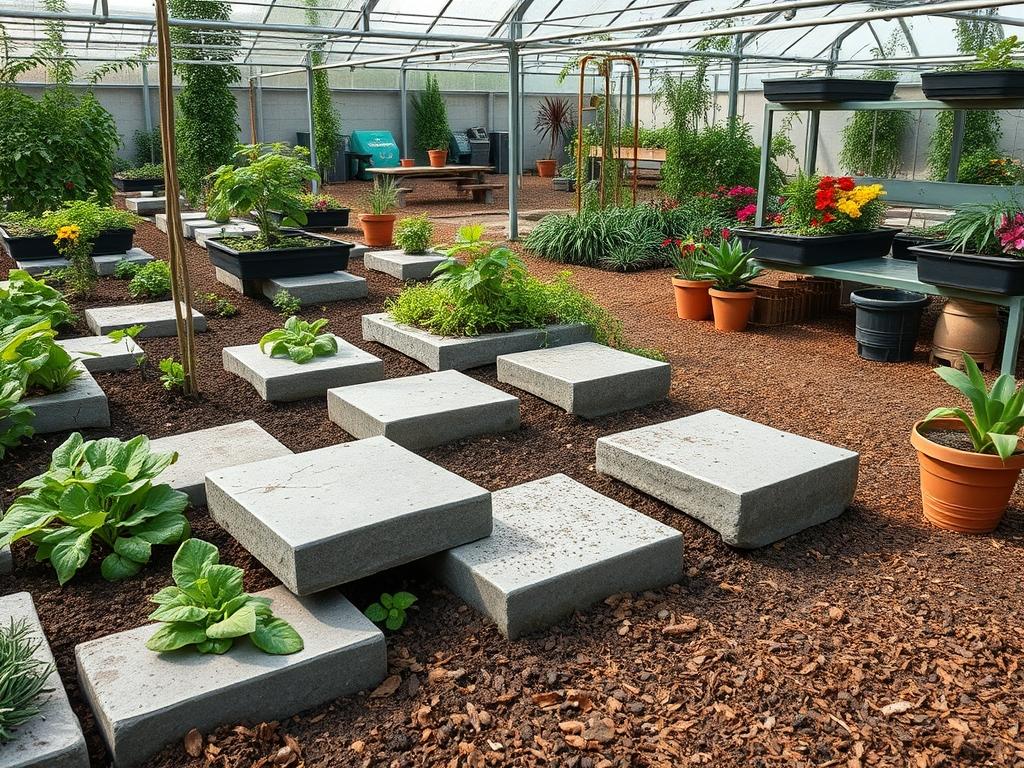
Defining the boundary between a manicured lawn and a cultivated planting bed is more than a simple aesthetic choice. It is a fundamental engineering requirement for any high end outdoor environment. The selection of Modern Garden Border Stones represents a long term commitment to the structural integrity of the landscape. These elements serve as the primary defense against invasive turf grasses, soil erosion, and nutrient runoff. In modern landscape architecture, we view the border not as a mere decorative perimeter, but as a critical transition zone. This zone must withstand fluctuating moisture levels, local freeze and thaw cycles, and the physical impact of maintenance equipment. Achieving a clean, professional finish requires a deep understanding of material durability and how different stone types interact with the surrounding ecology.
When we approach a new site, we evaluate the geological context of the property. For a contemporary residence, the objective is often to create high contrast and sharp geometry. This is achieved through the use of materials like Basalt, Honed Granite, or Cast Concrete. These materials offer the density required to resist cracking under environmental stress. They provide a crisp visual frame that elevates the curb appeal of the home while simplifying the logistics of mowing and trimming. If the border stones are chosen poorly, the entire design can feel fragmented. However, a well executed stone border provides a sense of permanence and intentionality that plastic or wood simply cannot replicate.
Landscape Design Principles
Symmetry and visual balance are the cornerstones of a sophisticated modern landscape. When integrating Modern Garden Border Stones, the designer must consider the vertical and horizontal planes of the site. Linear borders work best for minimalist designs, where the stones follow the architectural lines of the house. Curvilinear borders, which require more specialized cutting and fitting, are better suited for softened, organic transitions. Regardless of the shape, the border must act as a guide for the eye, leading the viewer toward specific focal points such as a Water Feature or a specimen Japanese Maple.
Elevation layers play a vital role in creating depth. By using thicker stones or stacking Slate Tiles, we can create raised beds that provide better drainage for sensitive root systems. These varied heights allow for a more complex planting pallet, moving from low groundcovers to mid sized shrubs. Furthermore, irrigation planning must be integrated into the initial layout. We often hide low voltage lighting cables and Drip Irrigation Lines directly behind or beneath the stone borders to maintain a clutter free appearance. This ensures that the functional components of the garden remain invisible while the stones provide a clean edge for the walkway or driveway.
Plant and Material Selection
The relationship between stone and flora is symbiotic. The thermal mass of Dark Basalt or Grey Granite can influence the microclimate of the soil immediately surrounding it. Choosing plants that thrive in these conditions is essential for a low maintenance outcome. Below is a strategic guide for selecting plants that complement modern hardscaping.
| Plant Type | Sun Exposure | Soil Needs | Water Demand | Growth Speed | Maintenance Level |
| :— | :— | :— | :— | :— | :— |
| Boxwood (Buxus) | Full Sun to Shade | Well drained, loamy | Moderate | Slow | Low (Requires pruning) |
| Lavender (Lavandula) | Full Sun | Sandy, alkaline | Low | Medium | Low |
| Blue Oat Grass | Full Sun | Poor to average | Low | Medium | Minimal |
| Japanese Forest Grass | Partial Shade | Moist, humus rich | High | Slow | Medium |
| Creeping Thyme | Full Sun | Well drained | Low | Fast | Minimal |
| Pachysandra | Shade | Acidic, moist | Moderate | Medium | Minimal |
Implementation Strategy
A successful installation begins with a rigorous grading plan. Before the first stone is laid, the surveyor must ensure that the site slopes away from the foundation of the home at a minimum two percent grade. This prevents water from pooling against the hardscaping, which can lead to stone displacement or soil saturation. The process starts by excavating a trench roughly twice the width of the chosen Modern Garden Border Stones. The depth of this trench should account for a four inch base of compressed Crushed Limestone or Road Base.
Once the trench is excavated, a high quality Geotextile Fabric is laid down to prevent the base material from mixing with the native soil. This is a critical step that many amateur installers skip. After the fabric is in place, the base material is added and compacted using a Plate Compactor until it is rock hard. A thin layer of Leveling Sand or fine stone dust is then applied. This allows the installer to use a Rubber Mallet and a Spirit Level to set each stone with precision. For modern aesthetics, the gaps between stones should be minimal and filled with Polymeric Sand to prevent weed growth and stabilize the units. Finally, the surrounding area is backfilled with topsoil or a three inch layer of Hardwood Mulch to retain moisture.
Common Landscaping Failures
The most frequent failure in garden edging is poor drainage management. If water cannot escape the planting bed, hydrostatic pressure will eventually push the stones out of alignment. This often occurs when a border is installed without considering the natural flow of surface water. Another common mistake is root overcrowding. Planting a large shrub too close to the stone border will cause the roots to lift the masonry as the plant matures. It is vital to research the mature spread of each species before digging.
Soil compaction is another silent killer of landscape designs. Heavy machinery used during construction can crush the soil structure, making it impossible for roots to penetrate and for water to drain. If the soil is compacted, it must be aerated or amended with organic matter before the stones are set. Additionally, improper irrigation placement can lead to the “canyon effect,” where water sprays directly onto the stone surfaces, leading to mineral staining or expedited weathering. We always recommend positioning Spray Heads so they direct water toward the root zone and away from the decorative stone edges.
Seasonal Maintenance
Modern landscapes are designed for longevity, but they are not entirely maintenance free. In the spring, the primary focus is on checking for frost heave. If any stones have shifted during the winter freeze, they should be reset immediately to prevent further misalignment. This is also the time to refresh the Polymeric Sand in the joints and apply a pre emergent herbicide to stop weed seeds from germinating in the crevices.
During the summer months, maintenance shifts to irrigation efficiency. We monitor the moisture levels near the stones, as stones can reflect heat and dry out the soil faster than open ground. Autumn requires the removal of fallen leaves and debris that can trap moisture against the stone, potentially causing algae or moss growth on porous materials like Limestone. In the winter, avoid using harsh de icing salts on or near your Modern Garden Border Stones. These chemicals can penetrate the stone surface and cause spalling or discoloration. Instead, use sand for traction or choosing salt free ice melt products that are labeled safe for masonry.
Professional Landscaping FAQ
What is the best stone for a minimalist modern look?
Honed Basalt or Dark Granite are the top choices. Their consistent color and smooth texture provide the clean, sharp lines required for minimalist architecture. These stones are also incredibly dense, making them resistant to moisture absorption and staining over decades.
How deep should I bury my border stones?
At least one third of the stone height should be below the finished grade. For a four inch tall stone, burying nearly two inches provides the necessary lateral stability to resist the pressure of soil and the impact of lawn mowers.
Is landscape fabric necessary under the stones?
Yes, a heavy duty Non-Woven Geotextile is essential. It prevents the gravel base from sinking into the subsoil while allowing water to pass through. Without it, the stones will eventually become uneven as the base material migrates into the earth.
Can I install these stones on a slope?
Yes, but it requires a “stepping” technique. Instead of following the angle of the hill, the stones should be installed in level sections that drop down incrementally. This prevents the stones from sliding and creates a more professional, architectural appearance.
How do I prevent weeds from growing between the stones?
The most effective method is using Polymeric Sand. Once swept into the joints and misted with water, it hardens into a flexible bond that resists weed penetration and ants while still allowing for slight thermal expansion of the stones.