
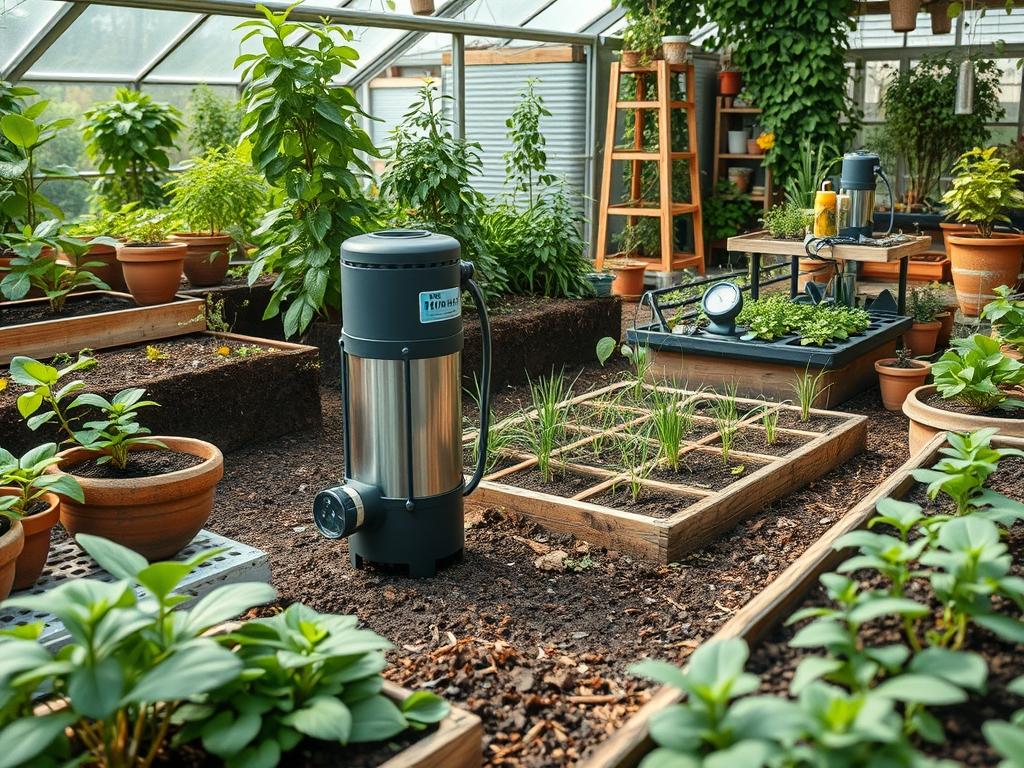
Designing a high end landscape involves more than just selecting a palette of perennials or laying down sod. It requires a sophisticated understanding of how energy, light, and water interact to create a cohesive sensory experience. One of the most significant hurdles in modern residential design has been the integration of water features without the prohibitive cost and disruption of electrical trenching. This is where Solar Garden Water Pumps have revolutionized the field. By decoupling the fountain or pond from the local power grid, architects can now place moving water in remote corners of a large plot or on a secluded patio using a remote panel. This transition to renewable power sources addresses the aesthetic need for movement and sound while maintaining the ecological integrity of the site.
The modern client demands curb appeal that is both striking and sustainable. Traditional fountain setups often involve hiring electricians, pulling permits, and burying heavy gauge wire deep beneath established root systems. These invasive procedures can stress mature trees or disrupt delicate drainage patterns. By contrast, a high quality Solar Garden Water Pump allows for a “light touch” installation. The environmental footprint is drastically reduced, and the functionality of the garden is enhanced by the ambient cooling effect of evaporating water. As temperatures rise globally, these features provide more than just visual relief; they create microclimates that support local bird populations and beneficial insects.
Landscape Design Principles
Successful garden planning centers on several core tenets that ensure a space feels intentional rather than accidental. Symmetry is perhaps the most immediate tool in the designer’s kit. A central water feature powered by a solar unit can act as the primary axis of a garden, drawing the eye toward a balanced arrangement of boxwoods or stone urns. However, balance does not always mean perfect mirroring. Asymmetrical balance uses visual weight, such as a large granite boulder offset by a cluster of fine textured grasses, to create a naturalistic flow.
Focal points are essential for guiding the viewer through an outdoor environment. A water feature provides both visual interest and an acoustic layer that masks neighborhood noise. When planning the elevation of these features, designers often use layers to build depth. Placing a solar fountain on a raised retaining wall creates a vertical element that can be seen from inside the home, while lower basins tucked into the flora provide a sense of discovery. Irrigation planning must also be considered; even with a self contained pump, the surrounding vegetation should be grouped by water needs to prevent over saturation near the reservoir.
Walkways should lead naturally to these water sources. Using crushed slate or permeable pavers for paths ensures that rainwater infiltrates the soil rather than pooling. The placement of the solar panel itself is a design challenge that requires professional finesse. Many modern systems allow the panel to be located up to 15 feet from the actual pump, enabling the fountain to sit in a shaded alcove while the collector remains hidden on a sunny roofline or behind a decorative trellis.
Plant and Material Selection
The following table provides a selection of species and materials that complement the moisture rich environment of a garden water feature.
| Plant Type | Sun Exposure | Soil Needs | Water Demand | Growth Speed | Maintenance Level |
| :— | :— | :— | :— | :— | :— |
| Nymphaea (Water Lily) | Full Sun | Heavy Clay | Aquatic | Fast | Moderate |
| Iris pseudacorus | Full to Part Sun | Saturated Loam | High | Moderate | Low |
| Caltha palustris | Partial Shade | Rich Organic Muck | High | Slow | Low |
| Carex elata ‘Aurea’ | Full to Part Sun | Moist Silt | High | Moderate | Low |
| Acorus calamus | Full Sun | Wet Silt | High | Fast | Medium |
| Equisetum hyemale | Full to Part Sun | Any Wet Soil | High | Aggressive | High |
| Matteuccia struthiopteris | Shade to Part Sun | Damp Loam | High | Moderate | Low |
Implementation Strategy
The first step in any backyard layout is grading. You must ensure that the area surrounding the water feature slopes slightly away from house foundations to prevent basement seepage. Once the grade is established, the footprint of the pond or basin is excavated. For a mid sized feature, a depth of 18 inches is often sufficient to prevent rapid evaporation and provide a stable temperature for the pump and any aquatic life.
A 6 mil pond liner should be installed over a 2 inch layer of damp sand to prevent punctures from rocks or roots. After the liner is in place, the Solar Garden Water Pump is positioned. It is vital to use a pump with a head height rating that exceeds your planned vertical rise by at least 20 percent. This ensures a robust flow even during periods of partial cloud cover. The wiring for the panel should be tucked inside a PVC conduit if it is to be buried, protecting it from garden tools and burrowing animals.
Edging provides the professional finish that separates a DIY project from a landscape architect’s masterpiece. Use natural fieldstone or flagstone to hide the edges of the liner. Avoid using mortar near the water if you plan on hosting fish, as the lime can alter the pH balance. Finally, apply a 3 inch layer of hardwood mulch around the perimeter plants to retain moisture and suppress weeds. This mulch should be kept a few inches away from the pump’s air intake or water intake to avoid clogging the impeller.
Common Landscaping Failures
The most frequent mistake in solar water feature design is improper panel orientation. A panel that receives morning sun but is shaded by a tree canopy during the peak hours of 12:00 PM to 3:00 PM will result in a pump that sputters or fails when it is needed most. Another common error is failing to anticipate the growth of plants. A small Salix babylonica might look perfect next to a pond today, but its aggressive root system can pierce liners or lift heavy stone features within five years.
Drainage mistakes can also be catastrophic. If the site is at the bottom of a hill without a French drain or similar mitigation, the water feature will overflow during heavy rains, washing away expensive mulch and silting the pump. Furthermore, many homeowners ignore “dry run” protection. If the water level drops due to evaporation and the pump continues to run, the motor will overheat. Always select a pump with an integrated sensor that cuts power when water is low. Soil compaction is another silent killer; heavy machinery used during construction can crush soil pores, leading to poor drainage and stunted plant growth throughout the entire garden.
Seasonal Maintenance
Landscape management is a year round commitment. In the spring, the primary focus is on cleaning. Remove accumulated leaf litter and debris from the pump intake and check the photovoltaic cells for any film or bird droppings that might reduce efficiency. This is also the time to divide perennials like Iris to keep them from overcrowding the pond.
Summer maintenance involves monitoring water levels and managing algae. High temperatures can cause rapid evaporation, so topping off the reservoir is necessary. Beneficial bacteria or a UV clarifier can be used to keep the water clear without harming the environment. In autumn, the goal is debris management. Netting the water feature before the leaves fall will save hours of dredging later.
Winter remains the most critical time for Solar Garden Water Pumps. In climates where the ground freezes, the pump should be removed from the water, cleaned, and stored in a dry, frost free location. Leaving a pump in a frozen pond can crack the plastic housing or damage the internal seals. If the feature must remain active, a small heater or bubbler should be used to maintain an open hole in the ice, though most solar systems are best served by a winter dormant period.
Professional Landscaping FAQ
Can solar pumps run during the night?
Standard solar pumps operate only under direct sunlight. However, models equipped with a Lithium-ion battery backup can store energy gathered during the day to power the fountain for several hours after sunset, providing evening ambiance.
How much sun does the panel actually need?
For optimal performance, the solar panel requires at least 6 hours of unobstructed, direct sunlight. Placing the panel at a 45 degree angle facing south is the standard recommendation for maximizing energy absorption in the northern hemisphere.
Are solar pumps powerful enough for large waterfalls?
Yes, but you must check the GPH (Gallons Per Hour) rating. High capacity solar pumps can move over 500 gallons per hour, which is sufficient for small to medium waterfalls with a modest vertical lift.
Do these pumps require special plumbing?
Most systems are plug and play, requiring only flexible vinyl tubing to connect the pump to the fountain head. No permanent copper or PVC plumbing is typically required unless you are building a very large, permanent architectural feature.
How do I hide the solar panel?
The best way to disguise a panel is through distance and camouflage. Use a model with a long lead wire to place the panel on a shed roof, or tuck it behind low growing, sun loving shrubs like Lavender or Spirea.