
Critical Constraints:
1. No em dashes (— or –). Use commas, semicolons, or periods.
2. No titles or H1 tags at the start. Proceed directly to the first paragraph.
3. ASCII only (standard quotes).
4. Human rhythm (varied sentence length, no repetitive AI patterns).
5. Internal thinking block must be suppressed.
6. Markdown structure: Specific H3 headers as outlined in the prompt.
7. Include a markdown table for plant/material selection.
8. Bolding: Bold plant species, tools, measurements, and materials.
9. FAQ: 5 questions, each answer < 45 words.
10. Style: Professional, practical, using specific terminology like drainage, irrigation, elevation, mulch, and native plants.
Plan:
– Open with the architectural challenge of verticality in modern landscapes. Discuss how arches provide structural transition and curb appeal.
– Segment 1: Principles focusing on focal points, height, and visual balance.
– Segment 2: Plant selection table with technical details.
– Segment 3: Technical implementation, focusing on site prep (grading, footings, drainage).
– Segment 4: Common failures (structural collapse, root issues, improper hardware).
– Segment 5: Maintenance schedule across four seasons.
– Segment 6: FAQ.
Word Count Strategy: I need approximately 150-200 words per section to hit the 1,200 mark. I will expand on the technical specifications of materials like powder-coated steel and cedar, and the hydraulic considerations of irrigation around permanent structures.
Drafting thoughts on “No Em Dashes”: I must be very careful. Usually, I use them for parenthetical thought. I will replace them with commas or parentheses.
Refinement on “Human Rhythm”: Avoid words like “delve,” “unveils,” “unlocks,” or “transformative journey.” Use industry-specific terms like “site-specific topography,” “hydro-zones,” and “structural integrity.”
Check: Start directly with text. No H1.
Check: Professional tone.
Check: All constraints.
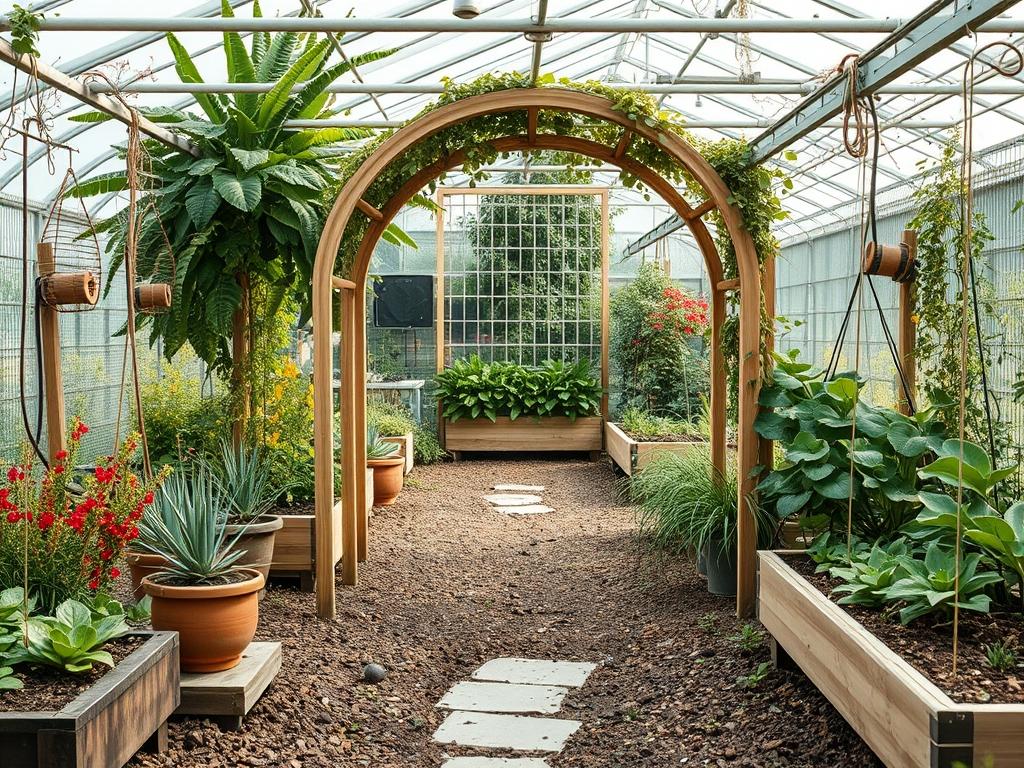
Integrating verticality into a modern residential landscape requires more than simply placing a decorative structure in the center of a yard. It demands a sophisticated understanding of spatial volume, sightlines, and the biological needs of climbing flora. The primary challenge for many property owners lies in the transition between hardscaped living areas and the softer, more organic perimeter of the garden. Modern garden arch designs serve as the architectural bridge in these scenarios. They provide a structural framework that directs the eye upward, breaking the monotony of horizontal planes. When executed correctly, these features improve curb appeal by adding a three dimensional layer to the home’s exterior. They also serve functional goals, such as providing shade, defining property boundaries, or creating a sense of mystery along a garden path. In climates with heavy wind or snow loads, the choice of material and anchoring Method becomes a matter of safety and long term viability rather than just aesthetics.
Landscape Design Principles
In the realm of professional landscape architecture, every element must justify its placement through both form and function. Symmetry plays a vital role in formal modern designs. Placing a powder coated steel arch at the exact terminus of a long walkway creates a powerful focal point that grounds the entire backyard composition. Conversely, in asymmetrical or contemporary minimalist gardens, an arch can be used to frame a specific view, such as a distant specimen tree or a water feature. Elevation layers are equally crucial. By introducing a structure that stands 7 feet to 9 feet tall, you create a mid level canopy that mimics the feeling of an outdoor room.
Visual balance is achieved by matching the mass of the arch with the surrounding foliage. A delicate wrought iron structure may be swallowed by aggressive vines, while a heavy timber pergola style arch might overwhelm a small courtyard. Irrigation planning must be integrated during the early design phase. Professional designers often hide 1/4 inch drip tubing along the interior legs of the arch to ensure that climbing vines receive consistent hydration without the aesthetic clutter of visible hoses. This ensures that the root zones, which are often constrained by the hardscaping of the walkway, do not suffer from dehydration or heat stress during peak summer months.
Plant and Material Selection
Choosing the right combination of structural material and biological companions determines the longevity of the installation. A heavy vine like Wisteria can easily collapse a flimsy trellis; therefore, high gauge galvanized steel or reinforced Western Red Cedar is required for such vigorous species. The following table outlines optimal pairings for modern garden arches based on environmental conditions and maintenance capacity.
| Plant Type | Sun Exposure | Soil Needs | Water Demand | Growth Speed | Maintenance Level |
| :— | :— | :— | :— | :— | :— |
| Clematis | Full Sun / Part Shade | Well drained, cool roots | Medium | Moderate | High (Pruning) |
| Star Jasmine | Full Sun to Part Shade | Loamy, fertile | Low to Moderate | Fast | Low |
| Climbing Rose | Full Sun | Rich, heavy loam | High | Moderate | High (Training) |
| Honeysuckle | Full Sun | Adaptable | Moderate | Very Fast | Medium |
| American Wisteria| Full Sun | Moist, slightly acidic | Moderate | Fast | High (Structural) |
| Bougainvillea | Full Sun | Gritty, dry | Low | Very Fast | Medium |
Implementation Strategy
The process begins with a precise site analysis. Before any soil is moved, you must determine the grading of the area to ensure that water does not pool at the base of the arch. Poor drainage is the leading cause of structural rot and root pathogen development. If the site is sloped, a small retaining wall or a leveled crushed stone base may be necessary to provide a stable foundation. Use a laser level and string lines to mark the exact footprint of the arch. For permanent installations, digging post holes to a depth of at least 24 inches (or below the frost line in northern climates) is a standard requirement.
Once the holes are prepared, fill the bottom with 4 inches of drainage gravel. This prevents the vertical supports from sitting in stagnant water. When using pressure treated 4×4 posts, it is advisable to use post anchors rather than burying the wood directly in concrete. This allows for easier replacement in the future. After the structure is plumb and level, backfill with concrete or compacted structural fill. Edging the area around the base with steel landscape edging or paver stones creates a clean transition between the arch and the surrounding lawn. Finally, apply a 3 inch layer of organic mulch or hardwood chips around the base of the newly planted vines to retain moisture and suppress weed competition.
Common Landscaping Failures
One of the most frequent mistakes in arch installation is the failure to account for the mature weight of the plants. A climbing hydrangea, for instance, develops thick, woody stems over a decade that can exert hundreds of pounds of downward and lateral pressure. If the arch is not anchored with heavy duty lag bolts or if the gauge of the metal is too thin, the structure will eventually buckle. Another common issue is soil compaction. During the construction of the arch and the surrounding walkways, heavy foot traffic or equipment can compress the soil. This destroys the pore space necessary for oxygen and water to reach the roots of your climbing vines.
Improper spacing is another pitfall. Arches should be wide enough to allow for easy passage even when the vines are in full bloom. A common standard is a minimum width of 48 inches for a single person path and 60 inches for a primary walkway. If the arch is too narrow, the thorns of a climbing rose or the sticky tendrils of a trumpet vine will snag pedestrians. Lastly, irrigation inefficiencies often plague these structures. Placing a sprinkler head too close to a metal arch can cause premature rusting through constant contact with mineral heavy water. Instead, use localized drip emitters at the base of each pillar.
Seasonal Maintenance
Landscape management is a year round commitment that changes with the biological cycle of the garden. In the spring, the focus is on structural integrity and pruning. Inspect all bolts, screws, and brackets for signs of fatigue or rust. Use bypass pruners to remove any dead or diseased wood from the vines before the new growth begins. This is also the ideal time to apply a slow release granular fertilizer to provide the nutrients required for the upcoming blooming season.
As summer arrives, the priority shifts to hydration and training. Use soft garden ties or jute twine to guide new shoots along the framework of the arch. This prevents the vines from becoming a tangled mass and encourages even coverage. During autumn, remove fallen foliage from the base of the structure to prevent the buildup of fungal spores. For wooden arches, this is the best season to apply a fresh coat of UV resistant sealant or stain. In the winter, especially in regions prone to ice and snow, keep a close eye on any sagging. Use a soft broom to gently knock heavy snow off the top of the arch to prevent structural collapse. If the arch supports deciduous vines, the winter months reveal the “bones” of the garden, making it a great time to evaluate the silhouette and plan updates for the following year.
Professional Landscaping FAQ
What is the best material for a low maintenance garden arch?
Powder coated aluminum or 304 stainless steel offers the best longevity. Unlike wood, these materials do not rot or require frequent staining. They resist rust and can support the weight of heavy perennial vines for decades with minimal intervention.
How deep should I bury the posts for a garden arch?
For stability and safety, bury posts at least 24 inches deep. In colder climates, you must reach below the local frost line to prevent heaving. Using concrete footings ensures the arch remains plumb despite wind or heavy plant loads.
Can I grow climbing vines on a plastic or vinyl arch?
Vinyl is suitable for lightweight annuals like Sweet Peas, but it often lacks the structural rigidity for woody perennials. Over time, UV exposure can make plastic brittle, leading to cracks under the weight of a mature Wisteria or Grapevine.
How do I prevent my arch from sinking into the ground?
Always install a compacted gravel sub base before pouring concrete or setting posts. This distributes the weight of the structure and the wet weight of the foliage. Properly engineered footings prevent the arch from leaning or sinking into soft garden soil.
Which vines grow the fastest for immediate coverage?
Honeysuckle and Silver Lace Vine are known for exceptional growth rates, often covering an entire arch in two seasons. However, their vigor requires aggressive pruning with loppers to ensure they do not overwhelm the arch or nearby garden beds.