
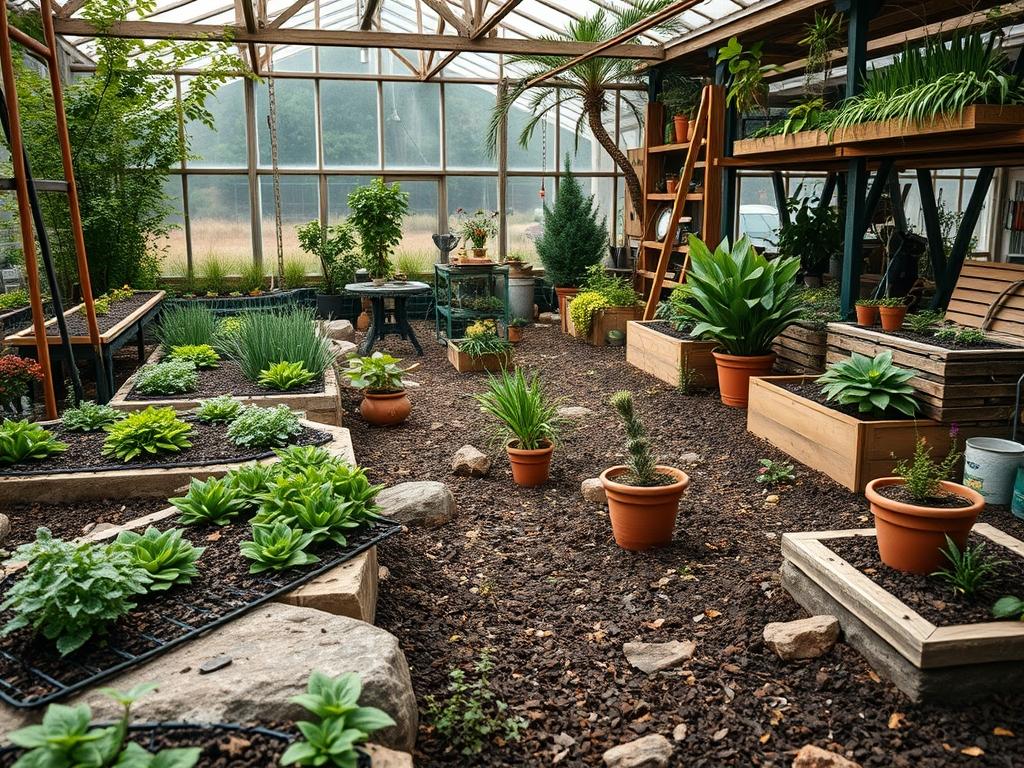
Modern landscapes often struggle to balance aesthetic minimalism with biological health, yet contemporary rock gardens offer a sophisticated solution to this architectural dilemma. Unlike the cluttered alpine gardens of the past, a contemporary approach emphasizes clean lines, negative space, and a curated palette of geological and botanical elements. This design style addresses the increasing demand for drought-tolerant environments while elevating the property value through high-end curb appeal. By utilizing structural stones and specialized flora, a designer can transform a neglected slope or a flat, uninspiring backyard into a sculptural masterpiece that functions as a self-sustaining ecosystem. The challenge lies in the orchestration of heavy materials and delicate drainage requirements, ensuring the garden looks intentional rather than accidental. Success in this field requires an understanding of how light interacts with stone surfaces and how different rock densities affect the ambient temperature of the surrounding soil.
Landscape Design Principles
The foundation of a successful contemporary rock garden is the deliberate use of symmetry and focal points to guide the viewer’s eye. While traditional gardens may rely on a riot of color, contemporary designs utilize Large-Scale Basalt Columns or Weathered Granite Boulders as primary anchors. These focal points should be installed first, often buried by one-third of their total height to create the illusion that they are natural outcroppings emerging from the earth. This technique, known as “planting the stone,” provides immediate structural permanence and prevents the “marbles on a plate” look that plagues amateur attempts.
Elevation layers are equally critical for visual depth. If the site is naturally flat, a landscape architect will often specify the creation of artificial berms using Clean Structural Fill and Crushed Aggregate. By varying the height of the terrain, you create different microclimates; the peaks of the mounds stay drier and warmer, while the valleys provide a cooler, moisture-rich environment for specific plant varieties. These layers should be defined by sharp, clean transitions. Using Corten Steel Edging or Powder-Coated Aluminum Strips provides a crisp boundary between the rock mulch and the surrounding turf or walkways, reinforcing the modern aesthetic.
Walkways within these gardens serve both a functional and a rhythmic purpose. Instead of continuous poured concrete, consider using Large Format Pavers or Dimensional Flagstone set in a bed of Fine Mexican Beach Pebbles. This allows for natural water infiltration and prevents the runoff issues associated with large impervious surfaces. Irrigation must be planned with precision during this phase. A Drip Irrigation System with Pressure-Compensating Emitters is the industry standard, delivering water directly to the root zones of the plants hidden beneath the stone mulch. This reduces evaporation and ensures that the rocks themselves do not become stained by the mineral deposits often found in overhead spray systems. Balance is achieved by contrasting the heavy, grey tones of the stone with the vibrant, structural greens of the selected foliage.
Plant and Material Selection
| Plant Type | Sun Exposure | Soil Needs | Water Demand | Growth Speed | Maintenance Level |
| :— | :— | :— | :— | :— | :— |
| Blue Fescue (Festuca glauca) | Full Sun | Well-Drained/Gritty | Low | Moderate | Low |
| Dragon’s Blood Sedum | Full Sun to Part Shade | Poor/Sandy | Very Low | Fast | Low |
| Dwarf Hinoki Cypress | Full Sun to Part Shade | Acidic/Well-Drained | Medium | Very Slow | Low |
| Creeping Thyme | Full Sun | Neutral/Rocky | Low | Moderate | Moderate |
| Agave parryi | Full Sun | Gritty/Mineral | Very Low | Slow | Low |
| Japanese Forest Grass | Full Shade to Part Shade | Humus-Rich | Medium | Moderate | Moderate |
Implementation Strategy
The transition from a design on paper to a physical landscape begins with rigorous site preparation. Grading is the most vital step; the ground must slope away from any permanent structures at a minimum of two percent grade. Once the rough grade is established, the designer must oversee the installation of a Non-woven Geotextile Fabric. This is not the sheer plastic found in big-box stores but a heavy-duty, permeable membrane that allows water to pass through while preventing the soil from mixing with the expensive decorative rock.
After the fabric is secured with 6-inch Landscape Staples, the placement of the primary boulders begins. Use a Mini-Excavator with a Thumb Attachment to position stones weighing over 300 pounds. Each stone should have its “best face” pointed toward the primary viewing angle, usually the home’s patio or the street front. Once the heavy lifting is complete, the planting pockets are cut into the fabric. Each hole should be twice as wide as the plant’s root ball. Replace the native soil in these pockets with a custom Rock Garden Mix, typically consisting of one part compost, one part coarse sand, and one part pea gravel.
Finally, the topdressing, or mulch, is applied. In a contemporary setting, a 2-inch to 3-inch layer of uniform aggregate is preferred. Black Lava Rock, Crushed Grey Granite, or Polished River Stones are popular choices. This layer suppresses weeds, regulates soil temperature, and provides a clean, monochromatic backdrop that makes the architectural shapes of the plants pop. For a professional finish, use a Plate Compactor on any gravel walkways to ensure a firm, walkable surface that does not shift underfoot.
Common Landscaping Failures
The most frequent failure in rock garden design is the neglect of subsurface drainage. If a “bowl” is created with the geotextile fabric without a clear exit point for water, the plants will suffer from root rot, regardless of how drought-tolerant they are. Always ensure that the Drainage Pipe or French Drain System is integrated into the lowest points of the garden layout.
Another common mistake is improper stone scaling. Using rocks that are too small for the space results in a cluttered, “busy” appearance that lacks the gravitas of a contemporary design. Conversely, failing to account for the mature size of plants leads to overcrowding. A Dwarf Conifer may look perfect in a 3-gallon pot, but if it is not spaced according to its ten-year spread, it will eventually obscure the carefully chosen stones.
Soil compaction is a silent killer in new landscapes. If heavy machinery moves over the planting areas during the boulder placement phase, the soil structure collapses, eliminating the air pockets necessary for root respiration. To fix this, use a Broadfork or Soil Auger to loosen the earth before the final planting. Finally, many designers fail to account for the “heat island effect” of large stone masses. In southern climates, dark stones like Basalt can reach temperatures that scorch sensitive foliage. In these regions, lighter colored stones such as Buff Limestone or White Quartzite are more appropriate.
Seasonal Maintenance
Contemporary rock gardens are marketed as low-maintenance, but they are not “no-maintenance.” In the spring, the primary focus is on debris removal. Use a High-Powered Leaf Blower to clear fallen leaves and organic matter from between the stones. If left to decay, this material becomes a growing medium for weeds. This is also the time to apply a Pre-emergent Herbicide to prevent weed seeds from germinating in the gravel.
Summer maintenance involves monitoring the Drip Irrigation System. Check for clogged emitters and ensure the Automatic Timer is adjusted for peak heat. Pruning should be minimal; only trim back spent blooms on plants like Lavender or Salvia to maintain a tight, globose shape. In the autumn, focus on structural integrity. Inspect Retaining Walls for movement after heavy rains and replenish any thin spots in the Stone Mulch where the underlayment might be showing.
Winter management depends on the climate. In snow-prone areas, avoid using salt-based de-icers near the rock garden, as the runoff will alter the soil pH and kill the specialized flora. Instead, use Coarse Sand for traction. If you have utilized porous stones like Sandstone, ensure they are properly sealed or positioned so that standing water does not freeze within their crevices, which can cause the stone to shatter over time.
Professional Landscaping FAQ
What is the best stone for a modern look?
Basalt, Slate, and Dark Granite are top choices. Their monochromatic tones and sharp edges complement modern architectural lines. Avoid rounded, multi-colored creek stones if you are aiming for a strictly contemporary aesthetic.
How do I prevent weeds from growing in the rocks?
Use a high-quality Non-woven Geotextile Fabric and a 3-inch layer of aggregate. Keep the stones clean of organic debris. If weeds appearing, use a Propane Torch for eco-friendly spot treatment without disturbing the rock layer.
Can I build a rock garden on a steep slope?
Yes, but it requires Structural Retaining Walls or Terracing. Use Large Angular Boulders that can be “keyed” into the slope. This prevents erosion and creates stable pockets for planting.
How much does a professional rock garden cost?
Expect to pay between $20 and $50 per square foot for a professional installation. Costs vary based on the rarity of the stone, the size of the boulders, and the complexity of the drainage and irrigation systems.
Can I use native plants in a contemporary rock garden?
Absolutely. Using Native Grasses and Local Succulents is highly recommended. They are adapted to your local climate and soil, which reduces the need for chemical fertilizers and excessive supplemental watering.