
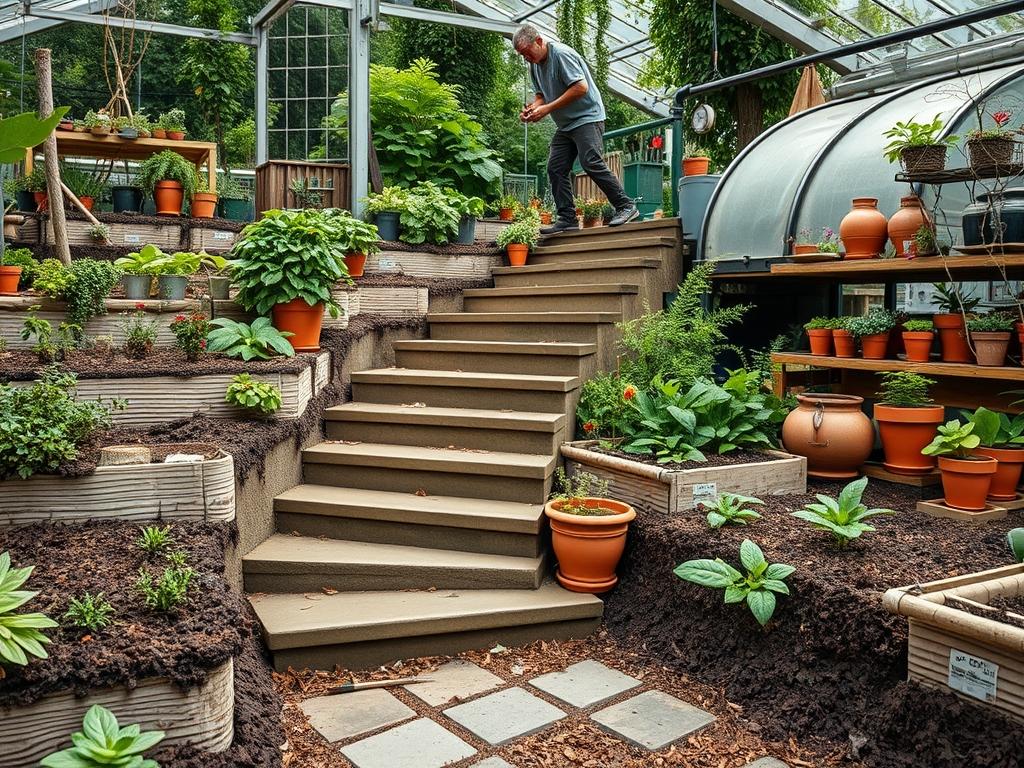
Navigating a sloped landscape requires more than a simple path; it demands a structural solution that marries safety with aesthetic continuity. When a property features significant changes in grade, the transition between different elevations can become a site of erosion, poor drainage, or wasted space if left unaddressed. Professional landscaping aims to transform these difficult inclines into purposeful journeys through the garden. By implementing cost effective Outdoor Staircase Ideas, homeowners can reclaim their land, providing a safe walking surface while simultaneously increasing the curb appeal and market value of the home. The primary challenge involves balancing the immediate need for a functional walkway with the long term stability of the soil. In regions with heavy rainfall or freeze-thaw cycles, the staircase must act as a stabilizer, preventing the yard from migrating downward over time. A well designed set of stairs serves as a structural spine for the rest of the landscape.
Landscape Design Principles
Successful garden transitions rely on the core principles of symmetry, rhythm, and visual balance. When planning a staircase, the architect looks for a focal point, perhaps a large Specimen Tree or a distant view, to align the steps toward. Symmetry does not always mean a mirror image; it often involves balancing the heavy weight of a Fieldstone staircase with softer plantings on either side to prevent the structure from appearing too industrial or harsh.
Elevation layers allow the designer to break up a steep slope into manageable sections. Instead of one long, intimidating flight of stairs, incorporating a landing every five to seven steps creates a place for rest and visual interest. These landings are perfect opportunities for outdoor living elements such as a small bench or a potted garden. Irrigation planning is also a critical component of the design phase. Water naturally flows toward the lowest point of the property, meaning the staircase must be designed with integrated drainage to prevent it from becoming a seasonal waterfall. Walkways at the top and bottom of the stairs should be constructed of compatible materials to maintain architectural unity across the site.
Plant and Material Selection
The materials chosen for an outdoor staircase must withstand constant exposure to the elements while providing enough friction to prevent slips. Pressure-treated lumber is a popular budget choice, offering durability and a natural look that blends well with wooded environments. For a more permanent, albeit slightly more expensive option, Pre-cast concrete pavers or Natural flagstone offer superior longevity. Underneath these materials, a solid foundation of Crushed stone and Levelling sand is essential.
Regarding vegetation, the plants surrounding the steps serve two purposes: aesthetics and erosion control. Native plants with deep root systems are preferred because they anchor the soil around the staircase risers, reducing the risk of the structure shifting.
| Plant Type | Sun Exposure | Soil Needs | Water Demand | Growth Speed | Maintenance |
| :— | :— | :— | :— | :— | :— |
| Creeping Juniper | Full Sun | Well-drained | Low | Moderate | Very Low |
| Blue Star Creeper | Partial Sun | Moist / Loamy | Medium | Fast | Moderate |
| Daylily | Sun / Part Shade | Adaptable | Moderate | Fast | Low |
| Switchgrass | Full Sun | Sandy / Clay | Low | Fast | Low |
| Vinca Minor | Full Shade | Rich / Moist | Medium | Moderate | Moderate |
| Stonecrop Sedum | Full Sun | Poor / Sandy | Very Low | Moderate | Very Low |
Implementation Strategy
The construction process begins with a meticulous backyard layout and grading plan. First, mark the path of the stairs using Landscape stakes and Masonry string. This allows you to visualize the transition before any soil is moved. The golden rule of staircase design is the 7/11 ratio: a 7-inch rise and an 11-inch run. This ensures a comfortable gait for the average adult.
Excavation follows, where you will cut “steps” into the existing hillside. This is known as the cut and fill method. As you dig out the tread area, use that soil to level other parts of the slope. Once the rough grading is complete, install a 4-inch base of Compacted gravel. This base is non-negotiable for drainage. If you are using Railway ties or Timber, secure them into the ground using 12-inch galvanized steel spikes or Rebar.
For the edging, use Plastic landscape edging or Metal borders to keep the Mulch or Pea gravel from spilling onto the steps. A mulch depth of 3 inches is recommended for the surrounding garden beds to suppress weeds and retain moisture for the new plantings. If the slope is particularly steep, consider installing a French drain behind the first few risers to divert subsurface water away from the staircase foundation.
Common Landscaping Mistakes
The most frequent failure in staircase construction is ignoring hydrostatic pressure. When water builds up behind a solid riser, such as a Concrete block or Timber, the pressure can eventually push the staircase out of alignment. Always provide a path for water to escape, either through “weep holes” or by using permeable materials like Crushed stone between the steps.
Another common error is root overcrowding. Planting a Large-growth shrub or an Oak tree too close to the staircase will eventually lead to the roots lifting the steps or cracking the masonry. Proper spacing is vital; research the mature width of every plant species before digging. Soil compaction is also often overlooked. While you want the base of the stairs to be compacted, the surrounding planting pockets should remain loose and aerated. Standard Tamping tools should be used on the structural path, but avoid using heavy machinery near the root zones of your ornamental plants. Finally, irrigation inefficiencies occur when the top of the slope is on the same zone as the bottom. The top will usually dry out faster, while the bottom becomes a swamp. Use separate Drip irrigation lines for different elevations to ensure even moisture distribution.
Seasonal Maintenance
Garden transitions require consistent management to remain safe and attractive. In the spring, inspect the staircase for any shifting that occurred during the winter frost. Clear away dead organic matter and refresh the Bark mulch in the adjacent beds. This is also the best time to apply a Pre-emergent herbicide to prevent weed seeds from taking hold in the gaps between your Pavers.
During the summer, focus on irrigation. Ensure that your Native plants are surviving the heat, as their root health is tied to the stability of the slope. If you used Wood decking or Timber, check for signs of rot or insect damage. Autumn maintenance involves the meticulous removal of leaves. Wet leaves on a staircase are a major slip hazard and can stain Natural stone. Ensure that your Drainage grates are clear of debris before the first winter rains. In the winter, avoid using harsh rock salt on Concrete steps, as it causes pitting and spalling. Instead, use Sand or Poultry grit for traction, which is safer for both the hardscaping and the surrounding soil chemistry.
Professional Landscaping FAQ
What is the cheapest material for outdoor stairs?
Pressure-treated lumber and Gravel are generally the most affordable options. Using Railway ties pinned with Rebar provides a rustic, low cost transition that handles grade changes effectively without the high price of masonry or professional stone setting.
How do I prevent my garden stairs from sliding down the hill?
Stability comes from a Compacted gravel base and deep Anchors. For timber stairs, use 12-inch steel spikes. For stone, ensure a thick Sub-base of 3/4-inch minus gravel and use Geotextile fabric to separate the stone from the raw soil.
Do I need a landing for my garden stairs?
If the total vertical rise exceeds 5 feet, a landing is highly recommended. Landings break the momentum of a fall, provide a resting point, and allow for a change in direction, which makes the ascent feel less strenuous.
Which plants are best for holding soil on a slope?
Creeping Juniper, Vinca Minor, and various Ornamental grasses are excellent choices. These species feature fibrous or spreading root systems that lace through the soil, acting as a natural net that prevents erosion around your Outdoor Staircase Ideas.
How wide should an outdoor staircase be?
A minimum width of 36 inches is standard for a single person, but 48 inches is preferred for a professional look. This allows two people to pass each other comfortably and provides enough scale to match the openness of an outdoor environment.