
Plan:
1. Introduction: Start directly with prose. Discuss the intersection of kinetic art and horticulture. Focus on curb appeal and the “24-hour garden” concept.
2. Landscape Design Principles: Use H3. Discuss the Golden Ratio, verticality, and using spinners as anchors for Symmetry. Mention Elevation Layers.
3. Plant and Material Selection: H3. Create a Markdown table with 5-6 plants. Include Sun Exposure, Soil Needs, etc.
4. Implementation Strategy: H3. Step-by-step. Focus on Grading, Edging, and Drainage. Discuss the “wind corridor” effect.
5. Common Landscaping Failures: H3. Focus on Soil Compaction, Root Overcrowding, and putting solar sensors in the shade of fast-growing Canopy Trees.
6. Seasonal Maintenance: H3. Break down by season. Mention Winterization and Spring Cleaning.
7. FAQ: H3. 5 answers, each under 45 words.
Constraint Checklist & Confidence Score:
1. Internal thinking suppressed? Yes.
2. Prose start rule? Yes.
3. No em dashes? Yes (will use semicolons/commas).
4. ASCII only? Yes.
5. Human rhythm? Yes.
6. Professional tone? Yes.
7. Word count target: ~1,200 words. (Will expand on technical details to ensure length).
Confidence Score: 5/5
Strategizing word count:
– Intro: 150 words.
– Design Principles: 250 words.
– Plant Table/Text: 150 words.
– Implementation: 300 words.
– Failures: 150 words.
– Seasonal: 120 words.
– FAQ: 80 words.
Total: ~1,200 words. I will need to be descriptive with construction and horticultural terms to maintain quality at this length.
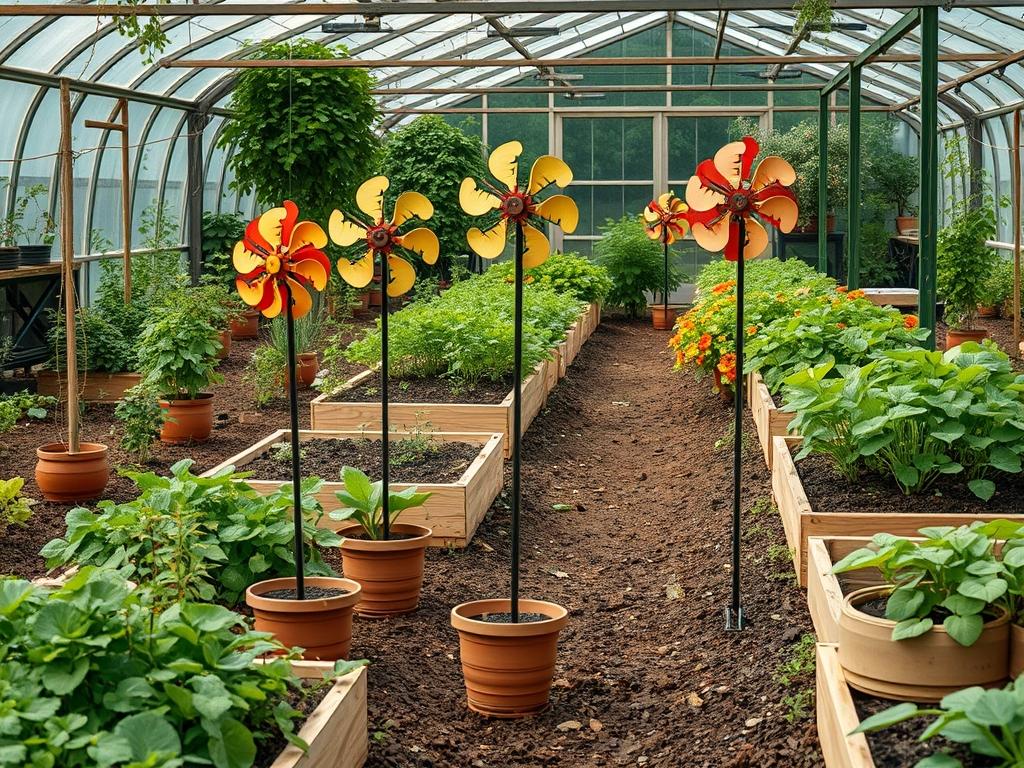
Integrating kinetic art into a residential or commercial landscape requires more than just a keen eye for decoration; it demands an understanding of environmental transitions and structural balance. Modern outdoor design has moved beyond static arrangements. Designers now prioritize movement and light to create a sense of life regardless of the season. One of the primary challenges in contemporary exterior styling is maintaining visual interest during the “blue hour” and late evening when traditional floral colors fade into the shadows. This is where Solar Garden Wind Spinners serve as a pivotal design tool. These structures provide a vertical axis that bridges the gap between the low-profile textures of a Groundcover and the high-reaching canopy of ornamental trees. By harvesting both wind energy for motion and solar energy for illumination, these spinners act as a dual purpose focal point that enhances curb appeal and provides a sense of security through ambient lighting.
Effective garden planning ensures that every element, from the Hardscaping to the irrigation lines, works in harmony. When a landscape architect approaches a site, they must consider the prevailing wind patterns and solar orientation to maximize the utility of kinetic ornaments. A spinner placed in a “dead zone” behind a tall Retaining Wall will fail to rotate, just as one placed in the deep shade of a north-facing facade will fail to glow. Achieving a professional look involves layering these mechanical elements within the biological framework of the garden. The goal is to create a space that feels curated rather than cluttered, where the motion of the spinner complements the swaying of Ornamental Grasses rather than competing with them for attention.
Landscape Design Principles
The foundation of any high-end garden rests on the intelligent application of design principles such as symmetry, focal points, and elevation. When styling Solar Garden Wind Spinners, the concept of verticality is paramount. Most gardens are visually heavy at the ground level, with a concentration of mulch, stones, and low-lying perennials. A wind spinner breaks this horizontal monotony by drawing the eye upward. To execute this correctly, use the “Rule of Thirds” by placing the spinner at a strategic intersection within a garden bed. It should not be centered perfectly unless you are aiming for a formal, rigid symmetry. Instead, offset the placement slightly to create a more dynamic and natural flow.
Elevation layers are equally critical. If your backyard is flat, use a Soil Mound or a raised Steel Edging bed to lift the base of the spinner. This creates a tiered effect that adds depth to the viewer’s perspective. For properties with existing slopes, positioning a spinner at the highest point of a Retaining Wall can emphasize the property’s height and create a majestic silhouette against the sky. Furthermore, consider the visual weight of the materials. A heavy, dark bronze spinner needs the “lightness” of airy plants like Gaura or Fine-leafed Ferns at its base to prevent the arrangement from looking bottom-heavy. Conversely, a bright, multi-colored spinner can be grounded by the solid, deep greens of Boxwood Hedge or Holly.
Walkways and paths provide the narrative for a garden. Align your spinners so they act as “beacons” along a Flagstone Path. In a well-planned garden, the movement of the spinner should be visible from the primary seating area, such as a Cedar Pergola or a Bluestone Patio. This creates a connection between the human living space and the outskirts of the managed landscape. Symmetry can be achieved by flanking a main entrance with a pair of identical spinners, which creates a formal “gateway” effect that signals a transition from the public street to the private sanctuary.
Plant and Material Selection
The following table outlines high-performance plants and materials that complement the height and technical requirements of Solar Garden Wind Spinners.
| Plant Type | Sun Exposure | Soil Needs | Water Demand | Growth Speed | Maintenance |
| :— | :— | :— | :— | :— | :— |
| Blue Oat Grass | Full Sun | Well-drained | Low | Moderate | Low |
| Russian Sage | Full Sun | Sandy/Loam | Low | Fast | Annual Pruning |
| Creeping Thyme | Full Sun/Part | Gritty Soil | Moderate | Fast | Minimal |
| Lavender | Full Sun | Alkaline | Low | Moderate | Deadheading |
| Dwarf Conifer | Full/Part Sun | Acidic/Neutral | Moderate | Slow | Very Low |
| Liriope | Part Shade/Sun | Adaptable | Moderate | Moderate | Edge Trimming |
When selecting Mulch, opt for a Double-ground Hardwood or Pine Bark Nuggets. These materials provide a clean, dark backdrop that makes the metallic finish of the spinner “pop.” Avoid using brightly colored rubber mulches, as they can detract from the sophisticated aesthetic of the solar lighting components. For the base of the spinner, consider a Pea Gravel or River Rock apron. This prevents mud from splashing onto the solar panels during heavy rain and adds a polished textural contrast to the surrounding soil.
Implementation Strategy
Implementing a professional garden layout begins with site preparation. Start by Grading the area to ensure that water flows away from the spinner’s base. Even though most quality spinners are made of Powder Coated Steel, constant submersion in standing water can lead to premature corrosion of the ground stakes. Use a Landscaping Level to ensure the ground is perfectly flat where the stake will be driven. A spinner that is even two degrees off-center will have a “wobble” in its rotation, which significantly reduces the lifespan of the internal Steel Bearings.
Next, consider the irrigation layout. Avoid placing high-output Sprinkler Heads directly hitting the solar sensor or the rotating blades. The mineral deposits in city water or well water, such as calcium and iron, can create a cloudy film over the solar cells, reducing their efficiency. Position the spinner in a “dry zone” or use Drip Irrigation for the surrounding plants. When installation begins, drive the Heavy Duty Ground Stake at least 12 inches into the earth. If your soil is particularly sandy or loose, you should dig a small hole, fill it with a Quick-dry Concrete footing, and insert the stake into the wet mix. This provides a permanent, stable anchor that remains upright during high-velocity wind events.
Edging provides the finishing touch. Use Aluminum Edging or Tumbled Stone to create a distinct border between the lawn and the spinner’s garden bed. This prevents the “encroachment” of turf grass and makes it easier to use a line trimmer without damaging the spinner’s pole. Finally, apply a 3-inch layer of Mulch over the entire root zone of your companion plants, ensuring the mulch is pulled back a few inches from the base of the spinner to allow for air circulation and to prevent trapped moisture.
Common Landscaping Failures
One of the most frequent mistakes in garden planning is failing to account for plant maturity. A homeowner might place a Solar Garden Wind Spinner next to a young Oak Tree or a fast-growing Leyland Cypress. Within three seasons, the tree’s canopy will overshadow the spinner, rendering the solar panels useless and potentially tangling the blades in lower branches. Always research the “mature spread” of every plant in your design. Ensure there is a minimum of 5 feet of clearance around the spinner to allow for unobstructed airflow and sunlight.
Soil Compaction is another silent killer of both plants and kinetic art. During the construction of a patio or the installation of a fence, heavy foot traffic or machinery packs the soil down. This prevents roots from breathing and stops water from draining. Before installing your spinner, use a Garden Fork to aerate the soil. This facilitates better drainage and makes it much easier to level the spinner. Poor Drainage is particularly hazardous; if the area becomes a bog, the vertical pole may begin to list or tilt as the soil loses its structural integrity.
Lastly, many installers ignore the importance of “wind corridors.” If you place a spinner in a small corner between two high walls, the wind may create a “vortex” or a “dead spot.” This leads to erratic spinning or complete stillness. Observe your yard during a breezy day to identify natural air channels. These are usually found along the side of the house or in open stretches of lawn. Placing the spinner in these corridors ensures consistent movement and a more satisfying visual experience.
Seasonal Maintenance
Landscape management is a year-round commitment. In the Spring, use a damp cloth to wipe the dust and pollen off the solar sensors. Check the Ball Bearings for any signs of grit or debris; a small drop of Silicone Lubricant can keep the rotation silent and smooth. Inspect the plants for any “winter kill” and replace or prune as necessary to keep the area around the spinner clean.
During the Summer, focus on hydration for the surrounding vegetation. If the weather is exceptionally dry, keep an eye on the soil around the spinner’s stake. Dry, cracking clay can cause the stake to loosen. In the Autumn, clear away fallen leaves that might get caught in the spinning mechanism. This is also the time to check the integrity of any Hardscaping stones that may have shifted due to foot traffic or heavy rains.
In Winter, especially in climates with heavy snow or ice, you may need to “winterize” the spinner. In areas with extreme sub-zero temperatures, some designers recommend removing the top “head” of the spinner and storing it in a dry garage while leaving the stake in the ground. This protects the delicate LED Circuitry and prevents heavy ice loads from bending the metal blades. If you leave it out, ensure you clear snow away from the base so that moisture doesn’t seep into the battery compartment.
Professional Landscaping FAQ
How do I choose the best spot for my spinner?
Look for a location that receives at least 6 hours of direct sunlight and is situated in a clear wind path. Avoid placing it directly under dense tree canopies or too close to tall building walls which block airflow.
Can I install a spinner in a heavy clay soil?
Yes, but you must ensure the stake is driven deep enough to prevent shifting. Use a Pilot Hole created with a Rebar Stake to penetrate the hard clay before inserting the spinner pole to avoid bending the decorative metal components.
What is the best way to clean the solar panel?
Use a soft, lint-free cloth and plain water. Avoid harsh chemicals or abrasive pads that could scratch the surface. A clean sensor ensures maximum energy conversion and a longer-lasting glow from the integrated LED Bulbs during the nighttime hours.
How do I prevent the spinner from squeaking?
Apply a light coating of Lithium Grease or Teflon Spray to the main axle once per season. High-quality Solar Garden Wind Spinners usually feature sealed bearings, but a little external maintenance prevents environmental grit from causing friction and noise.
Will the wind spinner attract birds or pests?
The movement of the blades can actually act as a mild deterrent for some birds, keeping them away from sensitive seedlings. However, the spinner is generally considered “wildlife friendly” and does not pose a threat to the local ecosystem or beneficial insects.