
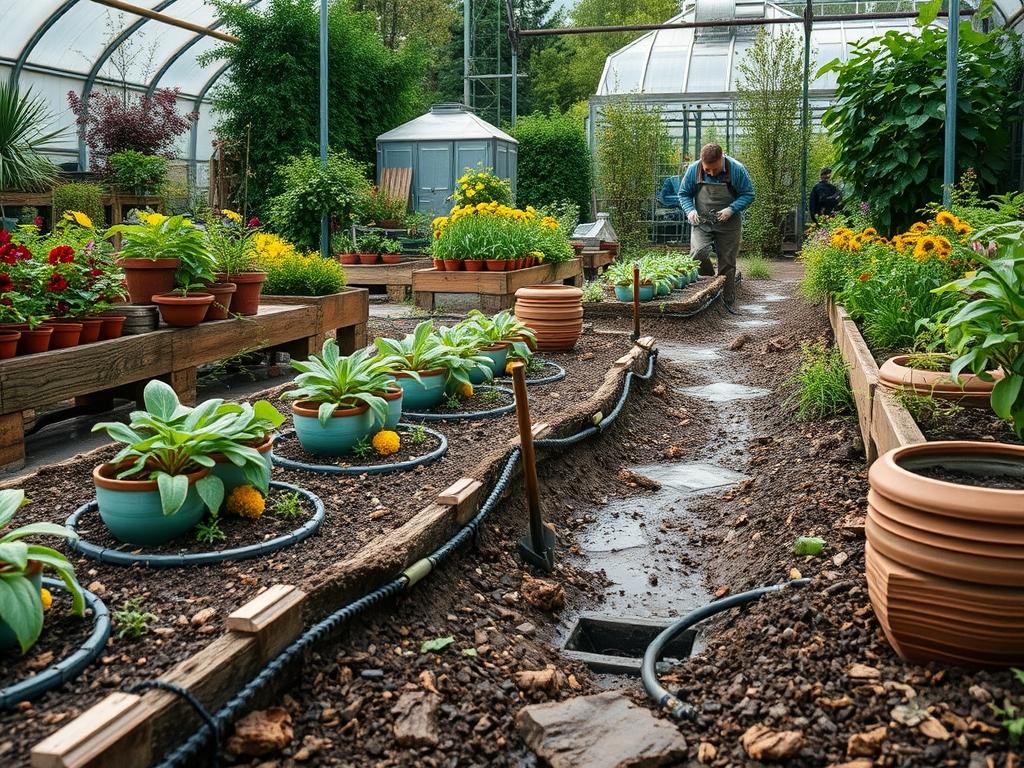
Managing a sloping driveway is a complex exercise in hydraulic engineering masked by aesthetic design. When water gains momentum on a vertical descent, it carries the potential to erode topsoil, compromise structural foundations, and flood lower-level entryways. Effective sloping driveway drainage requires more than just a surface level fix; it demands a comprehensive understanding of how elevation affects the local microclimate and soil stability. By integrating functional components like channel drains and swales into the broader landscape, property owners can improve curb appeal while ensuring their transition from street to garage remains a durable, safe asset. The goal is to redirect runoff away from the home using gravity, rather than fighting against it.
In professional landscaping, the slope is not simply a challenge to overcome but an opportunity to create a multi-dimensional environment. A well designed driveway should harmonize with the surrounding topography, using elevation shifts to define different zones of the yard. This approach prioritizes outdoor functionality, ensuring that heavy rainfall does not turn a primary entrance into a seasonal creek. Whether dealing with a gentle incline or a steep drop, the priority is always the controlled movement of water.
Landscape Design Principles
Symmetry and visual balance play vital roles in managing the optics of a sloping landscape. A driveway that cuts straight down a hill can look stark and utilitarian. To soften this, architects often use elevation layers, such as terraced planting beds, to flank the driveway. These layers serve a dual purpose. They break up the visual height of the slope while providing structural support that prevents lateral soil migration. When planning these zones, a focal point, such as a large specimen tree or a boulder grouping, can draw the eye away from the heavy infrastructure of the drainage system.
Irrigation planning is particularly sensitive on a slope. Water tends to pool at the bottom, creating a saturated zone, while the top of the incline remains arid. A tiered irrigation system ensures that each level receives appropriate moisture without contributing to excessive runoff. Walkways should also be integrated into the design with careful consideration of the grade. Using flagstone steps or permeable pavers for pedestrian paths adjacent to the driveway allows for natural infiltration. This vertical layering creates a sense of depth and luxury that a flat lot simply cannot replicate.
Focal points should be placed strategically to guide the viewer’s perspective. If the driveway leads down toward a garage at the basement level, the landscaping should emphasize the horizontal lines of the house to counteract the feeling of the driveway sinking. Conversely, if the driveway climbs toward the home, the design should emphasize the ascent with upward lighting on ornamental grasses or tapered evergreens. This visual balance ensures the driveway feels like a curated entry rather than a necessary scar on the hillside.
Plant and Material Selection
The choice of plants for a sloping environment depends on their ability to anchor the soil. Deep rooted species are essential for stabilization, while the materials used for the driveway itself must balance durability with permeability.
| Plant Type | Sun Exposure | Soil Needs | Water Demand | Growth Speed | Maintenance Level |
| :— | :— | :— | :— | :— | :— |
| Creeping Juniper | Full Sun | Well-drained | Low | Moderate | Low |
| Switchgrass | Full Sun/Part Shade | Adaptable | Low to Medium | Fast | Low |
| Creeping Phlox | Full Sun | Rich/Organic | Medium | Moderate | Medium |
| Daylily | Full Sun/Part Shade | Loamy | Medium | Fast | Low |
| Pachysandra | Shade | Acidic/Moist | Medium | Slow | Low |
| River Birch | Full Sun/Part Shade | Wet/Clay | High | Fast | Medium |
| English Ivy | Shade/Part Sun | Any | Medium | Very Fast | High |
For hardscaping materials, permeable interlocking concrete pavers are often the gold standard for sloping driveways. They allow water to enter the gaps between the units, filtering down into a crushed stone base rather than sheeting over the surface. If traditional asphalt or concrete is used, specialized trench drains or channel drains must be installed at critical points, such as where the driveway meets the garage or the public street. These drains should be topped with heavy-duty cast iron grates to withstand the weight of vehicular traffic.
Implementation Strategy
Planning a backyard or driveway layout begins with an accurate assessment of the grade using a transit level or laser level. A common rule of thumb is to maintain a minimum 2 percent slope away from any structures to ensure positive drainage. If the natural incline of the driveway is too steep, the primary strategy involves breaking the water’s path.
The first step in implementation is grading. The subgrade must be compacted using a plate compactor to prevent future settling. Along the edges of the driveway, installers should dig trenches for French drains. These consist of 4-inch perforated PVC pipe wrapped in filter fabric and buried in a bed of 3/4-inch clean crushed stone. The fabric prevents fine silt from clogging the pipe, ensuring the system remains functional for decades.
For surface water, catch basins should be placed at the low points of the landscape. These basins collect debris and water, funneling them into a solid exit pipe that carries the flow to a designated discharge area, such as a dry well or a municipal storm sewer. Along the sides of the driveway, bioswales can be constructed. These are shallow, vegetated depressions designed to slow down and bioretically treat runoff. Filling these swales with river rock and native sedges creates a natural filtration system that looks like a dry creek bed during the dry season.
Mulch depth is also a critical factor. On a slope, standard wood chips will likely wash away in a heavy storm. Professionals recommend using shredded hardwood mulch, which mats together to stay in place, or substituting mulch with aggregate materials like pea gravel or decomposed granite in high flow areas. These materials provide a stable base for plants while allowing water to pass through freely.
Common Landscaping Failures
One of the most frequent mistakes in sloping driveway management is the failure to account for water velocity. When water moves quickly, it gains the energy to lift even large stones. Using smooth, round river stones in a steep drainage channel often results in the stones being deposited at the bottom of the hill after the first major storm. Instead, angular riprap or fractured stone should be used, as the jagged edges lock together to resist movement.
Root overcrowding is another common issue. When homeowners plant large trees too close to the driveway to act as a barrier, the expanding root systems can eventually lift and crack the concrete slabs or asphalt. Proper spacing, based on the mature canopy spread of the species, is vital for long term structural integrity. Furthermore, soil compaction is a silent killer of landscape health. During the construction of the driveway, heavy machinery often packs the soil so tightly that it becomes nearly as impermeable as the pavement itself. This increases runoff and prevents plants from establishing deep roots. Professionals solve this by mechanically aerating the soil in the planting zones before installing the final landscape.
Lastly, irrigation inefficiencies frequently plague sloped designs. Installing a standard spray head at the top of a hill usually results in the water running straight down the driveway before it can soak into the ground. Drip irrigation or rotary nozzles with a lower application rate are required for sloped zones. These tools deliver water slowly, allowing the soil to absorb moisture at a rate that prevents surface saturation and runoff.
Seasonal Maintenance
Landscape management is a year round commitment, particularly when drainage systems are involved. In the spring, the focus should be on inspecting the grates and catch basins for debris that accumulated during the winter. Silt, leaves, and twigs can quickly block a 4-inch pipe, leading to localized flooding. This is also the time to check for erosion rills along the edges of the driveway and fill them with compacted topsoil and seed.
Summer maintenance revolves around irrigation monitoring. As temperatures rise, the higher sections of the slope will dry out faster than the base. Adjusting the irrigation controller to run in shorter, more frequent cycles, often called a cycle and soak method, ensures the plants remain healthy without wasting water. Pruning fast growing species like English ivy or Switchgrass prevents them from encroaching on the driveway surface or blocking drainage paths.
Autumn is the most critical time for clearing. Fall leaves are the primary enemy of sloping driveway drainage. If left on the ground, they will eventually wash into the trench drains and form a thick, waterproof mat. Weekly clearing with a leaf blower is necessary to keep the channels open. Finally, in the winter, the use of de-icing salts should be minimized. These chemicals can leach into the drainage system and damage the root zones of the very plants meant to stabilize the slope. Switching to sand or calcium magnesium acetate is a safer alternative for both the hardscaping and the environment.
Professional Landscaping FAQ
How do I stop my driveway mulch from washing away?
Switch from light wood chips to shredded hardwood mulch or double-ground bark. These materials interlock when wet, creating a stable mat. For steeper sections, consider using creeping groundcovers or angular decorative stone which provide superior resistance to heavy water flow.
What is the best drain for a steep driveway?
A trench drain or channel drain installed across the full width of the driveway is most effective. It should be placed at the point of maximum slope change or right before a garage entry to intercept and redirect high-velocity runoff.
Can I use a French drain for surface water?
French drains are primarily designed to manage subsurface groundwater. While they can assist with surface moisture, a catch basin or an open swale is better suited for capturing and moving the large volumes of water typical of driveway runoff.
How deep should my drainage pipes be buried?
Drainage pipes should typically be buried at least 12 to 18 inches deep to protect them from the weight of vehicles and the freeze-thaw cycle. Always ensure the trench has a consistent 1 percent to 2 percent grade for gravity flow.
Will permeable pavers work on a very steep slope?
Permeable pavers are excellent for moderate slopes, but on extreme inclines, the water may move too quickly over the surface to infiltrate. In these cases, combining pavers with horizontal interceptor drains ensures that water is managed effectively throughout the descent.