
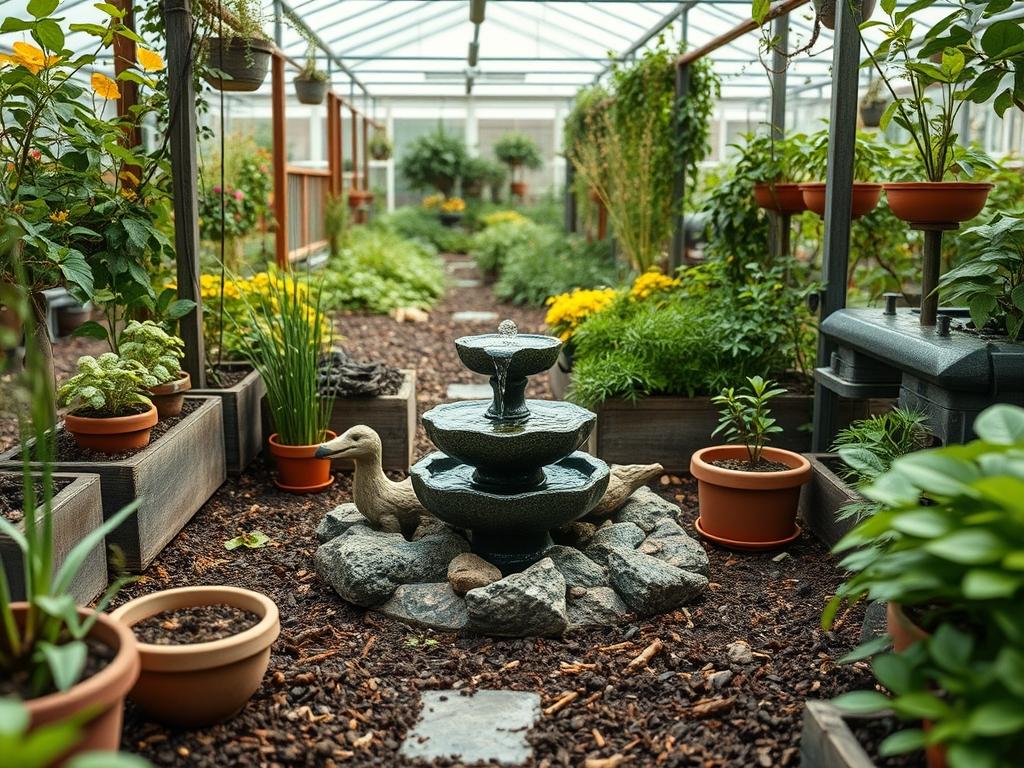
Creating an immersive outdoor living environment within the confines of a limited urban footprint requires a blend of spatial efficiency and sensory focus. Homeowners often struggle with small patios that feel disconnected from nature, yet the introduction of miniature water features can bridge this gap effectively. These installations provide more than just aesthetic value; they offer acoustic masking for city noise and create a cooling microclimate during peak summer months. From a landscape architecture perspective, the challenge lies in selecting a system that provides maximum curb appeal without overwhelming the scale of the existing hardscaping. Climate considerations are paramount, as the volume of water in a small basin evaporates quickly in arid regions or freezes solid in temperate zones. By prioritizing affordably sourced materials and strategic placement, a designer can transform a sterile concrete slab into a sophisticated sanctuary that enhances the overall functionality of the home.
Landscape Design Principles
When integrating miniature water features into a small patio, the principle of scale governs every decision. A focal point that is too large will make the area feel cramped, while a feature that is too small may get lost among the furniture. Achieving visual balance often involves using the concept of symmetry or the rule of thirds. For instance, placing a basalt column fountain at the terminus of a visual axis creates a sense of arrival. Elevation layers are equally important. By utilizing a tiered spillway, you introduce vertical movement that draws the eye upward, making a narrow space feel more expansive.
Irrigation planning must be integrated into the initial design layout to ensure the water feature remains a low-maintenance asset. Even though these features are small, they benefit from a dedicated refill valve connected to the main line, which prevents the submersible pump from burning out during dry spells. Walkways should be designed to lead the viewer toward the feature, perhaps using slate pavers or decomposed granite to create a textural contrast. The goal is to create a seamless transition between the hard surfaces and the fluid motion of the water.
Plant and Material Selection
The following table outlines high-performing plants and materials suitable for a small-scale water-focused landscape. These selections prioritize manageable growth and aesthetic harmony with miniature aquatic environments.
| Plant Type | Sun Exposure | Soil Needs | Water Demand | Growth Speed | Maintenance Level |
| :— | :— | :— | :— | :— | :— |
| Japanese Sweet Flag | Partial Shade | Boggy/Wet | High | Moderate | Low |
| Creeping Jenny | Full Sun to Shade | Moist/Well-Drained | High | Fast | Moderate |
| Dwarf Papyrus | Full Sun | Saturated | High | Fast | Low |
| Blue Star Creeper | Full Sun to Partial | Loamy | Medium | Moderate | Low |
| Water Lettuce | Full Sun | N/A (Floating) | High | Fast | Low |
| Fiber Optic Grass | Partial Sun | Moist | High | Moderate | Medium |
Implementation Strategy
The execution of a miniature water feature begins with a precise garden layout plan that accounts for both aesthetic placement and mechanical requirements. Start by grading the area to ensure a perfectly level surface; even a 0.25 inch slope can cause an uneven water fall in a shallow basin. If the feature is being placed near a house foundation, ensure the site slopes away from the structure to prevent moisture intrusion.
Begin by selecting a high quality polyresin reservoir or a weatherproof ceramic glazed pot. If the feature is freestanding, use a 12 inch deep excavation for the underground basin if you prefer a vanishing pondless look. Line the hole with a 45 mil EPDM rubber liner to prevent seepage. For patio-side installations, focus on hardscaping by surrounding the feature with river stones, polished pebbles, or lava rock to hide the mechanical components.
Install a 500 gallon per hour pump for most residential miniature features; this provides enough flow for a pleasant sound without excessive splashing. Use 0.75 inch Kink-Free tubing to connect the pump to the fountain head. Once the plumbing is secure, apply a layer of hardwood mulch or pine bark around the perimeter plants to retain moisture. If the design includes a small retaining wall for a raised feature, use tumble-faced blocks secured with exterior masonry adhesive to ensure structural integrity.
Common Landscaping Failures
One of the most frequent mistakes in small-scale water design is neglecting proper drainage. If a basin overflows during a heavy rainstorm, it can wash away surrounding mulch and drown the root systems of nearby native plants. Always incorporate an overflow drain or a decorative gravel transition zone to manage excess volume. Root overcrowding is another issue; aggressive species like certain varieties of cattails can quickly crack a small ceramic vessel or clog the intake filter of the pump.
Improper spacing often leads to a cluttered look that diminishes the tranquility of the water feature. Allow at least 2 feet of breathing room between the feature and the nearest large shrub. Furthermore, soil compaction is a hidden killer in new landscapes. When heavy concrete statues or fountains are placed on unreinforced soil, they settle unevenly, which can tear liners or disconnect PVC piping. Finally, irrigation inefficiencies occur when homeowners rely solely on manual filling. Without a consistent water level, mineral deposits build up on the edges of the decorative stones, leading to unsightly white scales that are difficult to remove.
Seasonal Maintenance
Maintaining a miniature water feature requires a rhythmic approach to the changing seasons to ensure longevity and hygiene. In the spring, begin by removing any accumulated winter debris. Flush the reservoir and scrub the pump with a soft brush to remove algae. This is also the time to divide any aquatic perennials that have become pot-bound. Check all electrical connections and GFCI outlets for signs of wear or moisture penetration.
Summer maintenance focuses on evaporation control and water clarity. In high-heat months, you may need to add water every few days if an auto-fill system is not present. Use a beneficial bacteria treatment to keep the water clear and prevent mosquito larvae from developing. As autumn approaches, install a fine mesh net over the feature to catch falling leaves. If organic matter is allowed to rot in the water, it will deplete oxygen levels and create foul odors.
Winter care is the most critical phase for those in cold climates. If the water feature is small enough, it is best to drain it entirely and move the submersible pump to a bucket of water in a frost-free garage. This prevents the internal seals from drying out. For larger, stationary stone features, use a floating de-icer or a small aerator to keep a hole open in the ice, which allows gases to escape and prevents the stone from cracking due to ice expansion.
Professional Landscaping FAQ
How much does a basic miniature water feature cost?
A DIY setup involving a ceramic pot, a small pump, and river stones typically costs between $150 and $300. Professional installations with integrated hardscaping and dedicated electrical lines can range from $800 to $2,500 depending on materials.
Will a small water feature attract mosquitoes?
Stagnant water attracts insects, but moving water does not. As long as your fountain pump remains operational and creates surface agitation, mosquitoes will be unable to lay eggs. For extra precaution, use BTI dunks in the reservoir.
Can I run my water feature 24 hours a day?
Yes, most magnetic drive pumps are designed for continuous operation and are very energy-efficient. Running the feature constantly prevents algae growth and keeps the water oxygenated, though you must monitor water levels more closely due to evaporation.
Which materials are most durable for outdoor containers?
Glass-fiber reinforced concrete (GFRC) and high-fired glazed ceramics are excellent for durability. They withstand UV exposure and temperature fluctuations better than cheap plastics. Always ensure the vessel is rated as frost-proof if you live in a northern climate.
How do I hide the wires and hoses?
Use flexible conduit buried under a shallow layer of pea gravel or tucked behind retaining wall blocks. For features sitting directly on a patio, decorative resin cord covers or strategic placement of potted plants can effectively camouflage the mechanical lines.