
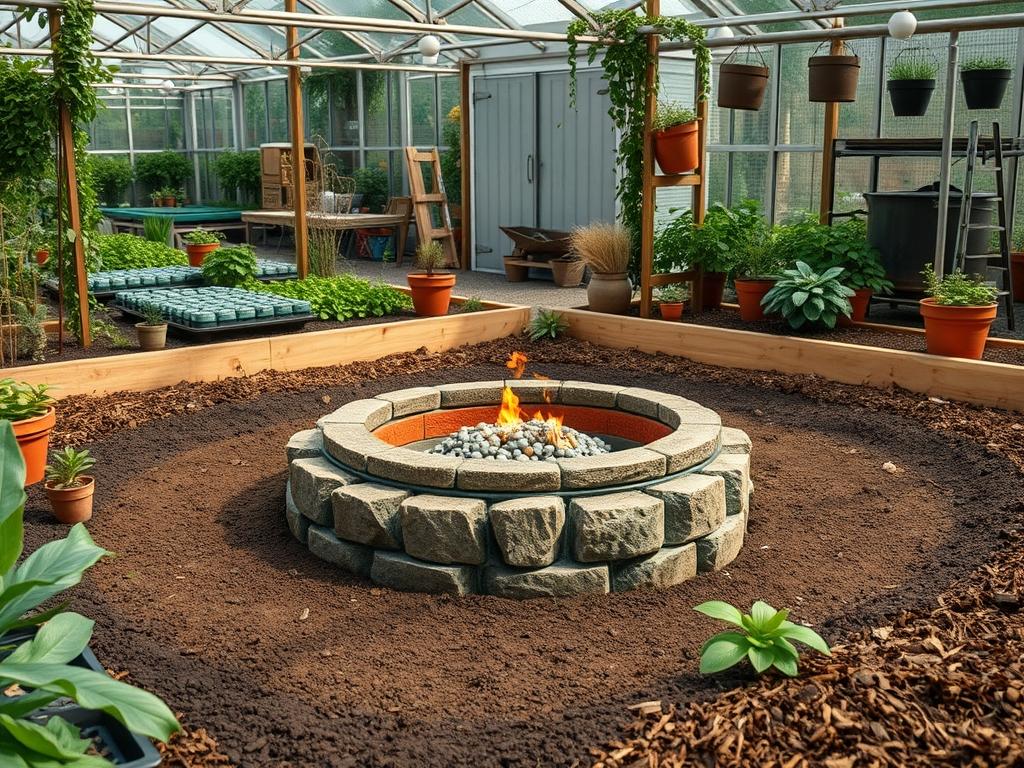
Exploring the transition between standard grade and a recessed lounge environment represents one of the most sophisticated challenges in modern landscape architecture. A sunken fire pit is more than a simple excavation; it is a strategic architectural intervention that redefines the topographical flow of a backyard. By dropping the seating area below the natural eye line, designers create an intimate, wind-shielded sanctuary that fosters conversation and psychological comfort. This design choice also preserves sightlines across the property, ensuring that bulky outdoor furniture does not obstruct the view of the surrounding landscape or architecture. Successfully integrating this feature requires a meticulous balance of structural engineering, hydrological planning, and aesthetic layering to ensure the space remains dry, safe, and visually captivating throughout the year.
The primary landscape challenge with any sub-grade structure is managing the forces of nature, specifically water and wind. In many climates, a sunken pit can become a collection point for runoff if the drainage system is not flawlessly executed. From a curb appeal perspective, a well-integrated fire pit acts as a subterranean focal point that adds value through “vertical interest” in reverse. It transforms a flat, monotonous lawn into a multi-dimensional environment. Beyond aesthetics, the functionality goals center on safety and longevity. This involves choosing non-combustible materials that can withstand thermal expansion while resisting the moisture-rich environment typical of underground installations.
Landscape Design Principles
Symmetry and proportion serve as the foundation for any successful sunken fire pit project. When planning the footprint, the diameter of the central pit must be scaled to the surrounding bench seating to allow for a comfortable “traffic zone” of at least 3 feet between the heat source and the knees of the guests. If the space is too cramped, the heat becomes unbearable; if it is too wide, the intimacy is lost. Focal points are naturally established by the fire itself, but the vertical transition, the stairs or ramps leading down, should be treated as an architectural feature in its own right. Wide, shallow steps create a sense of grandeur and safety, whereas narrow, steep steps can feel claustrophobic and hazardous.
Elevation layers are used to create “rooms” without the need for walls. By changing the height of the ground plane, you signal a transition from an active zone, like a dining patio, to a passive zone, like the fire pit lounge. Irrigation planning must be adjusted to ensure that the surrounding lawn or garden beds do not drain into the excavated area. This often involves creating a slight berm or “crown” around the perimeter of the pit to divert surface water. Visual balance is achieved by mirroring the materials. If the retaining walls of the pit are made of basalt stone, incorporating that same stone into a nearby water feature or walkway ties the entire environment together into a cohesive narrative.
Plant and Material Selection
The following table outlines the best plant species for the immediate periphery of a sunken fire pit, focusing on varieties that provide privacy and texture without creating a fire hazard or littering the pit with excessive debris.
| Plant Type | Sun Exposure | Soil Needs | Water Demand | Growth Speed | Maintenance Level |
| :— | :— | :— | :— | :— | :— |
| Blue Fescue | Full Sun | Well-drained | Low | Moderate | Low |
| Boxwood | Partial Shade | Loamy | Medium | Slow | Moderate |
| Lavender | Full Sun | Gritty/Sandy | Low | Moderate | Low |
| Yucca | Full Sun | Dry/Sandy | Very Low | Slow | Low |
| Dwarf Fountain Grass | Full Sun | Adaptable | Medium | Fast | Moderate |
| Creeping Thyme | Full Sun | Well-drained | Low | Fast | Low |
Material selection is equally critical for the structural longevity of the installation. For the interior of the fire pit, fire bricks (refractory bricks) must be used, as standard house bricks may crack or explode when exposed to high heat. The exterior can be finished with natural stone veneer, poured concrete, or weathering steel. For the flooring within the sunken area, 3/4-inch clean gravel or permeable pavers are preferred over solid slabs to allow for immediate water infiltration and to prevent the area from feeling like a concrete box.
Implementation Strategy
The implementation phase begins with a precise survey of utility lines. Because you are excavating, you must identify gas, water, and electrical conduits before the first shovel hits the ground. The standard depth for a sunken pit ranges from 18 inches to 36 inches. After excavation, the subgrade must be compacted using a plate compactor to prevent future settling, which could crack the retaining walls.
Drainage is the most important step in the process. A French drain system should be installed at the lowest point of the excavation, consisting of a 4-inch perforated PVC pipe encased in filter fabric and surrounded by 1-inch river rock. This pipe must lead to a daylight exit elsewhere on the property or a dedicated dry well. Once the drainage is set, the retaining walls are constructed. We recommend using concrete masonry units (CMU) reinforced with steel rebar and filled with concrete for the core of the walls. These walls act as the “bones” of the structure, holding back the weight of the surrounding earth. Finally, the “capstone” is installed on top of the wall to provide a finished look and additional seating space. For the mulch depth in surrounding garden beds, maintain a consistent 3-inch layer of hardwood mulch to suppress weeds and retain moisture for the perimeter plants.
Common Landscaping Failures
The most frequent failure in sunken fire pit construction is “the bathtub effect.” This occurs when the pit is built in heavy clay soil without an adequate drainage outlet, leading to a pool of stagnant water after every rainstorm. Another common error is inadequate ventilation. For wood-burning pits, fire needs oxygen. If the pit is too deep and has no air intake vents at the base, the fire will smoke excessively and struggle to stay lit. To fix this, designers should install 2-inch steel pipes through the retaining wall at the level of the fire grate to allow for cross-ventilation.
Soil compaction issues often arise when the backfill behind the retaining walls is not properly layered. You should backfill with structural fill or crushed stone in 6-inch lifts, compacting each layer as you go. Failure to do this will result in the surrounding patio sinking over the first two years. Furthermore, root overcrowding occurs when fast-growing trees are planted too close to the pit. The roots can eventually exert enough pressure to crack the masonry walls. Professional architects always maintain a “buffer zone” of at least 10 feet between large trees and subterranean structures.
Seasonal Maintenance
Landscape management for a sunken fire pit changes with the seasons to ensure both safety and aesthetic appeal. In the spring, the primary focus is on the drainage system. Clear any debris or sediment that has collected in the drain grates and ensure the outflow pipe is not blocked by nesting animals or spring growth. This is also the time to apply a fresh layer of polymeric sand to any paver joints to prevent weed growth.
Summer maintenance involves monitoring the heat levels and checking for any signs of thermal stress in the masonry. If you use a gas-powered system, inspect the burner rings for clogs and ensure the shut-off valve remains unobstructed. During the autumn, leaf management is paramount. Dry leaves collecting in a sunken pit are a significant fire hazard. Regularly clear the pit and the surrounding area to keep the zone clear of combustible organic matter. In winter, if you live in a climate with heavy snow, use a custom-fitted waterproof cover to prevent ice from forming in the crevices of the stone, which can lead to freeze-thaw damage and cracking.
Professional Landscaping FAQ
How deep should a sunken fire pit be for safety?
The ideal depth is between 18 and 24 inches for the seating area. This provides a sense of enclosure while allowing for easy entry and exit. The actual fire vessel should be recessed an additional 6 to 12 inches below that.
Which stone is best for the interior of the pit?
High-duty fire bricks are the only safe option for the fire-facing surfaces. While granite or limestone can be used for the exterior veneer, they may shatter if exposed to direct flames due to trapped moisture expanding under heat.
What is the best way to handle heavy rainfall?
A dedicated drainage sump or a gravity-fed French drain is essential. The floor of the pit should have a slight 2-percent slope leading toward a central drain grate to ensure that water never pools around the seating area.
Do I need a permit for a sunken fire pit?
Most municipalities require a permit for any permanent structure that involves significant excavation or gas line installation. Always check local building codes regarding “setback” distances from property lines and combustible structures like wooden fences or decks.
Can I use a sunken fire pit on a sloped yard?
Yes, slopes are actually ideal for sunken pits. You can “cut and fill” the slope, using the excavated earth to level the lower side. This naturally allows for easier drainage “to daylight” on the downward side of the hill.