
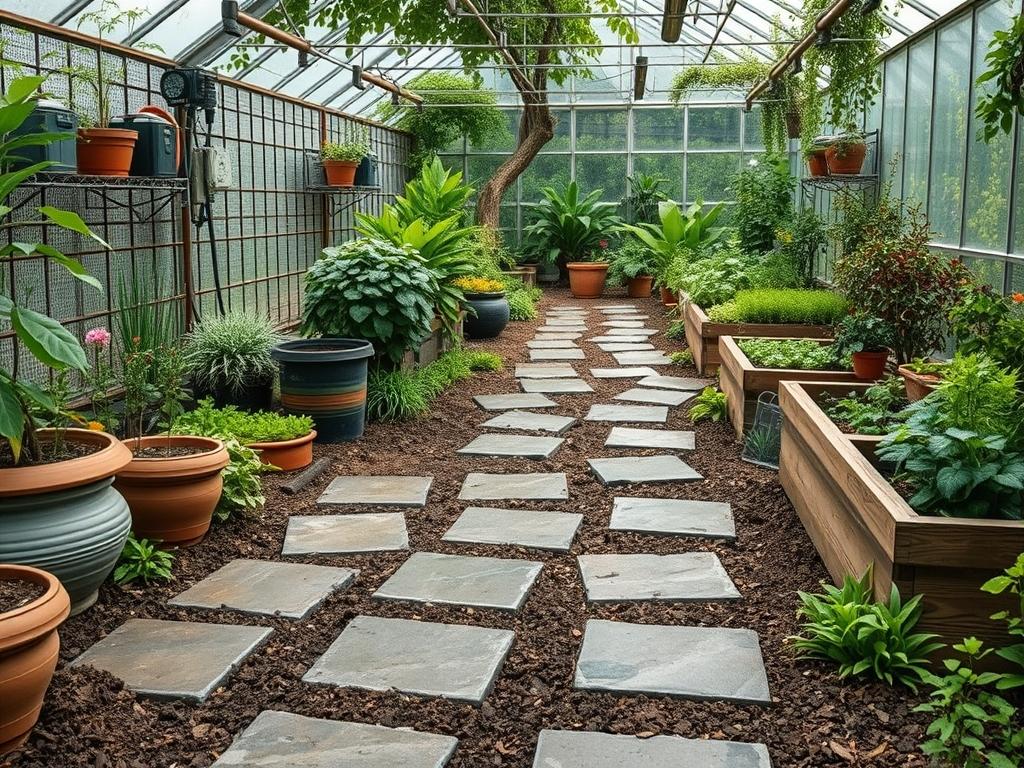
The selection of a walkway material serves as the architectural handshake between a home and its surrounding environment. For modern residences, where clean lines and organic textures often collide, flagstone stands as the premier choice for creating a sophisticated transition. The primary landscaping challenge lies in balancing the inherent irregularity of natural stone with the rigid geometry of contemporary design. Designers must account for regional climate fluctuations, as thermal expansion and freeze-thaw cycles can wreak havoc on poorly installed paths. Beyond mere aesthetics, a well-executed flagstone path addresses critical outdoor functionality goals such as effective water runoff, safe egress during inclement weather, and the enhancement of a property’s overall curb appeal. When homeowners invest in a Flagstone Walkway, they are not just installing a path; they are defining the movement and rhythm of their entire outdoor living space.
Landscape Design Principles
Successful modern landscaping relies on a disciplined approach to symmetry and visual weight. When planning a walkway, the senior architect considers how the path interacts with existing elevation layers. For instance, a flat site might require the introduction of low Retaining walls to create a sense of depth and enclosure. Visual balance is achieved by contrasting the heavy, grounded nature of Bluestone or Slate with airy, soft-textured plantings. Focal points, such as a sculptural specimen tree or a water feature, should be logically connected by the walkway to guide the viewer’s eye through the landscape.
Irrigation planning is an often overlooked principle during the design phase. A professional layout ensures that Drip irrigation lines are sleeved beneath the hardscaping before any stone is set. This prevents the need for invasive repairs later. Furthermore, the walkway should follow the natural contours of the land while maintaining a subtle 2 percent grade away from the home’s foundation. This marriage of form and function ensures that the walkway remains a durable asset rather than a maintenance liability.
Plant and Material Selection
The choice of stone and the vegetation that fills the interstices (the gaps between stones) dictate the final character of the project. For a modern look, many architects opt for Sawn-edge flagstone which offers the natural beauty of stone with the clean edges of a paver.
| Plant Type | Sun Exposure | Soil Needs | Water Demand | Growth Speed | Maintenance Level |
| :— | :— | :— | :— | :— | :— |
| Creeping Thyme | Full Sun | Well-drained | Low | Moderate | Low |
| Irish Moss | Part Shade | Rich, Moist | Medium | Fast | Moderate |
| Dwarf Mondo Grass | Sun to Shade | Adaptable | Moderate | Slow | Low |
| Blue Star Creeper | Full to Part Sun | Moist | Medium | Fast | Moderate |
| Sedum Tetractinum | Full Sun | Sandy/Rocky | Very Low | Moderate | Low |
Implementation Strategy
The transition from design to reality begins with a rigorous grading process. A professional installer starts by excavating the path to a depth of 8 inches. This allows for a 6 inch sub-base of compacted Crushed stone or 3/4-minus gravel. Proper compaction is the most critical step; using a Vibratory plate compactor ensures the base will not shift or settle over time, which prevents the stones from tilting.
Once the base is stable, a 1 inch layer of Leveling sand or Stone dust is spread. This provides the “bed” for the flagstones. Each stone, ideally at least 1.5 to 2 inches thick, is hand-set and tapped into place with a Rubber mallet. For a modern aesthetic, consistent joint widths of 1/2 inch to 1 inch are maintained. Finally, the edges are secured with Aluminum edging or a Concrete haunch to keep the stones from migrating laterally. In modern designs, the joints are often filled with Polymeric sand to prevent weed growth or planted with the low-profile groundcovers mentioned above to soften the hardscaping.
Common Landscaping Failures
The most frequent failure in flagstone installation is the “bathtub effect,” where water becomes trapped within the sub-base because of poor drainage planning. If the excavated trench sits in heavy clay soil without a French drain or perforated pipe to lead water away, the entire walkway will eventually float or heave. Another common mistake is root overcrowding. Planting large shrubs too close to the walkway will lead to “root heave,” where the expanding root systems of mature plants physically lift the Flagstone slabs, creating significant tripping hazards.
Improper spacing and “bridge” stones (stones that are only supported at the ends) also lead to cracking underfoot. If a stone is not fully supported by the bedding sand across its entire surface area, the pressure of a human step can snap even a thick piece of Sandstone. Lastly, many DIY installations fail because of soil compaction issues. If the native soil beneath the gravel base is not also compacted, the entire system will sink during the first heavy rain cycle of the season.
Seasonal Maintenance
Maintaining a Flagstone Walkway changes with the calendar. In the spring, the focus is on “resetting.” After the ground thaws, inspect the stones for any wobbles and refresh the Polymeric sand in the joints. This is also the time to apply a pre-emergent herbicide if you are not using “steppable” groundcovers. During the summer, maintenance is primarily about irrigation. If you have plants between your stones, ensure they receive consistent moisture, as the stones themselves can absorb heat and dry out the surrounding soil rapidly.
Autumn requires the diligent removal of leaf litter. If organic debris is left to rot on Flagstone, it can cause permanent staining from tannins, particularly on lighter stones like Limestone or Pennsylvania Bluestone. In the winter, avoid the use of harsh de-icing salts. These chemicals can penetrate the pores of the stone and cause “spalling,” where the top layer of the stone flakes off. Instead, use Coarse sand for traction, which provides grip without compromising the structural integrity of the masonry.
Professional Landscaping FAQ
What is the best type of flagstone for high-traffic walkways?
Bluestone and Quartzite are ideal for high-traffic areas. They are incredibly dense, slip-resistant, and can withstand significantly more pressure than softer stones like Sandstone or Limestone, making them perfect for main entry paths and modern transitions.
How do I prevent weeds from growing between the stones?
Using Polymeric sand is the most effective modern solution. It contains a binding agent that hardens when misted with water, creating a flexible but solid barrier that prevents weed seeds from taking root while still allowing for thermal expansion.
Should I seal my flagstone walkway?
Sealing is recommended for certain stones to prevent staining and water absorption. A Penetrating sealer with a matte finish will protect the stone without creating a slippery surface or altering the natural color, which is essential for modern aesthetics.
Does a flagstone path require a concrete foundation?
While a concrete “wet-set” provides maximum stability, a “dry-set” on a Crushed stone base is often preferred for residential walkways. It allows for better drainage and is much easier to repair if stones shift due to ground movement.
How wide should a standard entry walkway be?
A primary entry walkway should be at least 48 inches wide. This allows two people to walk side-by-side comfortably. Secondary garden paths can be narrower, typically between 24 and 36 inches, depending on the scale of the surrounding planting beds.