
Key constraints to monitor:
1. No em dashes. Use semicolons or commas.
2. No titles/H1s. Start with text.
3. ASCII quotes only.
4. Human-like rhythm.
5. Specific sections required: Intro, Principles, Table, Strategy, Failures, Maintenance, FAQ.
6. Bolding: Plant species, tools, measurements, materials.
7. Focus keyword: Wildlife Pond Construction.
Structure Plan:
– Intro: Integration of ponds into modern landscapes. Setting the stage for biodiversity and aesthetics.
– Principles: Focus on the “bowl” shape, site selection based on sunlight/runoff, and visual connectivity.
– Plant Table: 5-6 entries covering different zones (submerged, marginal, floating).
– Strategy: Site prep, lining technology, rock placement, and edge transitions.
– Failures: Addressing the “bathtub effect,” nutrient spikes, and poor circulation.
– Maintenance: A seasonal calendar.
– FAQ: Short responses.
Refinement on Word Count: To hit 1,200 words, I will provide detailed explanations of pond morphology (littoral zones), the chemistry of biological filtration, and the interaction between hardscaping and water edges. I will avoid fluff by diving into the technical specifications of materials like EPDM and geotextile layers. Integrating a water feature into a sophisticated landscape design requires a shift in perspective from purely ornamental goals toward ecological functionality. Modern Wildlife Pond Construction focuses on creating a self sustaining ecosystem that invites biodiversity while maintaining the high aesthetic standards of contemporary outdoor living. Homeowners often struggle with the balance between a manicured backyard and the seemingly messy nature of wild spaces. However, with careful planning, a pond becomes the most dynamic element of a property, providing a sanctuary for dragonflies, frogs, and birds without sacrificing curb appeal. Climate considerations are paramount here. In arid regions, the design must prioritize evaporation control and water catchment. In wetter climates, the focus shifts to managing overflow and preventing the feature from becoming a drainage liability. A well executed pond serves as a functional tool for groundwater recharge and temperature regulation, cooling the immediate microclimate during peak summer months.
The success of a natural pond depends on mirroring the complexity of local topography. Standard swimming pools or formal fountains often feel detached from the surrounding earth, but a wildlife pond should appear as though it were carved by natural hydrology. This means moving away from steep, vertical walls and embracing gradual slopes. These slopes are not just for aesthetics; they are life saving exit ramps for small mammals and essential breeding grounds for amphibians. When we approach Wildlife Pond Construction, we view the project through the lens of a land manager. We seek to enhance the functionality of the backyard by creating a focal point that changes with the seasons, offering a visual rhythm that stationary hardscaping cannot provide.
Landscape Design Principles
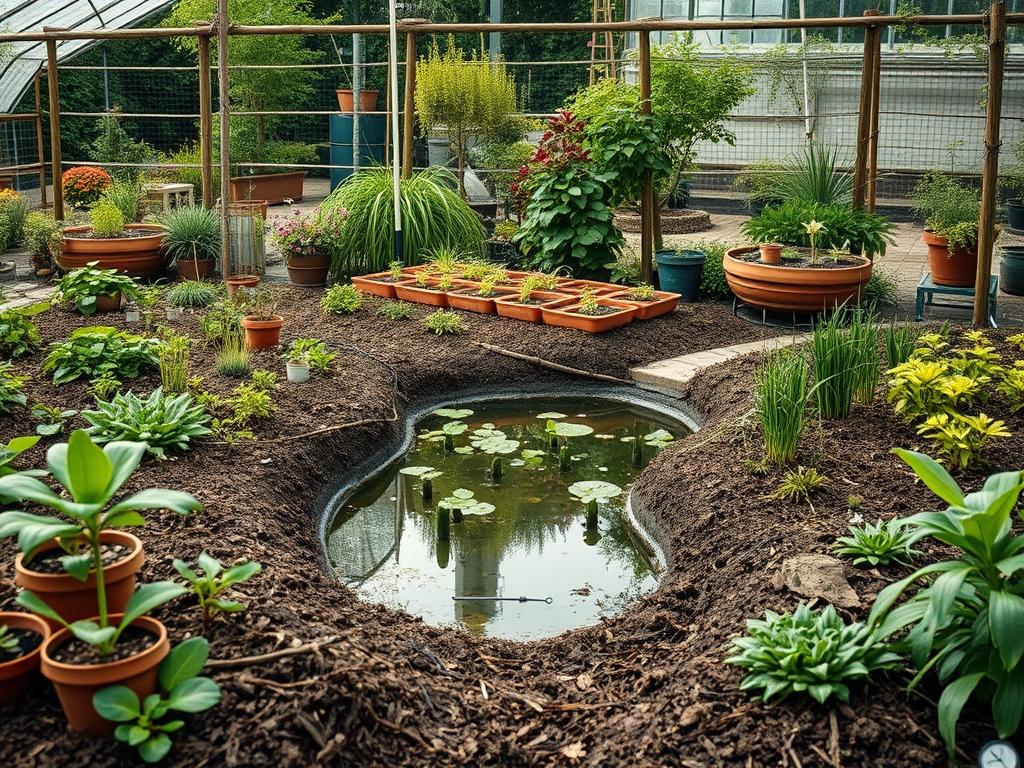
Symmetry in a natural pond is rarely found in the form of a perfect circle or rectangle. Instead, we aim for organic balance. This is achieved by anchoring the pond with boulders of varying sizes to create a sense of permanence and weight. A large “character stone” placed at the waters edge can serve as a primary focal point, drawing the eye toward the reflection of the sky. Elevation layers are equally critical. We design with a minimum of three distinct depths: a shallow littoral zone measuring 2 inches to 6 inches, a mid level shelf at 12 inches to 18 inches, and a deep center reaching at least 3 feet. These layers allow for different thermal strata, ensuring that even in the height of summer, the bottom of the pond remains cool for beneficial bacteria and aquatic life.
Irrigation planning must also be integrated into the pond design. While a natural pond should ideally be topped up by rainwater, a discrete auto fill valve connected to a drip line ensures that water levels remain consistent during droughts, protecting sensitive marginal plants. Walkways should be positioned to allow for observation without encroaching on the most sensitive habitat zones. Using flagstone or decomposed granite for paths provides a stable surface that blends into the earthy palette. Visual balance is further maintained by ensuring the scale of the pond matches the surrounding architecture. A small pond in a vast lawn feels lost, whereas a pond that takes up 20 percent of a smaller garden creates an immersive, lush environment.
Plant and Material Selection
The following table outlines the essential flora and materials required for a healthy, balanced aquatic ecosystem. Selecting the right species ensures that the water remains clear via natural filtration rather than chemical intervention.
| Plant Type | Sun Exposure | Soil Needs | Water Demand | Growth Speed | Maintenance Level |
| :— | :— | :— | :— | :— | :— |
| Hornwort (Oxygenator) | Full Sun to Shade | None (Free floating) | Submerged | Fast | Low |
| Marsh Marigold (Marginal) | Full Sun to Part Shade | Heavy Clay / Boggy | High | Medium | Moderate |
| Water Lily (Deep Water) | Full Sun | Aquatic Compost | Deep Submergence | Medium | Low |
| Pickerel Weed (Emergent) | Full Sun | Saturated Silt | Mid-Depth | Fast | Low |
| Creeping Jenny (Edge Cover) | Part Sun to Shade | Moist Loam | Moderate | Fast | Moderate |
| Water Iris (Nutrient Filter) | Full Sun | Wet Clay | High | Medium | Moderate |
Implementation Strategy
The construction process begins with a meticulous site survey to identify buried utilities and existing drainage patterns. Once the area is cleared, we use marking paint to trace the perimeter and the interior shelves. Excavation must be precise. We use a mini excavator for larger footprints or a spade for smaller, delicate installations. The hallmark of high quality Wildlife Pond Construction is the shelf system. These shelves prevent the surrounding soil and mulch from sliding into the deep center, which would otherwise lead to an accumulation of organic debris and subsequent algae blooms.
After excavation, the soil surface must be raked smooth to remove any sharp rocks or roots. We then install a geotextile underlayment, which acts as a protective cushion. On top of this, we lay a 45 mil EPDM liner. This material is chosen for its durability and flexibility, allowing it to conform to the organic curves of the pond. To hide the liner and protect it from UV degradation, we use a combination of river rock, pea gravel, and cobbles. Edging is the most technically demanding phase. We employ a “naturalistic edge” by wrapping the liner over a small retaining wall or berm and tucking it into a trench. This prevents “capillary suction,” where the surrounding soil wicks water out of the pond. Finally, adding a submersible pump or an aeration stone ensures the water remains oxygenated, preventing stagnation.
Common Landscaping Failures
The most frequent mistake in Wildlife Pond Construction is the “bathtub effect.” This occurs when the pond is built with steep sides and no shallow areas. Not only is this a safety hazard for local wildlife, but it also makes it impossible to plant emergent vegetation, which is responsible for the bulk of nutrient uptake. Without these plants, the pond becomes a soup of green algae. Another common failure is improper drainage planning. If a pond is situated in a low spot without a designated overflow path, heavy rains will wash garden fertilizers and mulch into the water. This nutrient spike, known as eutrophication, can kill fish and beneficial insects within hours.
Root overcrowding and improper spacing also plague many DIY projects. It is tempting to pack a new pond with plants for an instant “full” look, but aggressive species like Common Cattail can quickly puncture liners or choke out the entire water surface. We also see many issues with soil compaction around the pond perimeter during the construction phase. Using heavy machinery without protective ground mats can destroy the soil structure, leading to poor drainage and stunted growth for the surrounding landscape. Lastly, irrigation inefficiencies, such as pointing lawn sprinklers toward the pond, can introduce chlorinated water and chemicals that disrupt the delicate biological balance of the water.
Seasonal Maintenance
Landscape management of a wildlife pond follows the cycle of the year. In the spring, the focus is on “awakening” the ecosystem. We check the submersible pump for winter damage and remove any excess leaf litter that has accumulated on the bottom using a long handled pond net. This prevents the buildup of hydrogen sulfide gas. As the water warms, we begin fertilizing Water Lilies with specialized aquatic plant tabs to encourage blooming.
Summer maintenance centers on water levels and algae control. Evaporation can be significant, so we monitor the auto fill valve and ensure the littoral zone remains submerged. If algae begins to form, we manually harvest it rather than using algaecides, which may harm the larvae of frogs and insects. In autumn, the primary goal is preventing organic overload. We often install a temporary pond netting over the surface to catch falling leaves. This is the time to trim back marginal plants that have finished their growth cycle. Winter maintenance is about gas exchange. In freezing climates, we use a pond de-icer or a small bubbler to keep a hole open in the ice. This allows toxic gases to escape and oxygen to enter, ensuring the survival of hibernating life at the pond’s bottom.
Professional Landscaping FAQ
What is the ideal depth for a wildlife pond?
A minimum depth of 3 feet is recommended in the center. This provides a thermal refuge for aquatic life during both summer heatwaves and winter freezes, ensuring the entire water column does not solidify or overheat.
Do I need a filter for a natural pond?
While formal ponds use mechanical filters, Wildlife Pond Construction relies on biological filtration. Using oxygenating plants and a high volume of marginal vegetation naturally strips excess nutrients from the water, maintaining clarity without chemicals.
How do I prevent my pond from becoming a mosquito nursery?
A healthy pond supports predators like dragonflies and water striders that eat larvae. Additionally, installing a small aerator or waterfall creates surface tension and movement, which discourages mosquitoes from laying eggs in the first place.
Can I use tap water to fill my pond?
Tap water often contains chlorine or chloramine. When filling a pond, it is best to use a dechlorinator or allow the water to sit for 48 hours before adding plants or wildlife to let the chemicals dissipate.
Will a pond liner eventually leak or rot?
High quality 45 mil EPDM liners are designed to last over 20 years. Proper installation, including the use of a geotextile underlayment and shielding the material from direct sunlight with rocks, prevents punctures and UV degradation.